Court Rules Procedural Irregularity in Initial Magistrate Proceedings Does Not Vitiate Trial; Summoning Under IPC and SC/ST Act Affirmed
In a significant judgment dated October 15, 2026, the Allahabad High Court dismissed the criminal appeal filed by Ajai Yadav and others, affirming the summoning order passed by the Special Judge under the Scheduled Castes and Scheduled Tribes (Prevention of Atrocities) Act, 1989 (SC/ST Act). The appeal challenged the validity of the proceedings on the ground that the initial cognizance of the complaint was taken by the Additional Chief Judicial Magistrate (ACJM), which the appellants claimed was contrary to the provisions of the SC/ST Act after its 2016 amendment.
The case arose from a complaint lodged by Gulab Chandra Ram, a member of the Dom community (a Scheduled Caste), alleging that the appellants had assaulted him and his wife with lathis and sticks, used caste-indicative abusive language, and threatened them with death and eviction from their village. The complaint was initially taken cognizance of by the ACJM, who recorded statements under Sections 200 and 202 of the Criminal Procedure Code (Cr.P.C.). Subsequently, the case was transferred to the Special Judge constituted under the SC/ST Act, who passed the impugned summoning order under Sections 323, 504, 506 of the Indian Penal Code (IPC) and Section 3(1)(r) of the SC/ST Act.
The appellants contended that the Special Court's jurisdiction to directly take cognizance after the 2016 amendment to Section 14 of the SC/ST Act excluded any jurisdiction of the Magistrate to do so and that proceedings initiated by the Magistrate should be considered void, thus invalidating the summoning order.
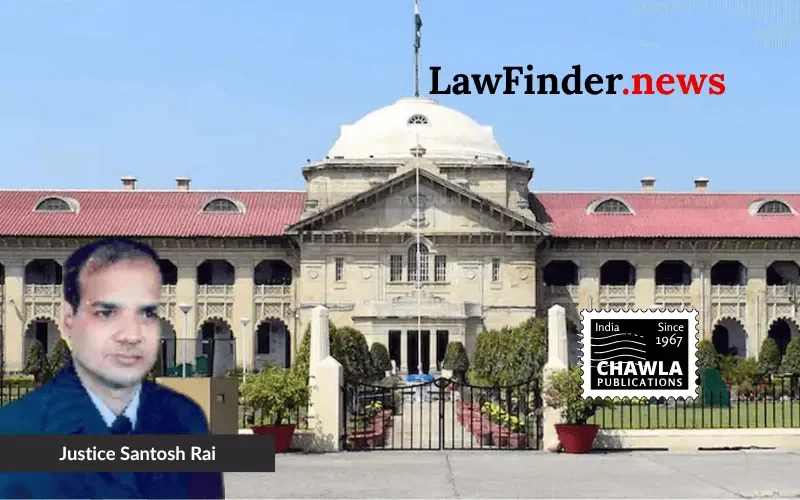
Justice Santosh Rai, presiding over the case, elaborated on the legal framework governing the jurisdiction of Special Courts under the SC/ST Act and the procedural safeguards under the Cr.P.C. The Court noted that the 2016 amendment to Section 14 confers an additional power on Special Courts to directly take cognizance of offences under the Act without prior committal by a Magistrate to ensure speedy trials. However, the Court emphasized that this power does not exclude the Magistrate's jurisdiction to take cognizance and commit the case to the Special Court. The absence of the word "only" in the amendment's language was highlighted as a legislative intent to allow concurrent jurisdiction rather than exclusivity.
The Court distinguished between procedural irregularities and incurable illegality, relying on Sections 460 and 461 of the Cr.P.C. It held that the Magistrate's initial cognizance, even if technically irregular, was taken in good faith and did not result in prejudice or failure of justice to the appellants. Therefore, such irregularity did not vitiate the subsequent proceedings before the Special Court.
Further, the Court examined the merits of the summoning order and found that the complaint and preliminary statements disclosed a prima facie case against the appellants for offences under IPC and the SC/ST Act. The Court reaffirmed the principle that at the summoning stage, the court's role is limited to determining whether a prima facie case exists and is not to conduct a detailed evaluation of evidence or credibility of witnesses.
The judgment cited authoritative Supreme Court precedents, including the Shantaben Bhurabhai Bhuriya case, which upheld the legislature's intent behind the 2016 amendment to avoid procedural delays and ensure speedy trials for SC/ST atrocity cases.
In conclusion, the Allahabad High Court dismissed the appeal, upheld the summoning order, and directed the appellants to appear before the trial court. The Court also set a timeline for the appellants to seek regular bail and instructed the trial court to expedite bail applications in accordance with Supreme Court and High Court guidelines.
This judgment reaffirms the judiciary's balanced approach in ensuring swift justice in sensitive cases involving atrocities against Scheduled Castes and Tribes, while maintaining procedural fairness and preventing technical defects from undermining substantive justice.
Bottom Line:
SC/ST Act - Mere fact that cognizance was initially taken by Magistrate and statements under Sections 200 and 202 Cr.P.C. were recorded before transfer to Special Judge does not vitiate subsequent proceedings - Such defect is at best a procedural irregularity and not an incurable illegality, in absence of prejudice or failure of justice - Summoning order under Sections 323, 504, 506 IPC and Section 3(1)(r) of SC/ST Act upheld.
Statutory provision(s):
Scheduled Castes and Scheduled Tribes (Prevention of Atrocities) Act, 1989 Sections 2(bd), 3(1)(r), 14; Criminal Procedure Code, 1973 Sections 190, 200, 202, 207, 209, 460, 461; Indian Penal Code Sections 323, 504, 506
Ajai Yadav v. State of U.P., (All) : Law Finder Doc Id # 2997818