Supreme Court Upholds Insurance Coverage for Cross-Border Accidents, Insurers Liable for Accidents Outside India if Vehicles Have Valid Permits, Rules Supreme Court
In a landmark decision, the Supreme Court of India has ruled that insurance companies are liable to cover accidents occurring outside Indian territory if the vehicle involved holds a valid permit authorizing its use outside India. This ruling was delivered in the case of Oriental Insurance Co. Ltd. v. Durg Roadways Private Limited, where the court dismissed the appeal filed by Oriental Insurance Co. Ltd., holding them responsible for compensating the claimants following a tragic accident in Nepal.
The case revolved around an incident where a vehicle, bearing registration number CG/07-LP/0344, met with an accident in Nepal, resulting in the death of three individuals. The vehicle was covered under an insurance policy issued by Oriental Insurance Co. Ltd., and it possessed a special permit authorizing travel to Nepal. Despite geographical limitations stated in the policy, the court emphasized the broader protective intent of the Motor Vehicles Act, 1988, and the principle of contra proferentem, which resolves ambiguities in favor of the insured.
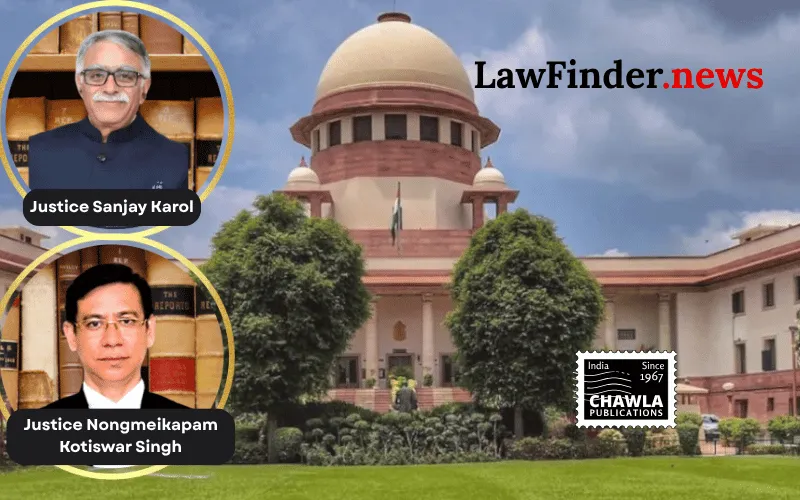
The Supreme Court's bench, comprising Justices Sanjay Karol and Nongmeikapam Kotiswar Singh, highlighted the need for clarity in insurance policy language and recommended that the Insurance Regulatory and Development Authority of India (IRDAI) standardize cross-border coverage clauses. The judgment also pointed out the importance of recognizing valid driving licenses across borders, as stipulated in treaties like the Treaty of Peace and Friendship between India and Nepal.
The court underscored that while insurers can impose geographical restrictions, they must do so explicitly, and any ambiguity should not prejudice the insured. The ruling further stressed that insurance policies should be interpreted in a manner that aligns with the beneficial purpose of the Motor Vehicles Act, ensuring protection and compensation for victims of accidents.
The decision is expected to have significant implications for the insurance industry, particularly concerning policies covering vehicles operating across borders. The court's directives to IRDAI aim to mitigate confusion and enhance policyholder protection, ensuring that coverage details are communicated clearly to prevent disputes.
Bottom Line:
Motor Vehicles Act, 1988 - Insurance policy covering use under a permit - Liability of insurer to cover accidents outside India if a valid permit exists allowing extraterritorial operation - Ambiguity in insurance policy clauses to be resolved in favor of the insured following the principle of contra proferentem - Clear drafting of insurance policies and regulatory guidelines recommended for cross-border coverage.
Statutory provision(s): Motor Vehicles Act, 1988 Section 147(5), India Motor Tariff 2002 General Regulation 4, Treaty of Peace and Friendship between India and Nepal, Article 245 of the Constitution of India, Section 139 and 149 of the Motor Vehicles Act, 1988.
Oriental Insurance Co. Ltd. v. Durg Roadways Private Limited, (SC) : Law Finder Doc id # 2943633