Court Rules Mere Absence of Ticket Does Not Negate Status of Deceased as Bona Fide Passenger; Railways Held Liable Under No-Fault Compensation Regime
In a significant judgment delivered on September 11, 2026, the Andhra Pradesh High Court allowed a Civil Miscellaneous Appeal filed by the family of a deceased passenger against the Union of India, directing the Railways to pay Rs. 8,00,000 as compensation for death caused due to an untoward railway incident.
The case arose from a tragic incident on March 29, 2012, when the deceased, a young engineering graduate traveling from Tanuku to Visakhapatnam, accidentally fell from a heavily crowded train at Tuni Railway Station after sudden jerks caused him to slip. Despite immediate medical attention, he succumbed to severe injuries. Although the deceased's father had purchased a ticket, no ticket was found on the deceased's person after the accident.
The Railway Claims Tribunal had earlier rejected the claim petition on grounds that the deceased was not a bona fide passenger due to absence of the ticket and that the injuries were self-inflicted while attempting to board a moving train. Aggrieved, the appellants challenged this decision before the High Court.
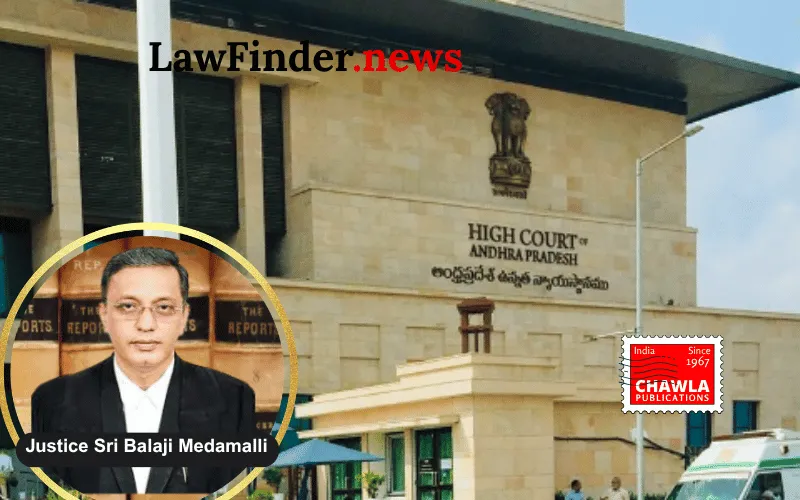
Justice Balaji Medamalli, presiding over the case, reversed the Tribunal's decision relying extensively on precedents including the Supreme Court rulings in Union of India v. Rina Devi (2019), Doli Rani Saha v. Union of India (2024), and Kalandi Charan Sahoo v. General Manager (2019). The Court emphasized that under Section 124A of the Railways Act, 1989, compensation is payable for untoward incidents irrespective of contributory negligence or absence of a ticket.
The Court observed that the initial burden of proof lies on the claimants who can discharge it by filing an affidavit stating relevant facts about the ticket purchase and travel. Once done, the burden shifts to the Railways to rebut the presumption of bona fide passenger status. The Railways failed to discharge this burden effectively, and the investigation report was criticized for being delayed and inadequate.
Moreover, the Court clarified the concept of 'self-inflicted injury', stating that mere negligence does not amount to self-infliction requiring intention to harm oneself. Hence, the deceased's death in the course of boarding or de-boarding qualifies as an untoward incident under no-fault liability principles.
The judgment also reiterated the importance of timely and proper investigation as mandated by the Railway Passengers (Manner of Investigation of Untoward Incidents) Amendment Rules, 2007. Failure to conduct a prompt inquiry undermines the Railways' defense against compensation claims.
Consequently, the High Court set aside the Tribunal's order and directed the Railways to pay Rs. 8,00,000 compensation to the appellants within two months, dividing the amount equally among the parents of the deceased.
This ruling reinforces the protective ambit of the Railways Act's compensation provisions and underscores the judiciary's commitment to ensuring justice for victims of railway accidents, even in cases where procedural lapses or absence of tickets are involved.
Bottom Line:
Compensation for untoward railway incidents - Mere absence of ticket does not negate the status of a deceased as a bona fide passenger. Burden shifts to Railways once claimants file an affidavit of relevant facts.
Statutory provision(s):
Railways Act, 1989 Sections 123(b), 123(c), 124A; Railway Passengers (Manner of Investigation of Untoward Incidents) Amendment Rules, 2007 Rule 7
N. Sri Rama Prasad v. Union of India, (AP) : Law Finder Doc Id # 2981400