Withdrawal Without Permission Prohibits Filing of New Writ Petition on Identical Issues
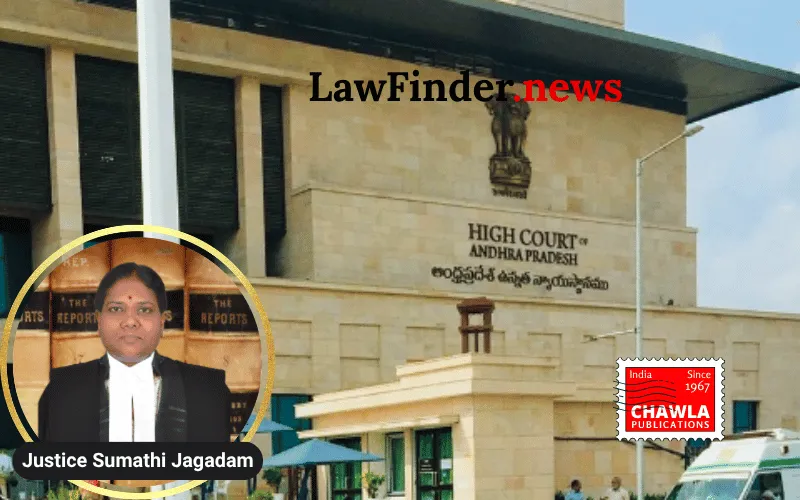
In a significant decision, the Andhra Pradesh High Court has ruled against the maintainability of a fresh writ petition filed by M/s. Larsen and Toubro Limited against the Union of India, concerning the withholding and recovery of seigniorage charges from the running account bills of the petitioner. This decision was rendered by Justice Smt. Sumathi Jagadam on June 19, 2026, in Writ Petition No. 20798 of 2023.
The petitioner sought a writ of mandamus to declare the actions of the respondents as illegal and arbitrary. However, the court noted that the petitioner had previously filed a writ petition (W.P.No.4720 of 2018) on the same subject matter, which was withdrawn without seeking permission to file a fresh petition. The court emphasized that such withdrawal without permission bars the maintainability of a subsequent writ petition on the same issue under Article 226 of the Constitution of India.
The judgment draws upon the principle enunciated in the landmark case of Sarguja Transport Service v. State Transport Appellate Tribunal, M.P., Gwalior, where the Supreme Court underscored the importance of preventing misuse of judicial processes. The High Court reiterated that the principle underlying Order XXIII Rule 1 of the Civil Procedure Code, 1908, applies to writ petitions to discourage bench-hunting tactics and promote the efficient administration of justice.
Justice Jagadam pointed out that the petitioner, by withdrawing the earlier writ petition without permission to refile, is deemed to have abandoned the remedy under Article 226 for the cause of action relied upon in the previous petition. Consequently, the court dismissed the present petition, advising the petitioner to seek alternative remedies, such as filing a petition to review or recall the earlier order.
The court refrained from addressing the merits of the case, focusing solely on the issue of maintainability. As such, the writ petition was disposed of, with no costs awarded, and any pending miscellaneous petitions were ordered closed.
This judgment serves as a reminder of the procedural rigor and implications of withdrawing a petition in the High Court, particularly highlighting the necessity for litigants to obtain explicit permission if they intend to file anew on the same subject matter.
Bottom line:-
Withdrawal of a writ petition filed in a High Court without permission to file a fresh writ petition bars the maintainability of a subsequent writ petition on the same subject matter under Article 226 of the Constitution of India.
Statutory provision(s): Article 226 of the Constitution of India, Civil Procedure Code, 1908 Order XXIII Rule 1
M/s. Larsen and Toubro Limited v. Union of India, (Andhra Pradesh) : Law Finder Doc id # 2940746