Court Emphasizes Gravity of Offence, Vulnerability of Victim, and Societal Impact; Rejects Bail Despite Prolonged Custody
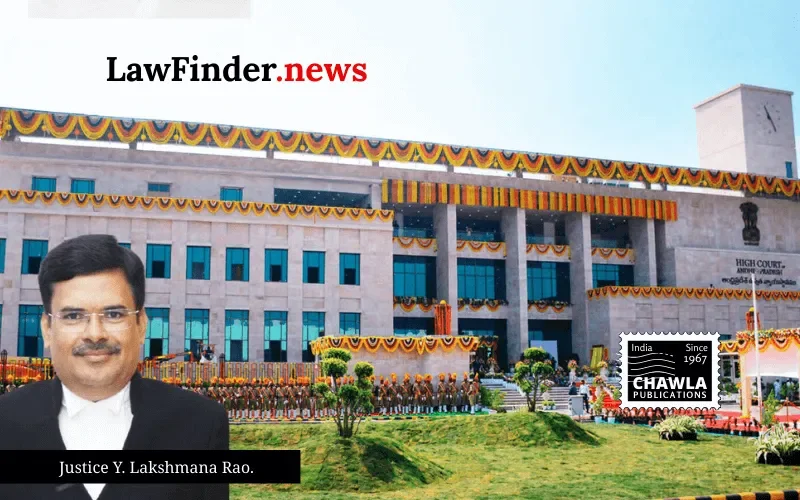
In a significant judgment delivered on November 11, 2026, the Andhra Pradesh High Court, presided over by Justice Dr. Y. Lakshmana Rao, dismissed the bail application of Kalavala Venkateswara Rao, the accused in a brutal case involving repeated sexual assault and the murder of a minor girl. The case pertains to Crime No.152 of 2026 registered at Pendurthi Police Station, Visakhapatnam, under the Protection of Children from Sexual Offences Act (POCSO Act), 2012, and relevant provisions of the Bharatiya Nyaya Sanhita (BNS), 2023, and Bharatiya Nagarik Suraksha Sanhita (BNSS), 2023.
The prosecution alleged that the accused, who had maintained a relationship of trust with the victim’s family for seven years, exploited this confidence to sexually assault the victim, a 17-year-old girl, repeatedly at multiple locations including his residences. The victim was subsequently murdered by the accused through smothering at his house in Sujatha Nagar, Pendurthi. The accused allegedly tried to conceal the crime by transporting the victim’s body to a different location.
During the investigation, the police seized critical evidence, including blood-stained articles and CCTV footage, and recorded statements from witnesses. The chargesheet was filed and the accused was remanded to judicial custody since March 31, 2026. The accused had been granted interim bail twice previously but was re-arrested.
In his plea, the accused’s counsel contended that the post-mortem report did not indicate sexual assault and relied on circumstantial evidence and an alleged extra-judicial confession. He argued that the accused had cooperated with the trial, had no previous misconduct during bail periods, and was a permanent resident unlikely to abscond. Further, the counsel claimed prolonged custody was prejudicing the accused’s right to effective defense.
Opposing the bail, the Public Prosecutor and Legal Aid Counsel emphasized the heinous nature of the offences, the vulnerability of the minor victim, and the strong prima facie evidence including scientific and circumstantial proof. They highlighted the possibility of witness intimidation and the societal impact of the crime. They also asserted that the delay in trial was partly caused by the accused’s own actions and that mere completion of investigation and filing of chargesheet did not entitle the accused to bail.
After careful examination of the case record and relevant legal precedents, the Court refused bail. The judgment reiterated that bail is a discretionary remedy and must be exercised judiciously, especially in grave offences involving minors under the POCSO Act. The Court relied on binding Supreme Court precedents such as X4 v. State of Rajasthan (2024), Ram Govind Upadhyay v. Sudarshan Singh (2002), and Prahlad Singh Bhati v. N.C.T., Delhi (2001), which emphasize the gravity of the offence, severity of punishment, nature of evidence, and societal interests as core considerations in bail matters.
The Court held that prolonged incarceration alone is not sufficient ground for bail where the prosecution has made out a prima facie case supported by substantial evidence and the trial is ongoing. It also noted the vulnerability of the victim, the heinousness of the crime, and the possibility of witness tampering as factors militating against bail. The Court observed that the accused failed to demonstrate any special circumstances warranting release and dismissed the petition.
This ruling reinforces the judiciary’s stringent approach towards bail in POCSO cases, underscoring the protection of vulnerable children and upholding societal interests against grave sexual offences.
Bottom Line:
Bail application in cases involving heinous offences under the POCSO Act must be decided by considering the gravity of the offence, vulnerability of the victim, material evidence, and the larger societal impact. Prolonged incarceration alone does not justify granting bail where substantial evidence exists and trial is ongoing.
Statutory provision(s):
Bharatiya Nagarik Suraksha Sanhita, 2023 Sections 480, 483; Bharatiya Nyaya Sanhita, 2023 Sections 103(1), 64(2)(m); Protection of Children from Sexual Offences Act, 2012 Sections 5(j)(iv)(1), 6
Kalavala Venkateswara Rao v. Station House Officer, (Andhra Pradesh) : Law Finder Doc Id # 3163282