The court emphasizes the necessity of including all affected parties in writ petitions to avoid abuse of legal processes.
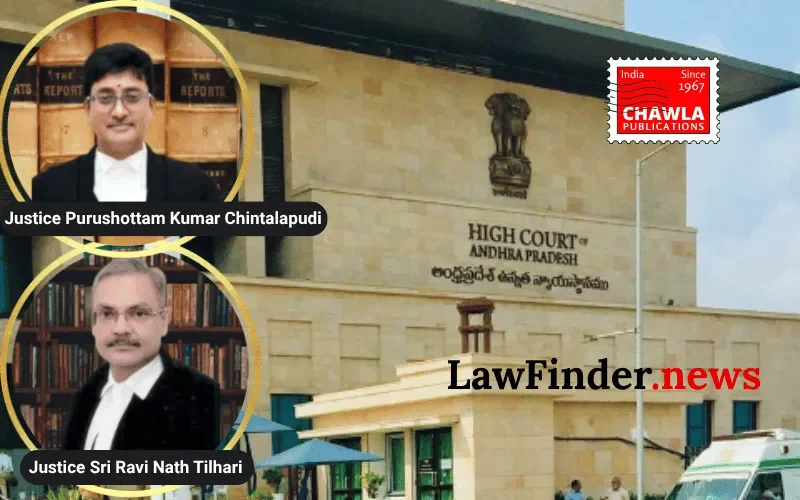
In a significant decision, the Andhra Pradesh High Court has set aside a judgment allowing the restoration of a canceled gift deed, underlining the importance of including all necessary parties in legal proceedings. The Division Bench, comprising Justices Ravi Nath Tilhari and Purushottam Kumar Chintalapudi, ruled on the matter concerning the unilateral cancellation of a registered gift deed by Savari Eswaramma in favor of her daughter, Parigala Anjinamma.
The court's ruling stemmed from a writ appeal challenging a previous judgment that had restored the gift deed canceled by Eswaramma. The Bench highlighted procedural lapses, noting that the writ petition filed by Anjinamma did not include third parties who acquired rights to the property after the gift deed's cancellation. This omission, according to the court, constituted a serious procedural flaw, as these third parties were directly affected by the outcome but were not given a chance to present their case.
The Bench emphasized that the unilateral cancellation of a registered gift deed is impermissible unless specific conditions under Section 126 of the Transfer of Property Act are met. The court referenced several precedents, including the Supreme Court's decision in N.P. Saseendran v. N.P. Ponnamma, to underline the illegality of unilateral revocations without a revocation clause.
Additionally, the court criticized the suppression of material facts, such as the pendency of related civil suits, by the writ petitioner. This suppression, coupled with the non-inclusion of subsequent transferees as parties in the writ petition, amounted to an abuse of legal processes, the court observed.
The judgment mandates the restoration of the writ petition to its original status, directing Anjinamma to disclose the pending civil suit (O.S.No.447 of 2022) and to include all parties affected by the gift deed's cancellation. The court refrained from delving into the merits of the original judgment, focusing instead on the procedural integrity of the legal process.
This decision underscores the judiciary's commitment to ensuring fairness by mandating the inclusion of all relevant parties in legal proceedings, preventing judgments from being passed in the absence of those directly impacted.
Bottom Line :
A writ petition challenging the cancellation of a registered gift deed cannot be decided without impleading third parties who have acquired rights under subsequent transactions post-cancellation. Non-disclosure of material facts and pendency of related civil suits amounts to suppression and abuse of process of law.
Statutory provision(s): Transfer of Property Act, 1882 Section 126, A.P. Registration Rules, 1960 Rule 26(i)(k).
Savari Eswaramma v. Parigala Anjinamma, (Andhra Pradesh)(DB) : Law Finder Doc id # 2962540