Court Emphasizes Public Interest and Departmental Morality Over Career Advancement Amidst Pending Criminal and Disciplinary Proceedings
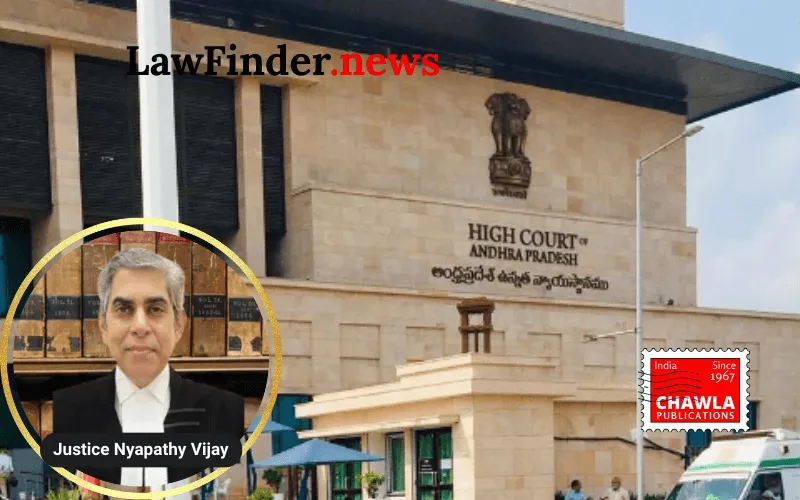
In a significant judgment dated September 3, 2026, the Andhra Pradesh High Court, presided over by Mr. Nyapathy Vijay, J., addressed the contentious issue of whether government employees facing grave criminal or departmental charges are entitled to promotion. The case arose from a writ petition filed by G. Papa Rao, a Deputy Director in the Mines and Geology Department, challenging the State's decision to withhold his promotion to Joint Director due to pending criminal and departmental proceedings against him.
Papa Rao, who joined the Mines and Geology Department in 1992 and rose through the ranks to Deputy Director by 2017, was implicated in a large-scale illegal mining scandal involving unauthorized excavation and transportation of limestone, causing a staggering loss of over Rs. 124 crore to the government exchequer. The charges against him included serious offenses under various sections of the Indian Penal Code, the Prevention of Damage to Public Property Act, and the Mines and Mineral (Development & Regulation) Act, 1957. Following a Central Bureau of Investigation (CBI) probe and prosecution sanction, a criminal case against him is currently pending trial.
Despite Papa Rao's plea of innocence and his contention that delays in the departmental inquiry should not stall his career progression, the State Government and the Departmental Promotion Committee (DPC) declined to consider his name for promotion. The DPC, applying the guidelines issued under G.O.Ms.No.257 dated June 10, 1999, which categorizes employees facing inquiries based on the gravity of charges, held that individuals facing charges involving moral turpitude, embezzlement, or grave dereliction of duty are not fit for promotion consideration.
The Court upheld this stance, underscoring that promoting an employee under such serious allegations would be contrary to public interest and detrimental to departmental morale. It emphasized that promotions are incentives for employees who serve with integrity and that those facing serious criminal charges should seek advancement only after acquittal or conclusion of disciplinary proceedings. The judgment referred to authoritative precedents, including the Supreme Court decision in State of Tamil Nadu v. E. Rangachari (2012) and similar rulings by the Andhra Pradesh and Telangana High Courts, which consistently deny promotion rights to employees facing grave criminal or departmental charges.
Rejecting the writ petition, the Court ruled that consideration for promotion in such cases is inappropriate and could normalize wrongful acts, causing demoralization among honest employees. The judgment also clarified that delays in concluding criminal cases do not entitle charged employees to claim promotions as a matter of right.
This decision reinforces the principle that public servants must maintain an unblemished record to be eligible for career advancement and that the State has a duty to uphold integrity and public trust in its administrative machinery.
Bottom Line:
An employee facing grave charges in criminal or departmental cases is not entitled to be considered for promotion, as such consideration is against public interest and may demoralize honest employees.
Statutory provision(s):
Indian Penal Code Sections 120B, 379, 386, 392, 420, 447, 465; Prevention of Damage to Public Property Act, 1984 Section 3; Mines and Mineral (Development & Regulation) Act, 1957 Section 21; G.O.Ms.No.257, dated 10.06.1999 (General Administration Department Guidelines)
G. Papa Rao v. State of Andhra Pradesh, (Andhra Pradesh) : Law Finder Doc Id # 2975212