Court holds that once a registered gift deed is accepted and acted upon, it cannot be revoked unilaterally by the donor; Registration officers have no jurisdiction to register such revocation deeds without mutual consent or court order
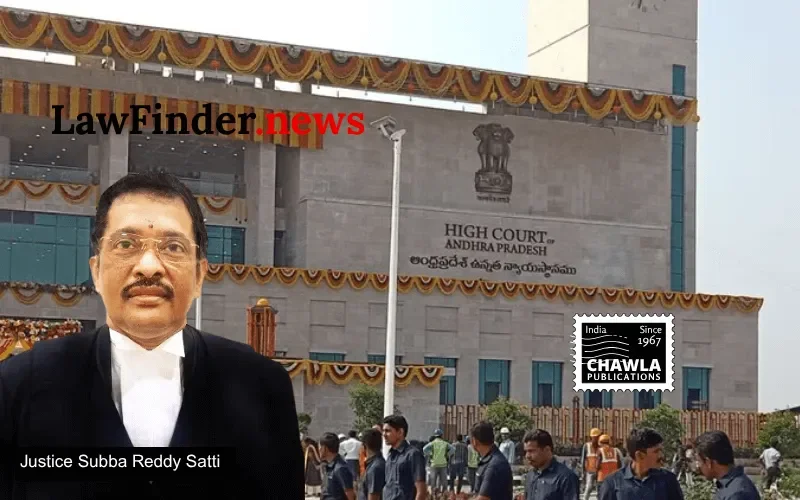
In a landmark judgment delivered on October 1, 2026, the Andhra Pradesh High Court, presided over by Justice Sri Subba Reddy Satti, decisively ruled against the unilateral revocation of a registered gift/settlement deed. The case, Selam Komala Kumar v. State of Andhra Pradesh, arose from a dispute wherein the petitioner's mother, the donor, executed a registered gift deed in 2015 transferring ownership of immovable property to the petitioner. Several years later, the donor executed a unilateral revocation deed in 2022, which was registered by the Sub-Registrar without the petitioner's consent. The petitioner challenged this act as illegal and arbitrary.
The Court meticulously examined the statutory provisions under the Transfer of Property Act, 1882, particularly Sections 123 and 126, and the Andhra Pradesh Registration Rules, specifically Rule 26(i)(k)(i). It was observed that under Section 123, a gift of immovable property is complete and absolute when effected by a registered instrument and accepted by the donee, vesting the title immediately in the donee. Section 126 strictly circumscribes the circumstances under which such a gift can be suspended or revoked, prohibiting revocation at the mere will of the donor.
Rejecting the contention of the respondents who relied on executive memos dated July 18, 2008, and June 6, 2016, which permitted registration of unilateral revocation of gift deeds, the Court held that these memos cannot override the statutory provisions or substantive law. The Court referenced binding precedents, including the Supreme Court decision in Thota Ganga Laxmi v. Government of Andhra Pradesh (2010), which unequivocally held that unilateral cancellation of a registered deed by the donor is void and non-est in law, and registration authorities have no jurisdiction to register such deeds without mutual consent or court order.
Furthermore, the Court clarified the scope of the term "conveyance" in Rule 26(i)(k)(i) to include not only sale deeds but also gift and settlement deeds, thereby reinforcing the requirement of mutual consent or judicial decree for cancellation. It was emphasized that allowing unilateral cancellation registration would result in arbitrary deprivation of vested property rights without notice or opportunity of hearing to the affected party, violating principles of natural justice.
The Court exercised its equitable jurisdiction under Article 226 of the Constitution to set aside the registration of the unilateral revocation deed dated September 17, 2022, and also quashed the executive memos permitting such registration. The judgment affirms the sanctity of property rights and the rule of law, making it clear that donors cannot unilaterally revoke completed and accepted gifts of immovable property through registered instruments.
This ruling not only provides relief to the petitioner but also establishes a binding precedent that protects donees from arbitrary revocation attempts and reinforces the statutory framework governing property transfers and registrations.
Bottom Line:
Transfer of Property Act, 1882 - Registered gift/settlement deed, once accepted and acted upon, cannot be revoked unilaterally by donor - Sub-Registrar has no jurisdiction to register unilateral revocation/cancellation deed - Executive memos permitting such registration cannot override statutory rules or substantive law and are liable to be set aside under Article 226.
Statutory provision(s): Transfer of Property Act, 1882 Sections 123, 126; Registration Act, 1908; Andhra Pradesh Registration Rules, Rule 26(i)(k)(i); Constitution of India, Article 226
Selam Komala Kumar v. State of Andhra Pradesh, (AP) : Law Finder Doc Id # 2994081