Court rules that executive memos introducing zonal procurement do not override Government Order; no mala fides found in tender conditions despite allegations of arbitrariness and favoritism
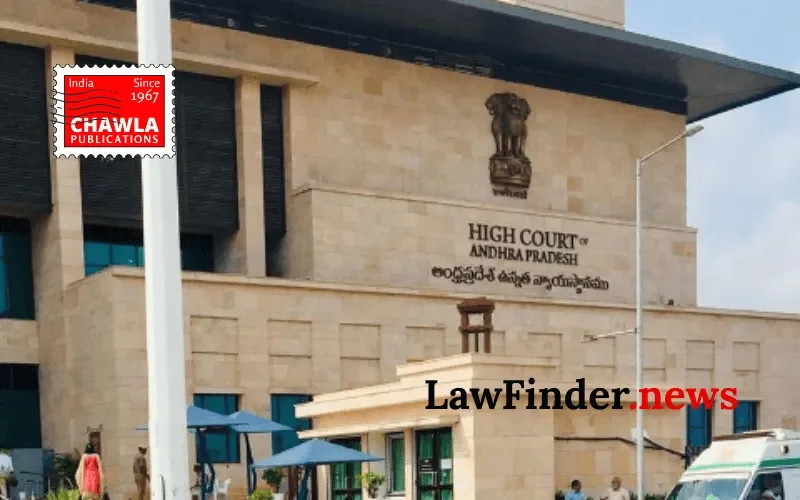
In a significant verdict delivered on August 25, 2026, the Andhra Pradesh High Court (Division Bench) dismissed writ appeals challenging the State Government's policy of zonal centralized procurement of non-perishable items, milk, and eggs for Kasturba Gandhi Balika Vidyalayas (KGBVs). The appeals, filed by suppliers alleging that the tender process was arbitrary, violative of a Government Order (G.O.Ms.No.53 dated 31.08.2023), and designed to favour certain bidders, were rejected on grounds that the State's new procurement policy was justified and no mala fides were established.
The appellants, including Mohammed Zuber and Sri Venkateswara Traders, argued that the impugned memos dated 23.03.2026 and 20.04.2026, which authorized zonal procurement and constituted a procurement committee, contravened the procurement procedure prescribed under G.O.Ms.No.53 issued by the Social Welfare Department. They contended that the Government Order mandated procurement at the State, District, and Divisional levels through specified agencies, and the introduction of zonal procurement distorted this framework, resulting in exclusion of eligible local suppliers and favouritism.
Further, the appellants challenged specific tender conditions, including eligibility criteria requiring bidders to have supplied at least 50% of the estimated contract value under a single work order and prohibitions on consortium bidding. They alleged that a corrigendum issued after the pre-bid meeting altered essential tender conditions to exclude them and facilitate participation by preferred bidders. They also claimed that the tender combined perishable and non-perishable items arbitrarily, lacked item-wise pricing, and retained an inflated estimated contract value despite quantity reductions.
The Government and official respondents countered these claims, asserting that the G.O.Ms.No.53 applied only to 21 non-perishable items, while the present procurement covered 37 items, necessitating a new policy to meet wider requirements. The zonal centralized system was implemented to ensure better quality, larger quantities, competitive pricing, and overall benefit to the public exchequer. They submitted that the tender documents permitted clarifications and amendments, and the corrigendum extended time for bid submission, with no bidder prevented from participating.
The High Court, after hearing senior counsel for both sides and analyzing the material, held that the scope of judicial review in tender matters is limited. Interference is warranted only if the process is tainted by mala fides, arbitrariness, irrationality, or perversity. The Court noted that no material evidence was produced to substantiate allegations of mala fides or favoritism, especially since the officials against whom such allegations were made were not impleaded as parties.
The Court emphasized that an executive memo cannot override or modify a Government Order issued under Article 162 of the Constitution unless properly amended. However, the State was justified in evolving a different procurement policy for wider requirements not covered by the existing G.O. The zonal procurement system enhanced bargaining power and ensured quality supplies at competitive prices.
Regarding the corrigendum, the Court found that it was validly issued under the tender document's provisions and did not prevent any bidder from participating. The petitioners' failure to meet the eligibility criteria or their choice not to participate fully in the tender process disqualified them from seeking judicial interference aimed at stalling the procurement. The Court further held that mere allegations without impleading concerned persons or producing supporting evidence are insufficient to invalidate tender conditions.
Consequently, the High Court dismissed the writ appeals, upholding the validity of the memos, procurement committee formation, and the tender process. The judgment underlines the principle that procurement policies may evolve to meet changing requirements and that courts must respect administrative discretion unless there is evidence of mala fides or arbitrariness.
Bottom Line:
Tender matters - Judicial review is limited - Zonal centralized procurement for KGBV supplies upheld - G.O.Ms.No.53 dated 31.08.2023 held inapplicable where present procurement covered wider and different requirements - Mere allegations of mala fides, tailor-made conditions and arbitrariness without impleading concerned persons eo nomine and without supporting material are insufficient - Corrigendum issued after pre-bid meeting valid when tender itself permitted amendment and time was extended - Non-participating or ineligible bidders cannot seek to stall tender process.
Statutory provision(s): Article 14, Article 19(1)(g), Article 21, Article 162 of the Constitution of India; General Financial Rules, 2017, Rules 144 and 173.
Mohammed Zuber v. State of Andhra Pradesh, (Andhra Pradesh)(DB) : Law Finder Doc Id # 2982907