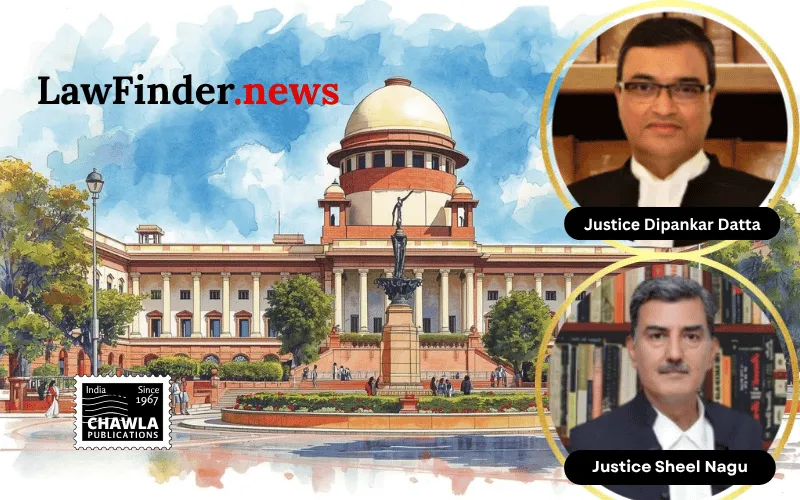
Court says prolonged pre-trial custody cannot become punitive detention when investigation is complete, chargesheets are filed, and trial is unlikely to end soon
The Supreme Court has granted bail to two accused in the Rajasthan Jal Jeevan Mission corruption case, holding that continued pre-trial incarceration would serve no useful purpose when investigation against them was complete and the prosecution’s case was largely based on documentary and electronic evidence already in the custody of the investigating agency.
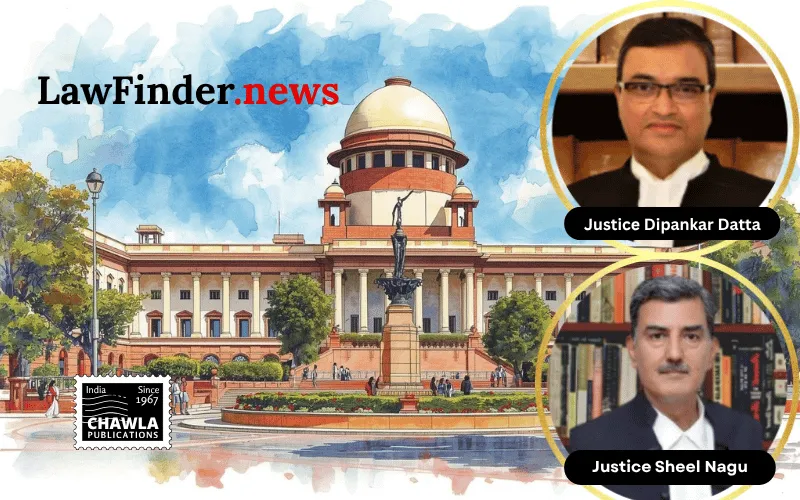
A bench of Justice Dipankar Datta and Justice Sheel Nagu set aside the Rajasthan High Court’s orders that had denied regular bail to Shubhanshu Dixit and Sanjay Badaya. The Court said that while economic offences involving deep-rooted conspiracy must be viewed seriously, personal liberty under Article 21 cannot be sacrificed where trial is not likely to conclude in the near future.
The case arose from allegations of large-scale irregularities in the award of public contracts under the Jal Jeevan Mission, a central and state initiative aimed at providing tap water connections to households. According to the prosecution, two contracting firms allegedly used forged and fabricated work-experience and completion certificates to secure eligibility and win around 104 tenders worth nearly Rs. 979.45 crore, causing substantial wrongful loss to the State exchequer.
The Court noted that the Anti-Corruption Bureau had already filed a chargesheet and supplementary chargesheet. It observed that the evidence was mainly documentary and electronic, and since those materials had already been seized, the risk of tampering was significantly reduced.
For Shubhanshu Dixit, a former Secretary of the Rajasthan Water Supply and Sewerage Management Board, the prosecution alleged that he ignored complaints and legal notices flagging the use of forged certificates and participated in meetings that approved the bids of the tainted firms. He was arrested on February 17, 2026. Sanjay Badaya, described by the prosecution as a private intermediary with influence over departmental functioning, was accused of facilitating bribe payments and influencing tender-related decisions. He was arrested on May 11, 2026.
The bench also took note of the fact that the case was still at a nascent stage, charges had not yet been framed, some accused were still under investigation, two accused were absconding, and sanction for prosecution of several public servants had been granted only later. With 124 witnesses proposed to be examined and voluminous records involved, the Court said the trial would likely take a long time.
Relying on the principle that pre-trial incarceration cannot amount to punishment, the Supreme Court said that keeping the appellants in custody any longer would not serve any fruitful purpose. It also considered parity, noting that one co-accused had already been granted bail by the High Court and the then PHED Minister had received bail in the corresponding PMLA proceedings.
The Court accordingly allowed the appeals, set aside the High Court’s orders, and directed that both appellants be released on bail subject to conditions to be imposed by the trial court. It further directed them to join investigation whenever called upon and to remain present before the trial court unless exempted. The Court clarified that its observations were limited to the bail issue and would not affect the merits of the trial.
Bottom Line:
Bail in economic offences - Even in serious corruption and conspiracy cases, prolonged pre-trial incarceration is not justified where investigation qua accused is complete, chargesheets are filed, evidence is mainly documentary/electronic and trial is not likely to conclude soon - Personal liberty under Article 21 must be protected.
Statutory provision(s): Sections 7(c), 9, 10, 12, 13(1)(a), 13(2), 19 of the Prevention of Corruption Act, 1988, Sections 409, 466, 467, 468, 471, 477-A, 120-B of the Indian Penal Code, 1860, Article 21 of the Constitution of India
Sanjay Badaya v. State of Rajasthan, (SC) : Law Finder Doc id # 2988315