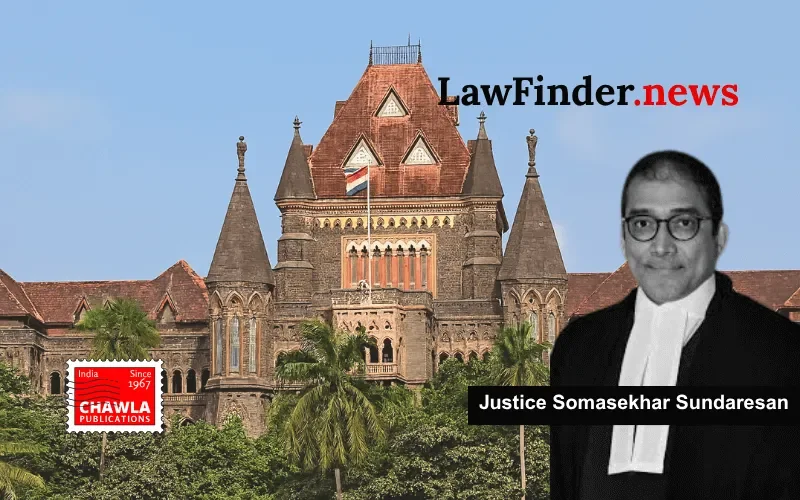
Court holds renewed Legal Proceedings Certificates relevant as evidence despite delay and objections, emphasizing trial to determine authenticity and probative value.
In a significant decision dated October 9, 2026, the Bombay High Court, presided over by Justice Somasekhar Sundaresan, allowed Colgate-Palmolive Company and Colgate-Palmolive (India) Limited ("Colgate") to mark into evidence renewed Legal Proceedings Certificates (LPCs) for trademark registrations in their trademark infringement suit against Anchor Health and Beauty Care Private Limited ("Anchor").
The suit, initiated in 1996, alleges infringement of registered trademarks owned by Colgate. The renewed LPCs pertain to six trademark registrations, originally part of the record, but the renewal certificates were sought to be admitted as evidence belatedly during the ongoing trial. Anchor had objected to the admission of these renewed certificates, arguing they constituted fresh evidence introduced at a late stage, violated procedural norms, and questioned the authenticity of the registry records due to missing original files and reconstructed registry documents.
The Court, after detailed analysis, clarified that the renewed LPCs were not evidence of new facts but merely administrative updates reflecting the renewal of existing registrations already on record. Five of the six registrations covered by the renewed LPCs were directly relevant to issues framed in the suit, with the sixth already supported by earlier evidence. The Court noted that Colgate's failure to tender the renewed LPCs at the earliest opportunity (July 10, 2019) was a lapse but not of such gravity as to exclude the documents altogether.
Addressing Anchor's concerns regarding the authenticity and integrity of the Trade Marks Registry records-especially the reconstructed files provided by Colgate-the Court held that such objections go to the probative value of the evidence, which can be tested during the trial. The statutory provisions under Sections 31 and 137 of the Trade Marks Act, 1999, provide that registrations and certified copies thereof are prima facie evidence of validity and admissible without further proof. However, the Court emphasized that the trial would determine the weight and truthfulness of these certificates.
Further, the Court endorsed the procedural course followed by the Court Commissioner, who had marked the documents for identification subject to the Court's decision, as consistent with the Full Bench ruling in Hemendra Rasiklal Ghia v. Subodh Mody (2008). It was held that objections to admissibility based on mode of proof or authenticity are to be decided at or after marking documents into evidence, not necessarily before.
The Court also observed that the ongoing delay of seven years in resolving this interim application had effectively stalled the trial since 2019 and that justice required allowing the renewed LPCs to be admitted to enable the suit to proceed. Costs were not imposed on Colgate despite the delay, considering the disproportionate hardship already suffered.
The renewed LPCs (marked as Exhibits P-50 to P-55) and two further renewals (marked as Exhibits P-56 and P-57) were allowed into evidence. Anchor retains the right to challenge their authenticity and probative value during trial. The Court also clarified that this order does not affect any pending rectification applications related to the trademarks.
This ruling underscores the principle that procedural technicalities should not impede substantive justice, especially in long-pending commercial disputes. It also affirms the evidentiary status of trademark registrations and renewals under the Trade Marks Act, while safeguarding the right to test authenticity and probative value through cross-examination and trial.
Bottom Line:
Trade Marks Act, 1999 - Renewal Legal Proceedings Certificates relating to trade mark registrations already on record can be permitted to be marked in evidence even at a later stage where they merely evidence renewal of existing registrations and are relevant to issues framed in suit - Such marking does not conclude probative value or truth of contents - Objections regarding authenticity, reconstructed registry records, and evidentiary weight remain open for trial.
Statutory provision(s): Trade Marks Act, 1999 Sections 31, 137; Code of Civil Procedure, 1908 Order XVIII Rule 4