Court sets aside trial court's rejection of summons application for Assistant Commissioner of CGST citing sufficient reasons and relevance to controversy, but upholds refusal for college principal as irrelevant witness
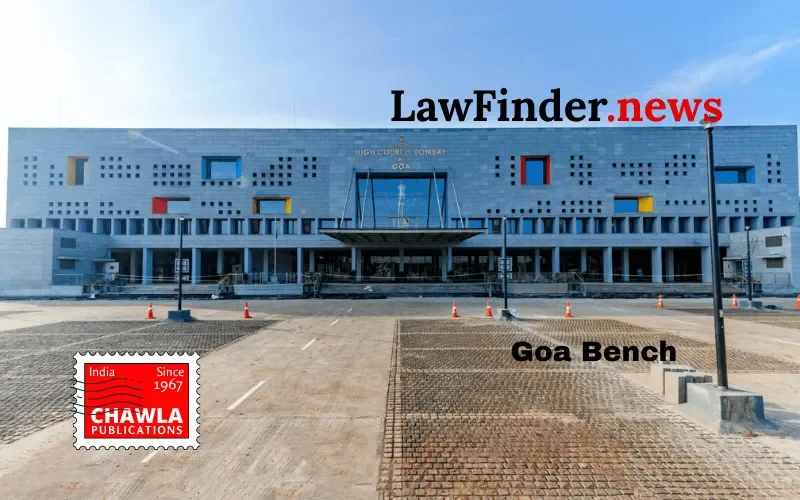
In a significant ruling dated October 21, 2026, the Bombay High Court (Goa Bench), presided over by Justice S.G. Chapalgaonkar, partially allowed a writ petition challenging the trial court's order rejecting the issuance of witness summons in a money recovery suit. The case, Imtiyaz Shaikh Z Chorlekar v. Salman Shaikh, involved a dispute over a contract for construction work and related bills amounting to over Rs. 20 lakh.
The petitioner, Mr. Imtiyaz Shaikh, had sought witness summons under Order XVI Rule 1(2) and (3) of the Civil Procedure Code (CPC) for the Assistant Commissioner of CGST and the Principal of Jain College of Engineering. The trial court had rejected the application on the ground that the petitioner failed to file the list of witnesses within the prescribed time and deemed the petitioner's conduct as an attempt to unnecessarily prolong the litigation.
On appeal, the High Court clarified that mere technical failure to file the witness list at the appropriate stage does not create an absolute bar against summoning witnesses through the court. The court emphasized that under sub-rule (3) of Rule 1 of Order XVI CPC, the court has discretionary power to allow issuance of summons for witnesses if the party provides sufficient reasons for the delay and if the evidence is necessary for resolving the real controversy.
The petitioner explained that before seeking summons, he had attempted to obtain relevant GST information from the Assistant Commissioner of CGST through a Right to Information (RTI) application. Only after failing to secure the necessary information did the petitioner move for witness summons. The High Court found this explanation satisfactory and held that the Assistant Commissioner's testimony was indeed relevant to contest the validity of GST registration and invoices produced by the respondent-plaintiff, who had denied the contract and alleged forgery of bills.
Conversely, the court found no relevance in summoning the Principal of Jain College of Engineering, as the witness had no bearing on the factual dispute between the parties.
The High Court's order sets aside the trial court's refusal to summon the CGST official, allowing the petitioner to examine this witness, while upholding the rejection concerning the college principal. This decision reiterates the principle that courts should adopt a flexible and pragmatic approach in permitting witnesses to ensure that justice is served and the real issues in dispute are effectively adjudicated.
The judgment also draws upon precedents from various High Courts and the Supreme Court emphasizing that procedural technicalities should not overshadow substantive justice, especially when the examination of witnesses is crucial to the controversy.
The writ petition was disposed of accordingly, with the application for issuance of summons to the Assistant Commissioner of CGST deemed allowed.
Bottom Line:
Civil Procedure Code, Order XVI Rule 1(2) and (3) - Mere failure to file list of witnesses within time does not by itself bar a party from seeking summons through Court - If sufficient reasons are shown and proposed evidence is necessary for determining the real controversy, Court may permit issuance of witness summons - However, summons cannot be issued for an irrelevant witness.
Statutory provision(s):
Civil Procedure Code, 1908 Order XVI Rule 1(2), Order XVI Rule 1(3), Right to Information Act, 2005, Constitution of India Article 227
Imtiyaz Shaikh Z Chorlekar v. Salman Shaikh, (Bombay)(Goa Bench) : Law Finder Doc Id # 3001383