In a landmark suo motu PIL, the Court directs ban on laser lights in processions, mandates decibel monitoring, security deposits for permissions, and warns of criminal prosecution under BNS 2023 and Environment Protection Act for violations
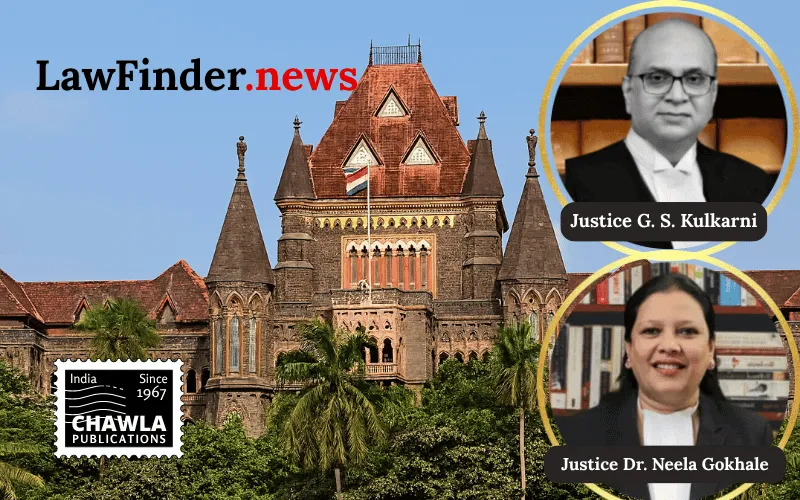
The Bombay High Court has delivered a sweeping set of directions aimed at curbing the rampant noise and air pollution caused by the unregulated use of loudspeakers, amplifiers, firecrackers, and other sound-producing devices on public streets during festivals across Maharashtra. A Division Bench comprising Justice G.S. Kulkarni and Justice Dr. Neela Gokhale took suo motu cognizance of the alarming deterioration in noise pollution levels during festive seasons and initiated Public Interest Litigation proceedings to address the crisis.
The Court, in its order dated 22 September 2026, imposed a total ban on the bursting of firecrackers on public streets, roads, and thoroughfares during festivities, observing that such activity poses grave dangers to pedestrians, motorists, and the general public. The bench expressed deep concern over the absence of any disclosure regarding decibel levels or toxicity of smoke generated by firecrackers that are openly sold and used during festivals, calling it "an unregulated area" that demands stringent intervention.
Going beyond firecrackers, the Court also banned the use of laser lights, high-intensity lumen lights, and beams during processions and festivities, recognizing them as hazards to public safety. The Court directed police authorities and other designated officials to actively measure decibel levels at procession sites and venues, take stringent action against unlicensed or unauthorized use of sound systems, and seize and confiscate offending devices upon detecting any breach.
In a significant procedural direction, the Court mandated that all organizers seeking permission to use noise-generating devices must install "Decibel Measurement Meters" at every venue and procession, displayed at conspicuous locations visible to both authorities and the public. Additionally, organizers must furnish undertakings confirming that all sound systems are fitted with internal sound limiters. Decibel levels, both singular and cumulative, must be recorded by designated officials in the presence of representatives of permission holders, and proper records must be maintained.
The bench introduced a financial accountability mechanism by directing authorities to consider collecting substantial security deposits — not less than Rs. 1,00,000 for associations or groups and Rs. 50,000 for individuals — as a precondition for granting permissions under the Noise Pollution (Regulation and Control) Rules, 2000. If decibel limits are breached, these deposits shall stand forfeited, in addition to further legal action.
The Court also directed that all organizers must prominently display their permissions along with the names, addresses, and mobile numbers of all responsible persons, so that accountability for any violation can be easily identified and fixed. Authorities were instructed to assess the cumulative impact of multiple permissions granted in a single ward before sanctioning any new permission, emphasizing that without a methodical and scientific assessment, permissions should not be granted.
Referring extensively to the Supreme Court's decision in Noise Pollution (V) In Re (2005) 5 SCC 733 and the Bombay High Court's earlier detailed directions in Dr. Mahesh Vijay Bedekar v. State of Maharashtra (2016), the bench noted that despite a wealth of judicial pronouncements, enforcement on the ground has been dismal. Justice Kulkarni observed that the noise pollution norms have remained "paper provisions" and that the "sad ground reality" of brazen violations cannot be wished away by the authorities reciting "All is well."
The Court underscored that festivals do not create any exemption from compliance with noise pollution regulations. Referring to Article 21 of the Constitution, the bench reiterated that citizens have fundamental rights to leisure, sleep, and freedom from noise, and that violations of these norms amount to a breach of constitutional guarantees, particularly affecting senior citizens, sick persons, students preparing for examinations, and young children.
The bench commended the proactive steps taken by the Commissioner of Police in Nagpur, Solapur, and Dhule, who had issued notifications banning high-intensity sound devices, modified vehicles carrying multi-speaker systems, and other noise-generating equipment during the festive period, questioning why similar measures had not been adopted in Mumbai, Thane, Pune, and Nashik.
Senior Advocate Aspi Chinoy, appearing as Amicus Curiae, argued that the need of the hour is a robust preventive mechanism rather than a reactive complaints-based approach. Senior Advocate S.M. Gorwadkar, representing intervenor Dr. Mahesh Bedekar, presented evidence that decibel levels in Thane consistently exceeded 90 dB(A) against the permissible maximum of 75 dB(A), and highlighted the dangerous use of metallic cylinders in processions.
The Court warned that violation of its directions would attract penal consequences under the Noise Pollution Rules read with the Environment (Protection) Act, 1986, prosecution under relevant provisions of the Bharatiya Nyaya Sanhita, 2023 for public nuisance, and action under the Explosives Act, 1884 and other applicable statutes.
The matter has been adjourned to 15 October 2026 for compliance review.
Bottom Line :
Noise pollution and public nuisance caused by unregulated use of loudspeakers, music systems, firecrackers, laser lights and high-intensity sound devices during festivals on public streets must be strictly curbed; authorities are bound to enforce the Noise Pollution (Regulation and Control) Rules, 2000 in letter and spirit.
Statutory provision(s): Noise Pollution (Regulation and Control) Rules, 2000 – Rules 2, 3, 4, 5, 5A, 6, 7, 8; Environment (Protection) Act, 1986 – Sections 3, 6, 19, 25; Environment (Protection) Rules, 1986 – Rule 5; Article 21 of the Constitution of India, 1950; Maharashtra Police Act, 1951 – Sections 10(2), 37(3), 38; Bharatiya Nyaya Sanhita, 2023; Bharatiya Nagarik Suraksha Sanhita, 2023 – Section 163; Explosives Act, 1884; Air (Prevention and Control of Pollution) Act, 1981 – Section 2(a)