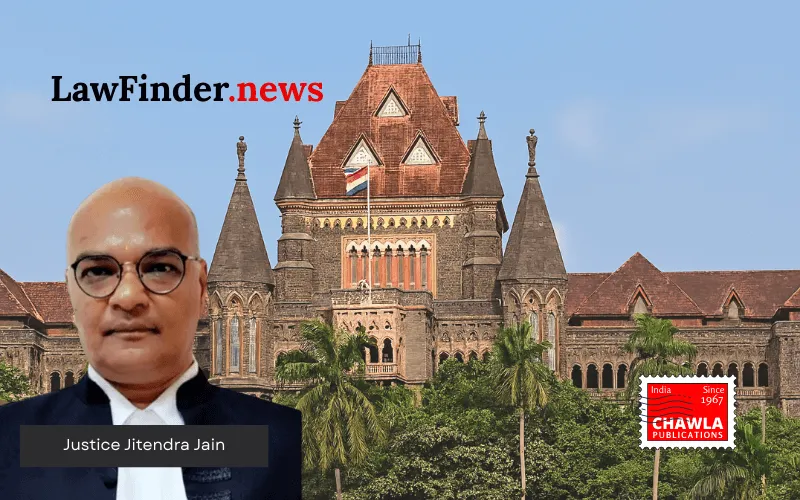
Judgment affirms that creditors need not possess a decree to lodge claims with the Official Assignee in insolvency proceedings.
In a significant ruling, the Bombay High Court has clarified the process for creditors to file claims in insolvency proceedings, stating that it is not mandatory for creditors to hold a decree or final adjudication order to make a claim with the Official Assignee. The judgment, delivered by Justice Jitendra Jain on July 2, 2026, addresses the long-standing question of whether a decree is necessary for creditors to lodge claims in insolvency cases under the Presidency-Towns Insolvency Act, 1909.
The case arose from objections by the Official Assignee, who insisted that creditor claims required a court decree or final adjudication. This stance was challenged, leading to a comprehensive review of the relevant statutory provisions and past judgments.
Justice Jain's judgment emphasizes that the Act's inclusive definitions of "creditor" and "debt" indicate that possessing a decree is not a pre-condition for making a claim. The decision underlines the broad authority of the Official Assignee to independently verify and adjudicate claims, ensuring fair treatment of all creditors, not just those with decrees.
The court examined multiple provisions within the Act, including Sections 2, 6, 9, 17, 46, and 48, which collectively suggest that creditors can lodge claims based on debts, irrespective of whether they have secured a court decree. The judgment also highlighted that pending legal proceedings concerning debts can continue before the appropriate forums, and the Official Assignee should not act as a substitute for such adjudications.
Justice Jain further clarified that the role of the Official Assignee is not judicial; instead, it involves verifying claims, managing assets, and distributing dividends equitably. The court's decision aligns with similar interpretations under the Insolvency and Bankruptcy Code (IBC), emphasizing that insolvency proceedings aim to benefit the general body of creditors.
The ruling is expected to streamline insolvency processes, reducing unnecessary legal hurdles for creditors. It reinforces the principle that insolvency proceedings should not be treated as execution courts solely for decree-holders, but as mechanisms for equitable distribution among all creditors.
The judgment has been welcomed by legal experts and insolvency practitioners, who see it as a step towards more efficient and fair insolvency resolutions. The decision is poised to impact numerous pending and future insolvency cases, guiding creditors in effectively pursuing their claims within the legal framework.
Bottom line:-
In insolvency proceedings under the Presidency-Towns Insolvency Act, 1909, a creditor need not hold a decree or final adjudication order to make a claim before the Official Assignee. The Official Assignee is empowered to independently examine and verify the claim before admitting or rejecting it. Pending legal proceedings concerning debts can continue before the appropriate forum, and the Official Assignee is not a substitute for such adjudication.
Statutory provision(s): Presidency-Towns Insolvency Act, 1909, Sections 2(a), 6, 9, 17, 18, 46, 48, 68
Uttamchand Devichand Shah, (Bombay) : Law Finder Doc id # 2933829