Court says public toilets near protected monuments are excluded from “construction” under law and stresses sanitation, heritage protection, and public convenience must go hand in hand
In a significant ruling balancing heritage conservation with public sanitation, the Bombay High Court’s Aurangabad Bench has quashed communications issued by the State Archaeological Department that had stopped the construction of a toilet block near Dargah Hazrat Sayed Shah Raju Khattal Husaini at Khuldabad.
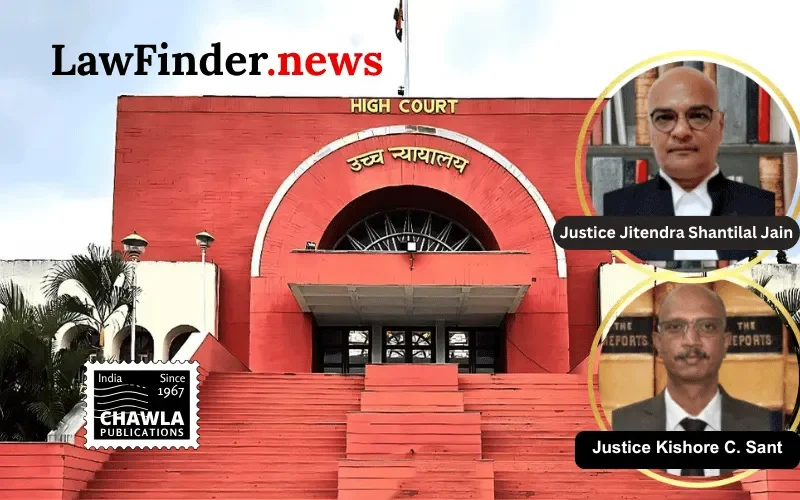
The Division Bench of Justice Kishore C. Sant and Justice Jitendra Jain, in its judgment dated 4 November 2026, held that the proposed toilet block, though located within 100 metres of the protected monument, did not require permission under Section 21 of the Maharashtra Ancient Monuments and Archaeological Sites and Remains Act, 1960 on the ground urged by the authorities.
The petition was filed by the Mutawalli of the Dargah challenging letters dated 31 October 2018 and 2 November 2018 issued by the State Archaeological Department directing the Municipal Council to stop construction work. The Municipal Council supported the petitioner, while the State and its Archaeological Department opposed the plea.
The court noted that funds for the toilet block had been provided under Government Resolutions dated 3 August 2015 and 2 March 2017 for implementation of the Swachh Bharat Abhiyan and recommendations of the 14th Finance Commission, with the objective of preventing open defecation. The Municipal Council had sought and obtained a no-objection from the Dargah before starting the work.
The State argued that since the toilet block was being built within 100 metres of a protected monument, prior permission under Section 21 of the 1960 State Act was mandatory. It also relied on powers under Section 17(1)(c)(ii) and a 1982 circular prohibiting toilets near protected monuments.
Rejecting this stand, the High Court held that the State Act does not define the term “construction,” and by virtue of Section 42, the State law operates in addition to the Ancient Monuments and Archaeological Sites and Remains Act, 1958. The Bench referred to Section 2(dc) of the Central Act, which specifically excludes “public latrines, urinals and similar conveniences” from the definition of “construction.”
On that basis, the court ruled that a toilet block cannot be treated as “construction” for the purpose of invoking the statutory bar under Section 21. It said the Archaeological Department’s reliance on lack of permission was therefore unsustainable.
The Bench also underlined that sanitation facilities near a place of worship and tourist destination support, rather than undermine, the object of heritage protection. It observed that in the absence of toilets, devotees and tourists visiting in large numbers would face hardship, and the surrounding area of the Dargah could become untidy and polluted. Such a situation, the court said, would harm the monument and its vicinity more than the construction of a toilet block situated away from the Dargah boundary, even if within 100 metres.
Referring to Sections 14 and 16 of the State Act, the court said the obligation to protect a monument includes protecting it from pollution and desecration. It held that provision of basic amenities such as toilets is consistent with the statutory purpose of preservation.
The High Court also took a progressive view of the 1982 circular relied upon by the State, observing that attitudes toward sanitation have changed substantially since then. It said that heritage promotion cannot be achieved without basic visitor amenities and that the issue must be approached in light of modern sanitation goals, including the national drive against open defecation.
To support this approach, the Bench cited policy materials including a NITI Aayog working group report on heritage management recommending toilets and visitor amenities near heritage sites, as well as a Comptroller and Auditor General report highlighting the severe lack of basic facilities such as toilets, drinking water, ramps, and wheelchairs at protected monuments across the country.
The court also relied on earlier judicial precedents, including the Supreme Court’s decision in Ardhendu Kumar Das v. State of Odisha and the Bombay High Court ruling in Parisar Sanrakshan Sanwardhan Sanstha v. Pune Municipal Corporation. These decisions recognized that toilets, drains, water supply, electricity and similar public facilities are excluded from the statutory meaning of “construction” and may be permitted even in prohibited areas, subject to heritage concerns.
While allowing the petition, the High Court quashed the stop-work communications and directed Respondent No. 3 to decide within two weeks the petitioner’s pending application dated 7 December 2018 seeking withdrawal of the objections and permission to proceed. The authority has been asked to hear both the petitioner and the Municipal Council and decide the matter on grounds other than those already settled by the court.
At the same time, the Bench left it open to the parties to mutually agree on any other suitable location for the toilet block.
The ruling is likely to have wider implications for management of protected monuments and religious heritage sites, especially where public sanitation and visitor facilities are urgently needed. By recognizing that preservation includes protection from pollution and lack of civic amenities, the judgment marks an important shift toward a more practical and public-oriented understanding of heritage law.
Bottom Line:
Ancient Monuments Law - Construction of toilet block near protected monument/place of worship - Public latrines and similar conveniences are excluded from definition of "construction" under Central Act - Hence, permission under Section 21 of Maharashtra Ancient Monuments and Archeological Sites and Remains Act, 1960 not required on that ground - Stoppage of construction quashed - Court adopted progressive approach balancing heritage protection with sanitation and public convenience.
Statutory provision(s): Sections 14, 16, 17, 17(1)(c)(ii), 21, 42 of the Maharashtra Ancient Monuments and Archeological Sites and Remains Act, 1960, Section 2(dc) of the Ancient Monuments and Archaeological Sites and Remains Act, 1958, Section 20-C of the Ancient Monuments and Archaeological Sites and Remains Act, 1958, Persons with Disability (Equal Opportunities, Protection of Rights and Full Participation) Act, 1995