Court emphasizes necessity of detailed grounds in constitutional challenges; imposes costs on petitioner for vague allegations
In a significant ruling dated August 21, 2026, the Bombay High Court (Nagpur Bench) dismissed a writ petition filed by Muhammad Qaisar Farooq challenging the constitutional validity of the Maharashtra Freedom of Religion Act, 2026. The petition sought to declare the Act or certain key provisions thereof unconstitutional, particularly focusing on aspects such as prior notice, public display, penalties, burden of proof, and third-party complaints. The petitioner also prayed for a restraint on the enforcement of the Act by the respondents, the State of Maharashtra and another.
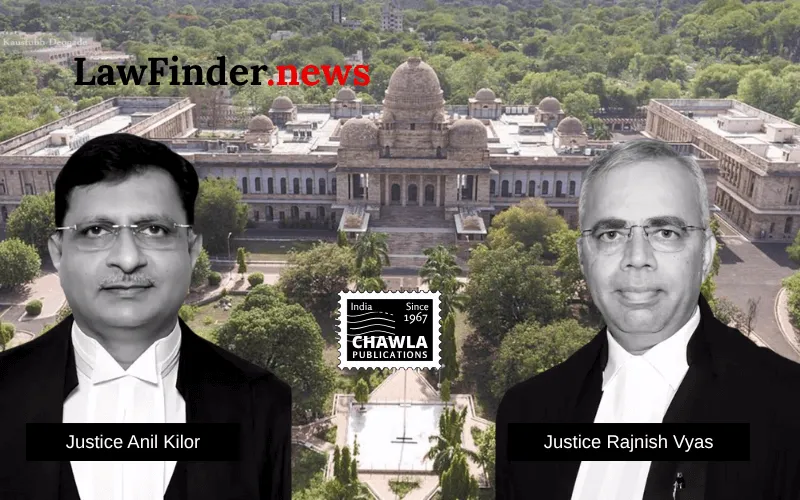
However, the Division Bench comprising Justices Anil S. Kilor and Rajnish R. Vyas found the petition to be lacking in specific pleadings and detailed grounds necessary to mount a constitutional challenge. The Court observed that the petitioner’s submissions were vague, general, and did not clearly specify which parts of the Act were being challenged or on what precise constitutional grounds. The petition merely alleged contraventions of Articles 14 (Equality before law), 19(1)(a) (Freedom of speech and expression), 21 (Protection of life and personal liberty), and 25 (Freedom of religion) of the Constitution of India without elaborating the nexus between these provisions and the impugned statute.
The Court underscored the settled legal position that courts must presume the constitutionality of legislation enacted by competent legislative bodies. It is the burden of the petitioner to establish, through clear and specific pleadings, that the statute is unconstitutional. The Court referred to several authoritative Supreme Court judgments reiterating that mere vague or general allegations are insufficient to invoke judicial scrutiny on constitutional validity.
In particular, the Court relied on the Supreme Court’s judgment in Kusum Ingots & Alloys Ltd. v. Union of India (2004), where it was held that a writ petition must plead facts that give rise to a cause of action linked to the relief sought. The Court also cited the recent Supreme Court decision in Union of India v. Manjurani Toutray (2023), emphasizing the indispensability of specific pleadings when challenging statutory provisions or rules. Another key precedent quoted was Haji Abdul Gani Khan v. Union of India (2023), which stressed that constitutional courts cannot interfere with legislation unless the challenge is articulated with precise grounds so that the State has a fair opportunity to defend the law.
The Court expressed that the petition’s vague and generalized allegations resulted in a wastage of precious judicial time. Consequently, it imposed a cost of Rs. 500 on the petitioner, payable to the High Court Legal Aid Services Sub Committee, Nagpur, within one week. The Court clarified that the petitioner remains free to file a fresh petition with appropriate and specific pleadings after thorough research and study.
This judgment reiterates the judicial principle that constitutional challenges to legislation must be supported by clear and detailed pleadings and that courts do not entertain such challenges based on assumptions or vague assertions. It safeguards the presumption of constitutionality and ensures that judicial resources are used judiciously.
Bottom Line:
Constitutional challenge to statutes or rules cannot be entertained by courts in the absence of specific pleadings and detailed grounds outlining the unconstitutionality. Courts cannot interfere with legislative acts based on vague allegations or assumptions of unconstitutionality. Proper research and specific pleadings are prerequisites for such challenges.
Statutory provision(s):
Maharashtra Freedom of Religion Act, 2026; Articles 14, 19(1)(a), 21, 25 of the Constitution of India
Muhammad Qaisar Farooq v. State of Maha., (Bombay)(DB)(Nagpur Bench) : Law Finder Doc Id # 2976014