Court says OCI holders and Indian citizens have distinct legal rights, but keeps deportation notice in abeyance after petitioner’s undertaking and unconditional apology
The Bombay High Court has continued interim protection to Imran Khan Pal, an Overseas Citizen of India (OCI) card holder and United States passport holder, who challenged a “Leave India” notice issued by the Foreigners Regional Registration Officer (FRRO).
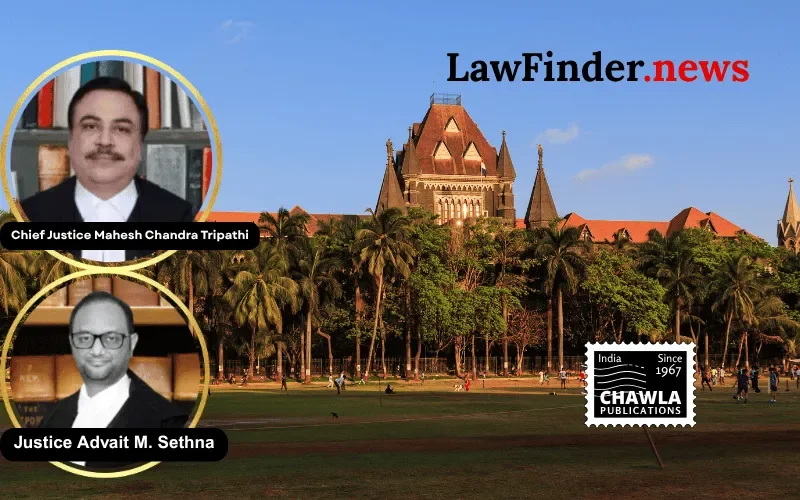
A Division Bench comprising Chief Justice Mahesh Chandra Tripathi and Justice Advait M. Sethna heard the matter in Writ Petition (L) No. 36271 of 2026 on November 2, 2026. The court did not finally decide the legality of the deportation-related notice at this stage, but allowed the petitioner to remain in India for the time being and directed the Union of India to file a detailed affidavit-in-reply.
The case arose from a notice dated October 14, 2026, directing Pal to leave India. Earlier, on October 27, the High Court had kept the notice in abeyance until the next hearing. On Monday, the bench continued that interim protection in view of the petitioner’s undertaking and the absence of a reply affidavit from the Union government.
Senior Advocate Venkatesh Dhond, appearing for Pal, argued that the petitioner was neither concerned with nor connected to the protest in question and was not present at the protest site in the manner alleged. He emphasized that Pal has been living in India for around 42 years, holds an OCI card issued in 2006, and had fairly acknowledged the legal limitations of being an OCI holder rather than an Indian citizen.
The petitioner also filed an undertaking dated October 27, 2026, stating that he would not participate in any protests in the future, nor directly or indirectly influence or instigate others to do so. Through counsel, Pal also tendered an unconditional apology before the court.
The undertaking stated that Pal had no intention to make demands during his limited remarks to the media and that he was only present to understand why movement was being restricted and voices were being “oppressed and suppressed.” He further said that he had no criminal antecedents, had lived in India since the age of two, and that his life, family, profession and affiliations were rooted in the country.
Opposing the petition, Additional Solicitor General Anil C. Singh argued that an OCI card holder is a foreigner in law and not an Indian citizen. He contended that the rights of such a person are restricted and limited, and that the Centre, acting through the FRRO, has the authority to deport such a person. The State government also informed the court that an FIR had been lodged against the petitioner.
In its order, the High Court observed, prima facie, that “there can be no quarrel with the proposition that the rights of an OCI card holder and an Indian citizen operate in distinct and different spheres.” The bench thus accepted, at least at this preliminary stage, the broad legal position that OCI status does not place a person on the same footing as a citizen under the Constitution.
At the same time, the court also noted that no affidavit-in-reply had yet been filed by the Union of India. It further recorded that the last date for the petitioner to leave India under the impugned notice was October 28, 2026, which had already passed and had been extended only because of the court’s earlier ad interim order.
The bench observed that the State, in exercise of its sovereign powers, has the right to deport a person from India in an appropriate case. However, before taking a final view, it considered it necessary to have the Union government’s detailed stand on record.
Taking note of the petitioner’s undertaking and unconditional apology, the court permitted the Union of India to file its affidavit-in-reply within three weeks from the uploading of the order. The petitioner was granted liberty to file a rejoinder within one week thereafter.
The matter has now been listed for final hearing as the first item on December 7 at 3 p.m. The court said it would endeavor to hear and decide the petition finally on that date.
Pending the final hearing, the bench made it clear that Pal is expected to remain in India as a law-abiding person and not associate with or indulge in any activities or protests. In a significant observation, the court noted that such protest-related rights are available to citizens of the country under the Constitution of India, underlining again the distinction between citizens and OCI card holders.
The order is significant because it balances two competing considerations: the sovereign power of the State to deport foreigners, and the need for procedural fairness before such action is sustained in court. While the High Court did not dilute the government’s authority over foreign nationals and OCI holders, it also refused to permit immediate enforcement of the notice without first calling for a formal response from the Union government.
Bottom Line:
Foreigners/OCI - Challenge to Leave India Notice issued to OCI card holder - Court held prima facie that rights of an OCI card holder and an Indian citizen operate in distinct and different spheres - State in exercise of sovereign functions has right to deport a person in a given case - However, considering petitioner's undertaking not to participate in protests in future and unconditional apology, Court took undertaking on record, granted time to Union to file affidavit-in-reply and continued interim protection.
Statutory provision(s): Constitution of India, Foreigners Act 1946, Citizenship Act 1955, Overseas Citizen of India (OCI) framework, Leave India Notice issued by FRRO
Imran Khan Pal v. Union of India, (Bombay)(DB) : Law Finder Doc id # 3009819