Court appoints Court Receiver with police assistance after defendant's associates obstruct enforcement of interim injunction in Asian Paints' suit for trademark and trade dress infringement.
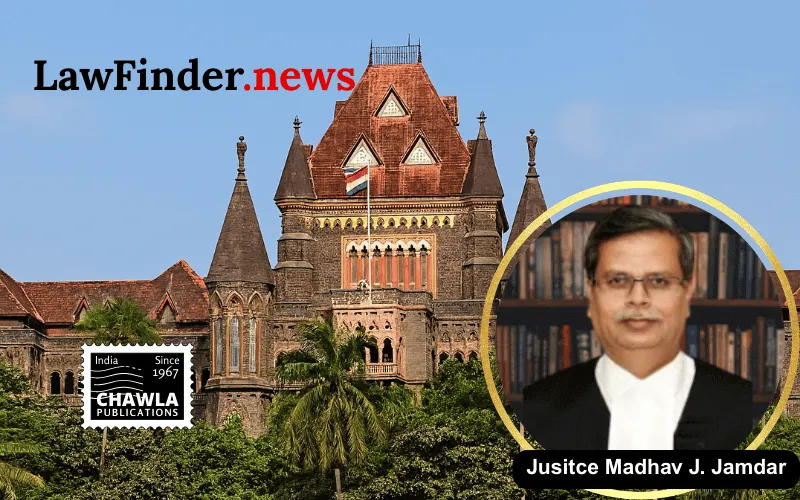
In a significant judgment delivered on August 31, 2026, the Bombay High Court, presided over by Justice Madhav J. Jamdar, granted an ex parte ad-interim injunction in favor of Asian Paints Limited in a high-profile trademark infringement suit against Deepak Kumar Panwar. The case centers on allegations that the defendant blatantly copied Asian Paints' registered trademarks and distinctive packaging trade dresses, thereby infringing its intellectual property rights.
Asian Paints, a leading Indian multinational with a legacy dating back to 1942, holds registered trademarks including `APEX', `ULTIMA/APEX ULTIMA', and `ACE', which it has used extensively in the paint and related products market. The company presented detailed evidence showing that the defendant's products bore packaging and trade dresses strikingly similar to Asian Paints' artistic labels, including identical color schemes, layout, typography, and distinctive design elements such as vertical purple strips and radial sunburst backgrounds.
The Court found a strong prima facie case of infringement, noting that the defendant had replicated essential and memorable features of the plaintiff's trade dresses and trademarks on products marketed under deceptively similar marks like "ULTIMATE" and "AFEX." Consequently, the Court restrained the defendant and all associated persons from using or dealing in goods bearing the impugned marks or packaging that were identical or deceptively similar to Asian Paints' registered trademarks and artistic trade dresses.
To enforce the order, the Court appointed a Court Receiver empowered under Order XL Rule 1 and Order XXXIX Rule 7 of the Code of Civil Procedure, 1908, to search the defendant's premises and seize infringing goods and materials. Given the defendant's location in Uttar Pradesh, the Court also appointed an Additional Special Receiver, Advocate Deepak Khandelwal, to assist in executing the order with police support.
However, in a dramatic turn of events, the Additional Special Receiver reported that enforcement was obstructed by the defendant's brother, Amit Panwar, an advocate, who along with about ten associates, physically prevented the execution of the Court's order at the defendant's factory premises in Ghaziabad. The report detailed aggressive behavior, refusal to cooperate, deletion of photographic evidence from plaintiffs' representatives' mobile phones, and physical altercations.
Responding to this obstruction, the Bombay High Court ordered the Court Receiver to take forcible possession of the defendant's entire premises by breaking open locks if necessary. The local police at Nandgram Police Station were directed to provide all assistance to the Court Receiver to ensure the order's effective execution. The plaintiff was directed to bear the costs of the Court Receiver and police assistance, and also to furnish an undertaking to safeguard the premises and seized materials.
While the Court found a prima facie case for contempt proceedings against Amit Panwar and his associates, it afforded them an opportunity to file a reply and appear before the Court on the next date.
The Court has scheduled further hearing on September 10, 2026, to consider the contempt issue and to review the progress of enforcement. The Court Receiver and Additional Special Receiver are to submit detailed reports on or before mid-September 2026.
This judgment underscores the judiciary's firm stance on protecting intellectual property rights and ensuring compliance with its orders, even in the face of blatant obstruction. It also highlights the procedural rigor and powers vested in Court Receivers to enforce injunctions effectively.
Bottom Line:
Intellectual Property Rights - Trademark and trade dress infringement - Defendant's blatant copying of Plaintiff's trademarks, packaging, and trade dresses - Court Receiver appointed to take possession of Defendant's premises and impugned goods to enforce the Court's order.
Statutory provision(s):
Code of Civil Procedure, 1908 - Order XL Rule 1, Order XXXIX Rule 7; Trade Marks Act, 1999
Asian Paints Limited v. Deepak Kumar Panwar, (Bombay) : Law Finder Doc Id # 2974692