Arrest and custody vitiated as court finds failure to provide statutory written factual grounds under Article 22(1) of Constitution and Section 47 of Bharatiya Nagarik Suraksha Sanhita, 2023; no bail bond or surety required for release.
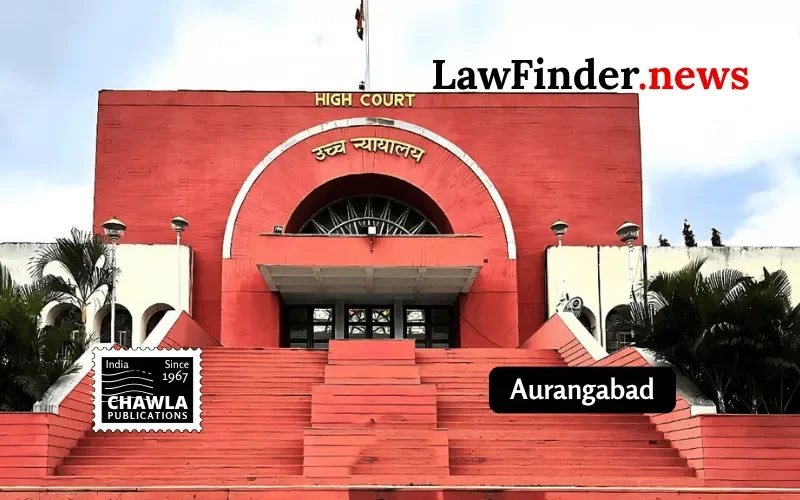
In a landmark judgment dated 1 October 2026, the Aurangabad Bench of the Bombay High Court, presided over by Justice Hiten S. Venegavkar, ordered the immediate release of Krushna Arun Shingare, who was arrested in connection with a serious public shooting incident under Crime No. 01 of 2026 at Shrirampur City Police Station, Maharashtra. The Court found that the arrest was illegal and the consequent custody was vitiated due to failure by the State to furnish the applicant with the written factual grounds of arrest, as mandated under Article 22(1) of the Constitution of India and Section 47 of the Bharatiya Nagarik Suraksha Sanhita (BNSS), 2023.
The applicant faced charges under Sections 103(1), 109(1), and 3(5) of the Bharatiya Nyaya Sanhita, 2023, and Section 3 read with Section 25 of the Arms Act, 1959, following the fatal shooting of Aslam Shabbir Shaikh on 31 December 2025. Despite the gravity of allegations and substantial investigative material including recovery of firearms, CCTV footage, and witness statements, the Court emphasized that the constitutional and statutory safeguards in arrest procedures cannot be compromised.
The crux of the case rested on the State's failure to provide Krushna Shingare with a written document outlining the factual basis for his arrest. The documents served to the applicant merely identified the crime number, police station, penal sections, and stated the offence was cognizable and non-bailable but did not communicate any intelligible factual accusation or role attributed to the applicant. The Court distinguished between the statutory requirement to inform the arrested person of the grounds of arrest and the separate duty to inform a relative about the arrest. Merely informing a relative or recording that grounds were explained orally does not satisfy the obligation to furnish written factual grounds in a language understood by the accused.
The Court referred extensively to recent Supreme Court precedents, including Mihir Rajesh Shah v. State of Maharashtra (2026), which mandates furnishing written grounds within a reasonable time and at least two hours before the accused's production before a magistrate. The Court rejected the State's reliance on the presence of counsel, absence of immediate protest, and general remand orders as sufficient compliance. It held that the failure to communicate written grounds invalidates the arrest and custody, regardless of the seriousness of the allegations.
Further, the Court acknowledged the rights of the victim's wife and informant to be heard independently in bail proceedings, underscoring the victim's right to a fair hearing under the BNSS, 2023.
While ordering the applicant's release forthwith without requiring any bail bond or surety, the Court clarified that this order does not quash the FIR, charge sheet, or trial, which shall proceed in accordance with law. The applicant was directed to comply with all lawful processes and refrain from intimidating witnesses.
The Court also mandated the Superintendent of Police to ensure protection of witnesses and directed the Director General of Police, Maharashtra, to circulate the judgment to police authorities and judicial officers for strict compliance with Supreme Court directions on arrest procedures.
Attempts by the informant and victim's wife to seek a four-week stay on the release were rejected by the Court, emphasizing that unlawful custody cannot be prolonged for procedural convenience or pending appeals.
This judgment reinforces the constitutional and statutory safeguards against illegal arrests and affirms the judiciary's role in upholding fundamental rights even in cases involving grave offences.
Bottom Line:
Arrest - Illegal arrest - Written factual grounds of arrest not furnished to accused - Mere mention of crime number, penal sections, purpose of arrest, arrest memo entry, intimation to relative, presence of advocate and remand recital are not sufficient compliance with Article 22(1) of Constitution of India and Section 47 of BNSS - Arrest and consequential custody vitiated - Accused directed to be released forthwith without bail bond or surety.
Statutory provision(s): Article 22(1) of Constitution of India, Section 47 and Section 48 of Bharatiya Nagarik Suraksha Sanhita, 2023, Sections 103(1), 109(1), 3(5) of Bharatiya Nyaya Sanhita, 2023, Sections 3 and 25 of Arms Act, 1959
Krushna Arun Shingare v. State of Maharashtra, (Bombay) : Law Finder Doc Id # 2994723