Court directs ward-wise action, strict prosecution against littering, source segregation, and better complaint redressal to protect citizens’ right to a clean environment
The Bombay High Court has issued a strong set of directions to the Municipal Corporation of Greater Mumbai (MCGM) and other authorities over persistent garbage dumping on public streets and the foul odour emanating from the Kanjurmarg dumping site.
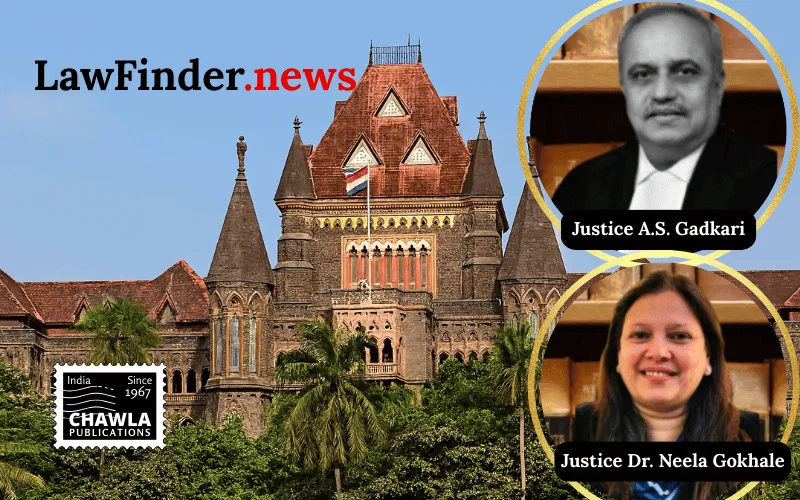
A Division Bench of Justices G. S. Kulkarni and Dr. Neela Gokhale expressed concern that repeated assurances by the municipal machinery had not translated into ground-level action. The Court noted that photographs placed on record showed a “dismal state of affairs,” with litter, trash, and unauthorised dumping continuing unabated on roads, pavements, lanes, bye-lanes, and spaces below flyovers.
The Bench said the municipal system appeared “totally inactive” and directed the Municipal Commissioner to “put the house in order” by fixing accountability of ward officers and their subordinates responsible for maintaining health and hygiene in public areas. The Court also asked the corporation to file an affidavit naming the officers concerned ward-wise and to place on record its standard operating procedure for cleanliness drives and accountability measures.
Taking a strict view of public littering, the Court said the MCGM must activate a mechanism to launch prosecution against persons indulging in illegal dumping of garbage under the Bharatiya Nyaya Sanhita, the Mumbai Municipal Corporation Act, and environmental laws. It also emphasised the need for police assistance and recovery of maximum fines. The judges observed that citizens have a legal right to clean and hygienic public spaces and that dumping of waste in public areas is a public nuisance that must be dealt with firmly.
The Court referred to Singapore’s anti-littering regime as an example of stringent enforcement, noting that public sanitation cannot be left to a “hands-off approach.” It observed that the State Government should consider a uniform policy to ensure effective enforcement across municipal corporations, especially in large cities like Mumbai and Pune.
On the issue of foul odour from the Kanjurmarg dumping site, the Bench found the complaint mechanism to be overly formalistic and ineffective. It directed respondent no. 7 to accept grievances by email and ensure that complaints are addressed in real terms, not merely registered on paper. The Court said that if the dumping site continues to generate odour or pollution, it could invite punitive orders, especially where citizens’ health is affected.
The judges also recorded that the odour was being generated during segregation and churning of waste at the site. They held that strict implementation of source segregation norms under the Solid Waste Management Rules, 2026 was essential. The MCGM was directed to enforce segregation at all possible sources, including commercial establishments, residential colonies, societies, and individual houses, and to obtain ward-wise undertakings from stakeholders.
The Court further asked the corporation to consider setting up a Group Task Force and ward-wise mechanism to ensure strict implementation of the Solid Waste Management Rules. The proposed task force, it said, should include citizen representatives and experts. The Bench also noted that a Special Cell had already been created under the orders of the District Collector in line with directions of the Supreme Court in Bhopal Municipal Corporation v. Dr. Subhash C. Pandey.
Another issue raised before the Court concerned possible deficiencies in the new rules relating to ambient air quality monitoring. Since the Union of India had not been appearing in the matter, the Bench directed the learned Additional Solicitor General to appear, calling the issue one of “seminal importance.”
The Court also directed the Maharashtra Pollution Control Board to closely monitor complaints regarding odour and pollution from the Kanjurmarg site and asked that a public mechanism be made available for citizens to register such complaints.
The matter has been adjourned to 7 October 2026 for compliance reports from the municipal authorities and other respondents.
Bottom Line :
Environment and municipal law - Bombay High Court issued directions to MCGM to fix accountability of ward officers for garbage dumping and litter on public streets, activate prosecution and recovery of fines against offenders, ensure effective complaint redressal regarding foul odour from Kanjurmarg dumping site, and strictly implement Solid Waste Management Rules, 2026 including source segregation and constitution of a task force.
Statutory provision(s): Environment (Protection) Act, 1986, Solid Waste Management Rules, 2026, Bharatiya Nyaya Sanhita, 2023, Mumbai Municipal Corporation Act, 1888