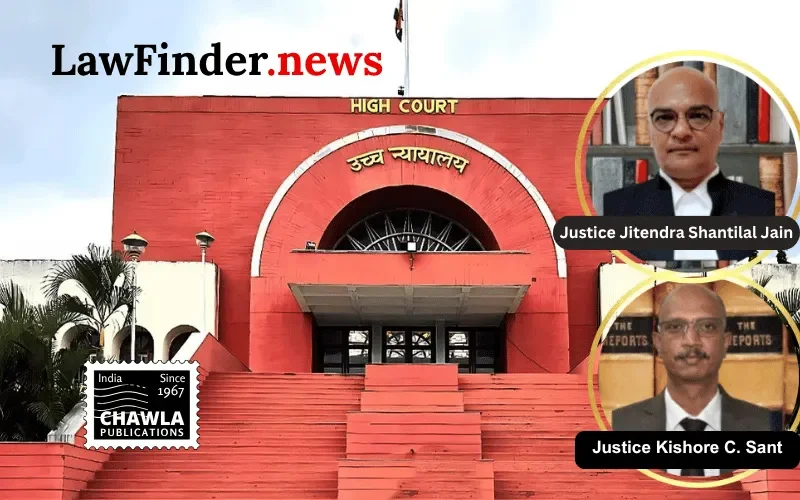
Court holds State liable for administrative inertia in sanctioning posts, directs payment of arrears and equal treatment under university pay scales for over a decade-long temporary employees.
In a landmark judgment dated October 29, 2026, the Bombay High Court (Aurangabad Bench) has ruled in favor of petitioners employed as teaching and non-teaching staff in Model Colleges established under a University Grants Commission (UGC) scheme. The court held that the appointments, though technically temporary, could not be deemed illegal and that the prolonged failure of the Maharashtra State Government to approve posts for these employees amounted to administrative inaction warranting regularisation of their services and payment of salary arrears.
The judgment arose from a batch of writ petitions filed by employees of Model Colleges-constituent colleges set up in educationally backward districts under a UGC initiative to improve Gross Enrollment Ratio (GER) and promote high-quality higher education. Despite being appointed through advertisements and selection committees, and continuing in service with only technical breaks over periods exceeding a decade, these employees were denied permanency and salary on par with regular university staff. The State Government had kept proposals for sanctioning posts pending for more than ten years, while simultaneously directing the colleges to continue temporary appointments.
The Court meticulously examined the background of the Model Colleges, noting that the colleges were to be maintained academically and financially by the respective universities with the State Government bearing 100% of recurring expenses, including salaries. It observed that the appointments were made through due process, with petitioners possessing the requisite qualifications and fulfilling the same duties as regular employees.
Rejecting the State's contention that the absence of sanctioned posts precluded regularisation, the Court held that the inordinate delay in taking a decision on the proposals effectively amounted to deemed approval. It ruled that, in the absence of any prescribed time limit for approval under the Maharashtra Universities Act, 1994 and the Maharashtra Public Universities Act, 2016, the decision ought to have been made within a reasonable time-no more than one year in the facts of the case.
The Court further applied constitutional principles, holding that the State's failure to provide equal pay and regularisation violated Articles 14 (equality before law) and 16 (equality in public employment) of the Constitution. It also found contravention of Articles 38, 39, 47, and 300A, which collectively impose obligations on the State to promote social welfare, ensure equal pay for equal work, raise living standards, and protect property rights respectively.
Invoking doctrines of promissory estoppel and legitimate expectation, the Court emphasized that the State's conduct-directing temporary appointments while withholding approval-created a legitimate expectation of regularisation among employees, which the State could not now renege upon.
The Court ordered that petitioners be regularised from the date of their initial appointments and be paid salaries fixed according to the university/UGC pay scales applicable to similar posts. However, monetary arrears were limited to three years prior to filing of the writ petitions. The State and university were directed to pass appropriate orders for regularisation and salary fixation within six months, failing which interest at 6% per annum would accrue on unpaid amounts.
Expressing strong displeasure at the State's "administrative inertia" and failure to comply with earlier Court directions, the Bench highlighted the detrimental impact on the quality of education and the very purpose of establishing Model Colleges.
This judgment underscores the judiciary's commitment to upholding employment rights of educational staff and ensuring State accountability in fulfilling its constitutional and statutory obligations in the higher education sector.
Bottom Line:
Model Colleges established as constituent colleges of universities - Teaching and non-teaching staff appointed through advertisement and continued for over a decade with technical breaks - State kept proposals for sanction/approval of posts pending and simultaneously directed temporary appointments - Held, appointments were not illegal but at the highest irregular - Posts deemed approved after unreasonable delay - Petitioners entitled to regularisation if in continuous service and to salary in applicable university/UGC pay-scale, with actual arrears restricted to three years prior to filing of petitions.
Statutory provision(s):
Maharashtra Universities Act, 1994 Sections 5(9), 5(11), 76, 77, 111, 2(10), 2(11), 2(41);
Maharashtra Public Universities Act, 2016 Sections 102, 103, 143, 2(61), 2(68);
Constitution of India Articles 14, 16, 38, 39, 47, 300A