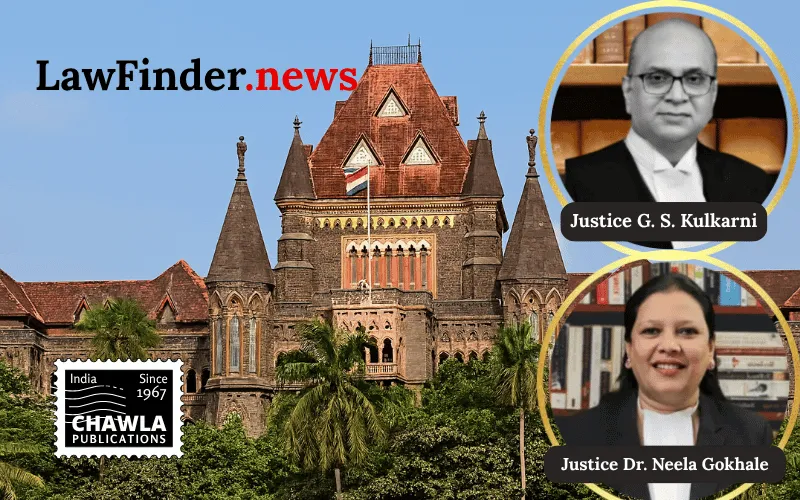
Court says loudspeakers, laser lights and high-intensity sound devices must be tightly regulated; authorities directed to enforce noise norms in letter and spirit
Mumbai, Sept. 22, 2026: In a sweeping suo motu intervention, the Bombay High Court has directed a total ban on bursting firecrackers on public streets, roads and other public spaces during festivities, while also prohibiting the use of laser lights and high-intensity lumen beams in processions and celebrations.
A Division Bench of Justice G.S. Kulkarni and Dr. Justice Neela Gokhale said unregulated use of loudspeakers, music systems, firecrackers and other high-decibel devices during festivals had become a serious source of noise and environmental pollution, amounting to a public nuisance and a violation of citizens’ fundamental rights under Article 21 of the Constitution.
The court was hearing suo motu public interest litigation concerning noise and environmental pollution caused by the use of amplified music systems and firecrackers on public streets during festivals. It noted that despite the existence of the Noise Pollution (Regulation and Control) Rules, 2000, violations had continued in cities including Mumbai, Thane, Pune and Nashik, often with little effective enforcement.
The bench emphasized that the Noise Pollution Rules are mandatory and must be implemented strictly by designated authorities, including the Police Commissioner, District Magistrate and other authorized officers. It reiterated that loudspeakers and public address systems cannot be used without prior written permission, and that night-time use is prohibited except within the narrow exceptions provided by law.
The court expressed particular concern over the bursting of firecrackers in processions and on public streets, observing that such activity generates both toxic smoke and dangerous noise levels, while also posing accident risks to pedestrians and vehicles. It held that firecrackers cannot be treated as an unchecked part of festival celebrations when they harm public health and disturb the rights of others to sleep, study and live peacefully.
To strengthen enforcement, the court issued several directions. Authorities must measure decibel levels, seize and confiscate offending devices, and ensure that organizers install decibel measurement meters and internal sound limiters. Organizers must also display permissions granted under the Noise Pollution Rules, along with contact details of responsible persons. The court further directed authorities to consider substantial security deposits as a condition for permission, which may be forfeited in case of violations.
The bench said that cumulative noise impact must also be assessed before granting multiple permissions in a single ward or locality. It added that violations of its directions and the Noise Pollution Rules may invite penal action under the Environment (Protection) Act, 1986, the Bharatiya Nyaya Sanhita, 2023, the Explosives Act, 1884 and other applicable laws.
The judgment drew support from earlier Supreme Court and Bombay High Court rulings on noise pollution, including the landmark “Noise Pollution (V) in Re” decision, and reiterated that festive occasions do not create any exemption from compliance with statutory noise limits.
The matter has been adjourned to October 15, 2026 for further compliance review.
Bottom Line:
Noise pollution and public nuisance caused by unregulated use of loudspeakers, music systems, firecrackers, laser lights and high-intensity sound devices during festivals on public streets must be strictly curbed; authorities are bound to enforce the Noise Pollution (Regulation and Control) Rules, 2000 in letter and spirit.
Statutory provision(s): Environment (Protection) Act, 1986, Noise Pollution (Regulation and Control) Rules, 2000, Article 21, Bharatiya Nyaya Sanhita, 2023, Explosives Act, 1884, Maharashtra Police Act, 1951, Section 163, Indian Civil Security Code, 2023