Court holds that filing legal complaints and proceedings, without proof of malice or direct instigation, cannot amount to abetment to suicide under IPC Sections 306 and 107.
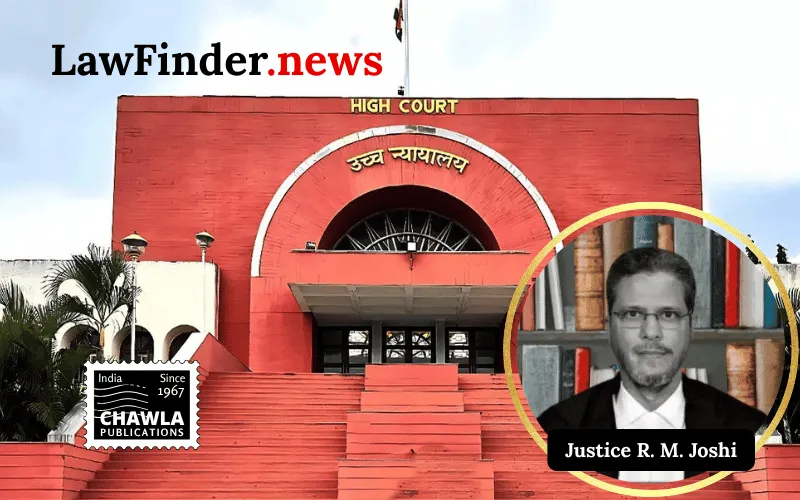
The Bombay High Court’s Aurangabad Bench has quashed criminal proceedings against a petitioner accused of abetting suicide, ruling that mere initiation of legal proceedings, even over a long period, does not by itself constitute instigation or abetment unless there is clear material showing malice, mens rea, or a direct and proximate act driving the deceased to take his life.
Justice R.M. Joshi passed the order in a writ petition filed by Sadashiv Ambadasrao Gayake, who had challenged the FIR and Sessions Case arising out of Crime No. 63/2019 registered at Kranti Chowk Police Station, Aurangabad. The case had been registered under Sections 306 and 107 read with Section 34 of the Indian Penal Code.
According to the prosecution, the deceased left behind a suicide note alleging that the petitioner and others had mentally tortured and harassed him for nearly 20 years by filing false cases against him. The note also referred to a complaint allegedly lodged on the day of the incident, which the prosecution claimed was the final trigger for the suicide.
However, the High Court found that the material on record did not disclose the essential ingredients of abetment. The Court noted that the petitioner had initiated proceedings in his capacity as a member of the District Co-operative Bank and not in his personal capacity, and that those proceedings were taken under the Maharashtra Co-operative Societies Act in relation to alleged irregularities and misconduct. There was no finding in any of those cases that the petitioner’s actions were malicious, vexatious, or an abuse of legal process.
The Court emphasized that a person cannot be penalized merely for using remedies available under law. It observed that if lawful complaints or proceedings were treated as abetment to suicide, it would effectively discourage citizens from reporting wrongdoing or seeking redress.
On the alleged complaint lodged on the day of the suicide, the Court found no evidence that the deceased even knew about it before ending his life. The complaint recorded in the morning did not name the deceased, and the FIR naming him was lodged only later in the evening, after the deceased had already died. Therefore, the Court rejected the prosecution’s argument that the complaint was the immediate cause or trigger point for the suicide.
The Court also dealt with the suicide note naming the petitioner. It held that merely naming a person in a suicide note is not enough to establish criminal liability under Section 306 IPC. The surrounding circumstances must show that the accused’s conduct would have driven an ordinary person, and not an oversensitive one, to commit suicide. In this case, no such supporting material existed.
Referring to several Supreme Court precedents, including Amalendu Pal, Mohit Singhal, and Patel Joshnaben Pravinkumar Patel, the Court reiterated that abetment requires a clear intention to instigate, aid, or encourage suicide, along with proximity between the accused’s conduct and the act of suicide. Since those elements were absent, the Court held that continuing the prosecution would amount to abuse of process.
Accordingly, the High Court allowed the petition and quashed the FIR and consequential criminal proceedings against the petitioner.
Bottom Line :
Indian Penal Code, 1860 Sections 306 and 107 Abetment of suicide - Mere institution of legal proceedings, complaints or invocation of remedies available under law, even repeatedly over a long period, does not by itself amount to instigation or abetment to commit suicide unless there is material showing malice, mens rea, direct or proximate incitement, or acts of such nature as would drive an ordinary person to commit suicide.
Statutory provision(s): Indian Penal Code, 1860 Sections 306, 107, 34; Code of Criminal Procedure, 1973 Section 482; Maharashtra Co-operative Societies Act; Maharashtra Vexatious Litigation (Prevention) Act, 1971