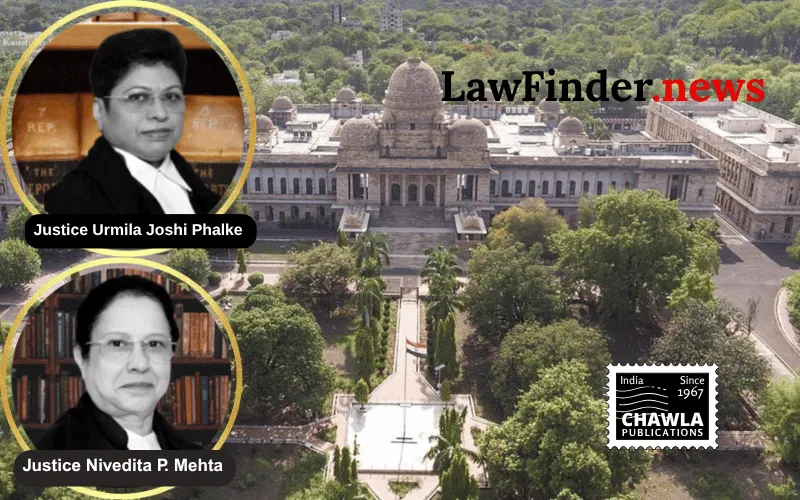
Court Quashes CWC Custody Order, Directs Biological Parents to Hand Over Child to Adoptive Parents Despite Non-Compliance with CARA Procedures
In a significant judgment dated July 31, 2026, the Bombay High Court (Nagpur Bench) clarified the jurisdictional limits of the Child Welfare Committee (CWC) in cases involving adoption where the child is neither an orphan nor abandoned. The Division Bench comprising Justices Urmila Joshi-Phalke and Nivedita P. Mehta held that the CWC has no authority to take custody of such children or to order their custody back to biological parents, thereby quashing the CWC's order to that effect.
The case arose when petitioners Nilima Dilip Kannurwar and her husband, a childless couple from Korpana, Chandrapur district, sought custody of a child given to them in adoption by the child's biological parents, respondent Nos. 3 and 4. The biological parents, struggling financially and already having two children, decided to give their third child in adoption to the petitioners by mutual consent. An adoption ceremony was conducted according to Hindu customs in April 2026, and a notarized adoption deed was executed.
However, the Child Welfare Committee, without recognizing the notarized deed as valid adoption under the Juvenile Justice (Care and Protection of Children) Act, 2015, intervened and ordered the child's custody to be returned to the biological parents on May 25, 2026. The petitioners challenged this order, contending that the child was not "abandoned" or "orphaned" as defined under Section 2(14) of the Juvenile Justice Act and hence, the CWC had no jurisdiction.
The Court examined the relevant provisions of the Juvenile Justice Act, the Hindu Adoptions and Maintenance Act, 1956 (HAMA), the Guardians and Wards Act, 1890, and the Central Adoption Resource Authority (CARA) Guidelines. It noted that while the notarized adoption deed executed by the parties did not amount to a legally valid adoption under HAMA or CARA, the child's status as neither orphan nor abandoned placed the case outside the ambit of the CWC's authority.
The Court emphasized that the Juvenile Justice Act empowers the CWC only in cases involving children in need of care and protection, which includes orphaned or abandoned children, but not children given in private adoption by biological parents through mutual consent. The Court also referred to its earlier ruling in Leelendra Deju Shetty v. State of Maharashtra (2024), which held that the CWC cannot exercise jurisdiction over children who do not fall under the "child in need of care and protection" category.
Since the child had already been handed over back to the biological parents before the petition was filed, the petitioners did not press their writ of habeas corpus claim. The Court, however, allowed the petition to the extent of quashing the CWC's order and directed the biological parents to hand over the child's custody to the petitioners forthwith.
This judgment underscores the necessity to follow the proper legal adoption procedures under CARA and the Juvenile Justice Act, especially where children are orphaned, abandoned, or surrendered. At the same time, it clarifies that private adoptions between biological parents and adoptive parents by mutual consent fall outside the jurisdiction of the CWC, provided the child is not in need of care and protection as defined by law.
Bottom Line:
Adoption - Child Welfare Committee (CWC) has no jurisdiction over children who are neither "abandoned" nor "orphan" as defined under the Juvenile Justice (Care and Protection of Children) Act, 2015.
Statutory provision(s):
Juvenile Justice (Care and Protection of Children) Act, 2015 Section 2(13), 2(14); Hindu Adoptions and Maintenance Act, 1956; Guardians and Wards Act, 1890; Central Adoption Resource Authority (CARA) Guidelines