Court Quashes Railway Board Circular Excluding Such Children, Upholds Legitimacy under Hindu Marriage Act; Denial of Benefits Deemed Arbitrary and Discriminatory
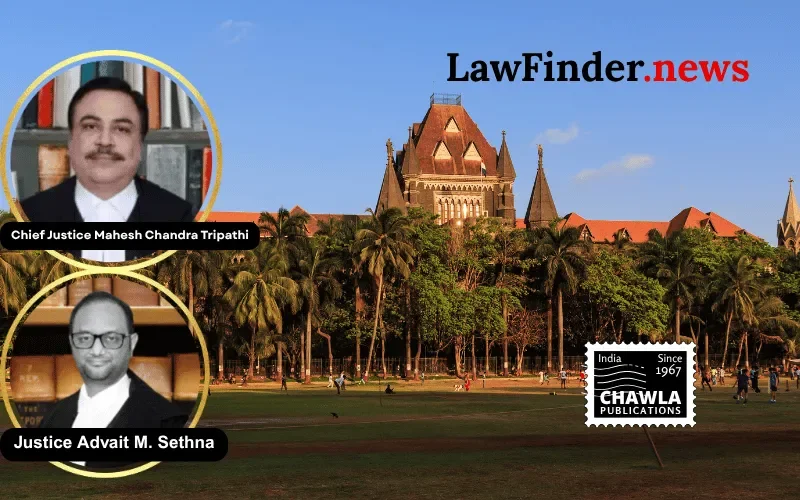
In a landmark judgment dated October 9, 2026, the Bombay High Court (Division Bench) has held that children born from void marriages or second relationships during the subsistence of a first marriage cannot be denied railway passes, medical facilities, and allied benefits on the ground of illegitimacy. The court quashed the Railway Board Circular (RBE No.39/2005) which had excluded such children from enjoying the benefits extended to railway employees' families.
The case arose when Kiran Tukaram Shelke, a railway employee, sought inclusion of his three children born from a relationship with his second wife prior to their lawful marriage, for railway passes, privilege ticket orders (PTOs), medical facilities, and nomination for pensionary benefits. The Railway authorities denied these benefits citing that the children were born during the subsistence of his first marriage and were thus illegitimate under the then prevailing rules.
The petitioner challenged the denial before the Central Administrative Tribunal (CAT), which dismissed his claim, relying heavily on the Railway Services (Conduct) Rules, 1966, which prohibit a government servant from contracting a second marriage during the subsistence of the first. The Tribunal held that such misconduct barred the petitioner's children from claiming benefits.
On appeal, the Bombay High Court overturned the Tribunal's decision, emphasizing that the Hindu Marriage Act, 1955, particularly Section 16, confers legitimacy on children born of void or voidable marriages. The court noted that the law deems these children legitimate for all purposes except succession to ancestral property, and such children are entitled to family pension and other service benefits.
The court highlighted that the Railway Servants (Pass) Rules, 1986, do not restrict the definition of "son" or "daughter" to children born only from valid wedlock. It observed that denying benefits to children based on the validity of their parents' marriage violates Articles 14 and 16 of the Constitution, which prohibit discrimination on grounds of descent.
Relying on Supreme Court precedents, including Union of India v. V. R. Tripathi (2019) and Mukesh Kumar v. Union of India (2022), the court held that policies discriminating against children born from second marriages or void marriages are constitutionally impermissible. It also referred to administrative orders issued by the Ministry of Personnel and Pension Department clarifying that children from void marriages are entitled to pensionary benefits.
The court further rejected the argument that allowing such benefits would incentivize misconduct or bigamy, emphasizing that children should not be penalized for the actions of their parents. The judgment underscores that the labels of "illegitimate" do not apply under current law for the purpose of service benefits.
Consequently, the court quashed the Railway Board Circular and the impugned orders denying the petitioner's children railway passes and other benefits. It directed the railway authorities to consider the petitioner's claim afresh and grant benefits within two months.
This decision reinforces the constitutional mandate against discrimination and aligns administrative policies with the legal recognition of legitimacy under the Hindu Marriage Act, offering relief to children born from void or voidable marriages in accessing government employee benefits.
Bottom Line:
Railway Pass Rules - Children born from void marriage/second relationship cannot be denied railway passes, medical and allied service benefits merely on ground of illegitimacy, Section 16, Hindu Marriage Act confers legitimacy - Railway Board Circular excluding such children held arbitrary, discriminatory and unsustainable.
Statutory provision(s): Articles 14 and 16 of the Constitution of India, Sections 11 and 16 of the Hindu Marriage Act, 1955; Railway Servants (Pass) Rules, 1986 Rules 2(d) and 4; Railway Services (Conduct) Rules, 1966 Rule 21; Railway Services (Pension) Rules, 1993 Rule 74(1)(i)
Kiran Tukaram Shelke v. Union of India, (Bombay)(DB) : Law Finder Doc Id # 2998122