Court Recognizes Right to Self-Perceived Gender Identity Under Bharatiya Nyaya Sanhita, 2023 and Transgender Persons (Protection of Rights) Act, 2019, Rejects Discharge Application
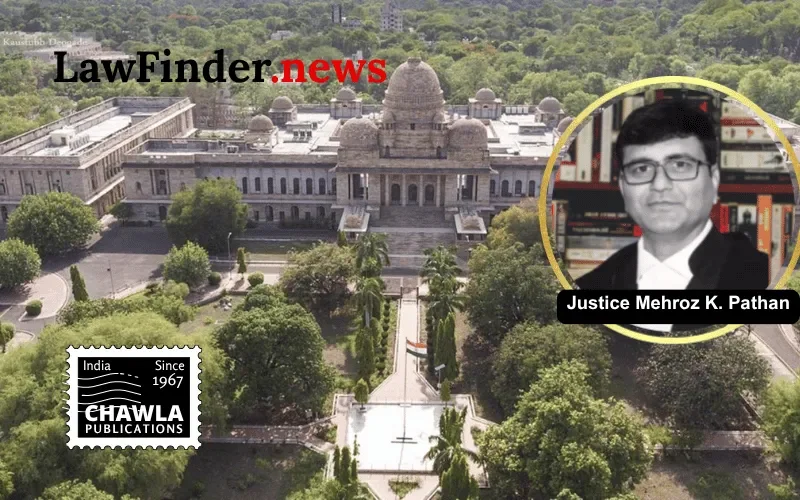
In a significant judgment dated November 3, 2026, the Bombay High Court, Nagpur Bench, presided over by Justice Mehroz K. Pathan, rejected the discharge application of Vishal Sunil Ingle, an Indian Army Agniveer, accused of sexually assaulting a transgender woman. The court emphasized that transgender persons identifying as women are entitled to protections under Section 75 of the Bharatiya Nyaya Sanhita, 2023 (BNS), and Section 18(d) of the Transgender Persons (Protection of Rights) Act, 2019 (TPA), thereby enabling legal recourse for offences committed against them.
The case arose from an FIR lodged on November 1, 2025, by Ganesh @ Shakti Gajanan Solanke, who identifies as a transgender woman. The complainant alleged that Ingle, under the pretext of marriage proposals, committed forcible sexual intercourse and sexual harassment on two occasions in October 2025. The complaint also detailed the complainant's gender transition journey, including hormonal treatment and wearing female attire, underscoring her self-identified gender as a woman.
The defense argued that Section 75 of the BNS applies exclusively to female victims and that the complainant, being a transgender person without a certificate of identity at the time of the alleged offences, could not invoke these provisions. They further contended the relationship was consensual and premised on the promise of marriage, and that the BNS lacks a provision analogous to Section 377 of the Indian Penal Code relating to sexual offences.
Rejecting these contentions, the Court clarified that under the TPA, 2019, a transgender person's right to self-perceived gender identity is sacrosanct and cannot be questioned at the stage of discharge. The absence of a transgender identity certificate on the date of the incidents was held to be immaterial, as the definition of "transgender person" under the TPA includes those who identify as transgender regardless of surgical or hormonal treatment or possession of certificates.
Citing the Supreme Court's landmark decision in National Legal Services Authority v. Union of India (2014), the Court reiterated that gender identity is a matter of self-determination. The Court further noted that the amendments to the TPA in 2026, which omitted certain provisions, did not affect the applicability of the law as it stood at the time of the offences. The Court found that the prima facie case against the accused was well-founded, supported by the allegations and evidence in the charge-sheet.
The Court also held that the defense's claim of consensual relations and promise of marriage involved factual disputes to be decided at trial and did not warrant discharge at this preliminary stage. Consequently, the order of the Additional Sessions Judge, Akot, rejecting the discharge application under Section 250 of the Bharatiya Nagarik Suraksha Sanhita, 2023 (BNSS), was upheld.
This ruling affirms the legal recognition and protection of transgender persons under Indian criminal law and underscores the judiciary's commitment to uphold the rights of marginalized communities. It clarifies that the protections against sexual offences extend to transgender women who identify as female, reinforcing the inclusive approach of the BNS and TPA.
Bottom Line:
Transgender person identifying as a woman can, at the stage of discharge, invoke protection under Section 75 of Bharatiya Nyaya Sanhita, 2023 and Section 18(d) of the Transgender Persons (Protection of Rights) Act, 2019; absence of identity certificate on date of incident is not by itself fatal.
Statutory provision(s):
Bharatiya Nyaya Sanhita, 2023 Section 75, Section 235;
Transgender Persons (Protection of Rights) Act, 2019 Sections 2(k), 4, 5, 6, 18(d);
Bharatiya Nagarik Suraksha Sanhita, 2023 Section 250
Vishal Sunil Ingle v. State of Maharashtra, (Bombay)(Nagpur Bench) : Law Finder Doc Id # 3011595