Court Affirms Administrative Authority in Law and Order Matters, Refuses Specific Route for Kavad Yatra
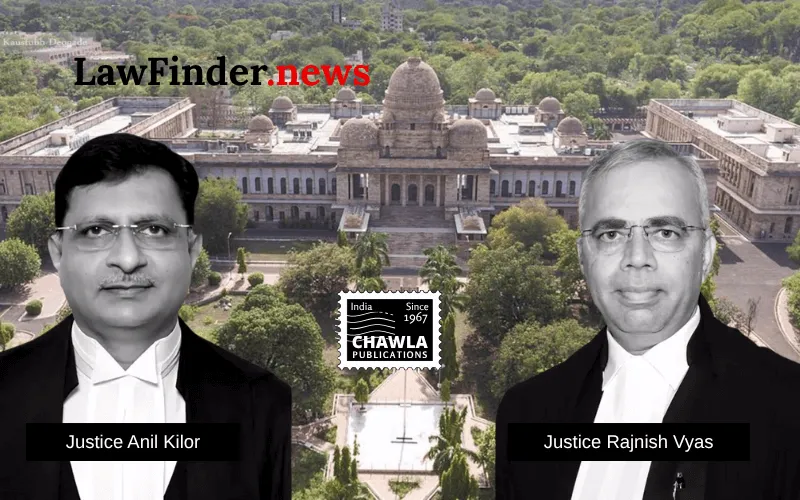
In a significant ruling, the Bombay High Court's Nagpur Bench, comprising Justices Anil S. Kilor and Rajnish R. Vyas, dismissed a petition challenging the police's decision to deny a specific route for the Kavad Yatra, a religious procession. The petitioner, Deepak Nechwani, representing Bharat Mata Sewa Sangathan, had sought permission for the procession along a designated 3.5 km route. However, the police suggested an alternate path citing law and order concerns.
The court emphasized that the right to practice religion under Article 25 of the Indian Constitution does not inherently include the right to use any specific route for religious processions. The judgment underscored the police's responsibility to maintain public order and their prerogative to modify procession routes based on safety assessments.
The court highlighted several concerns raised by the police, including the presence of multiple mosques and a Dargah along the proposed route, past incidents of communal tension, and logistical challenges such as narrow roads and potential traffic disruptions. The police also noted the lack of a detailed traffic management plan from the organizers.
Justice Kilor, delivering the oral judgment, reiterated that administrative authorities are best positioned to make decisions regarding law and order, and courts should not interfere unless there is evidence of arbitrariness or illegality. The court referred to previous judgments, including those from the Supreme Court, affirming the administrative authority's role in preserving public peace.
The judgment also pointed out that the temple involved in the Kavad Yatra is private property, and the petitioner cannot compel participation from private individuals or insist on using private premises for the procession.
Ultimately, the court found no fault in the police's decision to suggest an alternate route, ruling that it was justified in light of the potential for disturbances and the need to maintain public order. The petition was dismissed, reinforcing the principle that religious rights are subject to broader societal interests and public safety considerations.
Bottom Line:
Right to practice religion and conduct religious processions is subject to larger interests of law and public order, and the needs of other sections of the population. Courts should avoid interference in administrative decisions concerning law and order unless there is arbitrariness or illegality.
Statutory provision(s): Article 25 of the Constitution of India, Article 19(1)(b) of the Constitution of India
Deepak v. State of Maharashtra, (Bombay)(DB)(Nagpur Bench) : Law Finder Doc id # 2961338