Court Rules Use of Credit Card Constitutes Acceptance of Terms, Directing Arbitration While Leaving Detailed Disputes for Tribunal
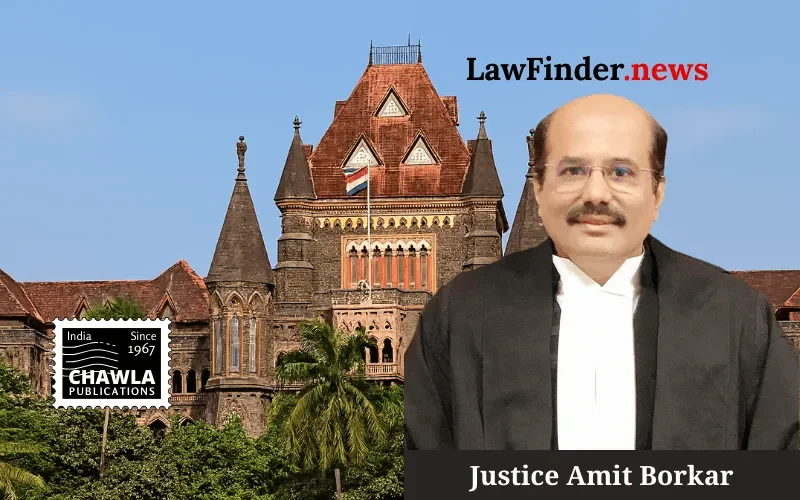
In a significant judgment delivered on November 4, 2026, the Bombay High Court, presided over by Justice Amit Borkar, addressed the contentious issue of whether the absence of a physical or digital signature on a credit card application negates the existence of an arbitration agreement between Kotak Mahindra Bank Limited and its customers. The Court held that a signature, although a common mode of recording consent, is not an indispensable requirement under the Arbitration and Conciliation Act, 1996, to establish an arbitration agreement.
The case arose from four connected arbitration applications filed by Kotak Mahindra Bank against respondents including Maulin Niranjan Patel, Kaustubh Rajendra Kuwadia, Ziya Ur Rehman, and N.V. Srinivas, concerning disputes over credit card dues. The primary legal question was whether the bank could compel arbitration when the cardholder application lacked a physical or digital signature.
Justice Borkar, after a meticulous examination of the Arbitration and Conciliation Act provisions, notably Section 7 and Section 11, and the Cardholder Agreement terms, emphasized that an arbitration agreement must be in writing but need not necessarily bear the signatures of both parties. The Court noted that the Cardholder Agreement explicitly provides that acceptance of terms can be manifested not only by signing the application form but also by applying online, via email, signing on the reverse of the card, or by using the card itself.
The bank produced the Cardholder Agreement containing the arbitration clause (Clause 32.2), the Most Important Terms and Conditions (MITC), a summary statement of account linked to the respondents, and affidavits from its authorized representative affirming the issuance and use of the credit card by the respondents. Although the bank admitted it could not produce the original digital application or electronic audit trail due to vendor-related issues, it relied on the statement of account and the clause in the agreement recognizing card usage as acceptance.
The Court highlighted that the absence of the original digital records is a significant but not determinative factor. The combined materials - the Cardholder Agreement clause, the bank's affidavit, and the statement of account showing outstanding dues - provided prima facie evidence that an arbitration agreement existed. The Court clarified that detailed issues regarding the genuineness of the digital application, unauthorized transactions, correctness of dues, and the actual use of the card are to be adjudicated by the Arbitral Tribunal under Section 16 of the Act.
Importantly, the Court rejected the respondent's objection that lack of signature invalidated the arbitration agreement, aligning with the Supreme Court's precedent in Govind Rubber Ltd. v. Louis Dreyfus Commodities Asia (P) Ltd., which recognized that agreements can be inferred from correspondence, conduct, or other written records indicating mutual consent.
Consequently, the Bombay High Court appointed Mr. Shadab Jan as the sole arbitrator to adjudicate the disputes in all four cases. The Court directed procedural formalities for the arbitration, including disclosures and communication protocols, while reaffirming that all substantive disputes remain open for the tribunal's determination.
This judgment underscores the evolving jurisprudence recognizing electronic and conduct-based acceptance of contractual terms in the digital age, particularly in financial services. It reinforces minimal judicial interference at the pre-arbitral stage and delineates the boundaries between prima facie judicial scrutiny and detailed arbitral adjudication.
Bottom Line:
Arbitration and Conciliation Act, 1996, Section 11 - Credit card disputes - Mere absence of physical or digital signature on credit card application does not by itself negate existence of arbitration agreement - Where Cardholder Agreement provides that online application or use of card amounts to acceptance, and bank produces cardholder agreement, statement of account and affidavit showing issuance and use of card, prima facie arbitration agreement exists - Detailed issues regarding genuineness of digital application, actual use of card, unauthorised transactions and correctness of dues are to be decided by Arbitral Tribunal.
Statutory provision(s): Arbitration and Conciliation Act, 1996 Sections 7, 11, 16
Kotak Mahindra Bank Limited v. Maulin Niranjan Patel, (Bombay) : Law Finder Doc Id # 3011168