Court emphasizes judicial preservation of electoral materials amid administrative demands, orders District Election Officer to identify and segregate machines linked to ongoing election petition.
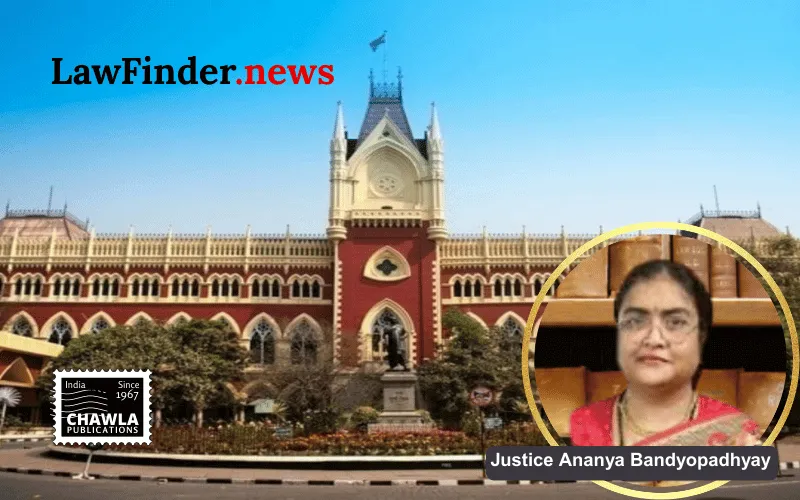
In a significant judgment delivered on September 7, 2026, the Calcutta High Court, presided over by Justice Ananya Bandyopadhyay, addressed crucial issues concerning the custody, preservation, and administrative handling of Electronic Voting Machines (EVMs) and Voter Verified Paper Audit Trails (VVPATs) used in the 29-Arambagh (SC) Parliamentary Constituency elections.
The matter arose from an application filed by the District Election Officer (DEO), Hooghly, seeking permission to release certain VVPATs stored at the Arambagh warehouse and defective EVMs housed at the District Warehouse-II in Chinsurah. The DEO aimed to repair, recondition, and redeploy these machines in forthcoming elections. The application also requested authority to segregate and transfer machines between designated storage facilities, including the Regional Training Centre Warehouse within the same compound.
The Court underscored the paramount importance of preserving electoral materials connected to pending election petitions, specifically E.P. No. 4 of 2024, which challenges the election from the 29-Arambagh Parliamentary Constituency. It clarified that while the District Election Officer holds administrative responsibility for the maintenance and deployment of electoral equipment under the Representation of the People Act, 1951 (Sections 20A and 13CC), such authority is subordinate to judicial directions requiring preservation of materials for adjudication.
A key highlight of the judgment is the distinction drawn between electoral materials linked to different constituencies. The Court noted that the preservation order in E.P. No. 1 of 2019 pertains to the 28-Hooghly Parliamentary Constituency and cannot be extended to machines from the 29-Arambagh constituency. Therefore, only those machines used in the election under challenge in E.P. No. 4 of 2024 must remain preserved.
The Court rejected the notion that defective EVMs and VVPATs could be excluded from preservation. In fact, defects may be relevant evidence in election disputes and thus must be safeguarded. Machines unrelated to the pending election petitions may be segregated and released for administrative purposes following a meticulous identification process.
Justice Bandyopadhyay directed the District Election Officer to undertake a comprehensive exercise of identification and segregation of the machines. This includes preparing a detailed inventory specifying each machine's identity, associated constituency, polling station, election use, and current storage location. The DEO must ensure that preserved machines are not opened, repaired, or deployed without further judicial approval.
Importantly, the Court permitted the transfer of preserved electoral material between designated storage facilities for better custody, provided strict compliance with Election Commission of India protocols, including maintaining seals, custody integrity, and evidentiary safeguards.
The judgment also mandated that any handling of machines requires proper documentation, observation of prescribed safeguards such as videography and sealing, and adherence to the participation rights of political party representatives where applicable.
While the Court refused blanket release of the machines from the 29-Arambagh constituency, it allowed the DEO to segregate and release those machines not connected to ongoing election petitions, thereby preventing unnecessary retention of equipment.
This ruling balances the administrative imperatives of election authorities with the judicial necessity of preserving electoral evidence, reinforcing the integrity of election dispute adjudication processes.
The case is set for further hearing on November 16, 2026.
Bottom Line:
Preservation of EVMs and VVPATs required for adjudication of an election petition cannot be displaced by administrative requirements. Machines not connected to the election proceedings may be identified and dealt with appropriately.
Statutory provision(s):
Representation of the People Act, 1951 - Section 20A; Representation of the People Act, 1950 - Section 13CC
Arup Kanti Digar v. Mitali Bag, (Calcutta) : Law Finder Doc Id # 2973621