Court Rules Authorization Committee Cannot Reject Transplant Solely on Documentary Discrepancies When No Commercial Transaction Exists and Genuine Affection is Established
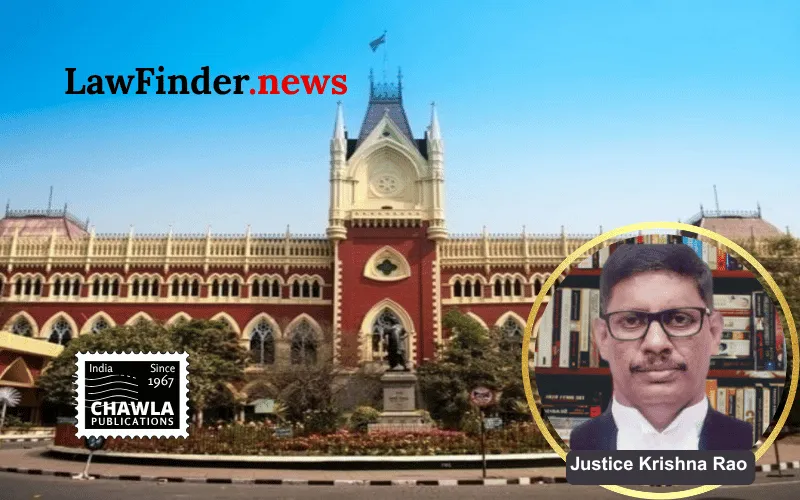
In a significant judgment delivered on October 5, 2026, the Calcutta High Court under Justice Krishna Rao quashed the refusal of the State Level Authorization Committee to approve a kidney transplant involving an unrelated donor. The case pertains to petitioner Ranjeet Kumar Ghosh, suffering from chronic kidney disease, who sought a kidney donation from the wife of his driver, identified as Proforma Respondent No. 9.
The kidney transplant was denied authorization on the grounds that the donor and recipient failed to satisfactorily prove their relationship and discrepancies existed regarding the donor's husband's driving license issuance date and lack of documentary evidence of his employment as a driver since 2021. Despite these concerns, police verification confirmed there was no commercial transaction, no involvement of middlemen or touts, and no unofficial dealings between the donor and recipient.
The donor, her husband, and the recipient's wife were examined by the District Level Verification Committee and their statements indicated a genuine relationship developed over 3 to 4 years. The donor expressed willingness to donate the kidney out of affection and attachment towards the recipient, whom she referred to as "Kaku" (uncle), highlighting visits and care extended during his dialysis treatments.
The court analyzed the relevant provisions of the Transplantation of Human Organs and Tissues Act, 1994 (Section 9(3)) and the Transplantation of Human Organs and Tissues Rules, 2014 (Rule 7(3) and 17). It emphasized that in cases involving unrelated donors, the Authorization Committee's duty is to ensure the absence of commercial dealings and to evaluate the genuineness of affection or special reasons for donation. The court stated that the burden on applicants is to establish the donation is not commercial in nature but should not be unduly heavy in the absence of any definite material indicating financial transactions.
The court found that the Authorization Committee placed excessive reliance on minor documentary discrepancies concerning the donor's husband's driving license and employment proofs, which did not outweigh the clear evidence of affection and the absence of commercial elements. It held that refusal of authorization on such grounds was not in accordance with the statute's intent.
Consequently, the court set aside the decision of the Authorization Committee and directed it to reconsider the application within two weeks, taking into account the genuine affection and the police verification report confirming no commercial involvement.
This judgment reaffirms the principle that kidney donations by unrelated donors should not be rejected merely due to inadequate documentary proof of relationship when the overall evidence supports a genuine intention to donate out of love or attachment, and there is no evidence of financial inducement. It also underscores the need for Authorization Committees to balance scrutiny with compassion, avoiding placing undue burdens on donors and recipients in life-saving transplant scenarios.
Bottom Line:
Transplantation of Human Organs and Tissues Act, 1994 - Kidney donation by unrelated donor - Where there is no material showing commercial transaction or involvement of middleman/tout, and donor establishes affection/attachment towards recipient, authorization cannot be refused merely because documentary proof of link is insufficient or there are discrepancies regarding donor's husband's driving licence/employment details.
Statutory provision(s):
Transplantation of Human Organs and Tissues Act, 1994 Section 9(3), Transplantation of Human Organs and Tissues Rules, 2014 Rules 7(3), 17
Ranjeet Kumar Ghosh v. State of West Bengal, (Calcutta) : Law Finder Doc Id # 2990988