Court highlights suppression of material facts and jurisdictional concerns in petition by CPI(M) seeking protection for book stall on State Highway during Durga Puja
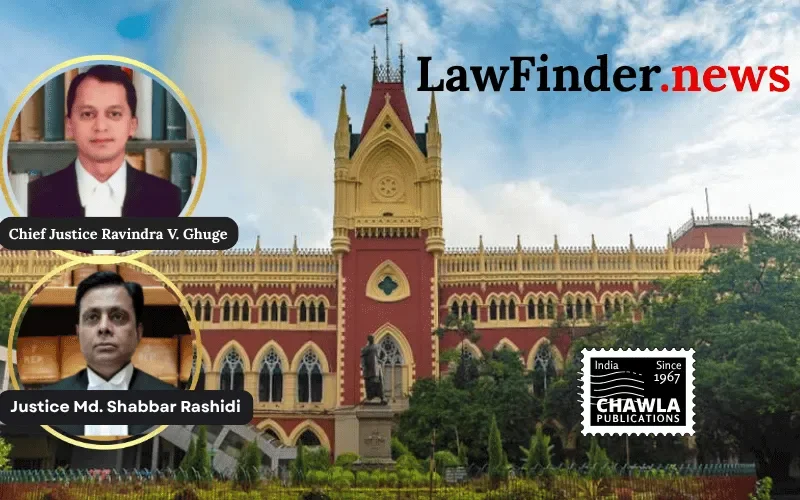
In a significant judgment delivered on October 16, 2026, the Division Bench of the Calcutta High Court, comprising Chief Justice Ravindra V. Ghuge and Justice Md. Shabbar Rashidi, stayed an interim order by a Single Judge that had directed police protection for the Communist Party of India (Marxist) (CPI(M)) to erect and operate a book stall on a State Highway near their party office in Bongaon during the Durga Puja festival.
The case arose from a writ petition filed by the CPI(M) seeking police protection to set up a roadside book stall on Jessore Road, a State Highway in North 24 Parganas, for the Durga Puja period. The party alleged obstruction in erecting the stall whereas other temporary stalls were being allowed nearby. The Single Judge had granted an interim relief directing the Superintendent of Police and local police authorities to maintain peace and provide protection for the lawful establishment and operation of the stall.
However, the State challenged this order in an intra-court appeal before the Division Bench, raising two critical issues:
1. Jurisdictional competence of the Single Judge to entertain the writ petition under the court's roster system, specifically whether the matter pertains to land use (Group-I matters) or police inaction (Group-IX matters).
2. Suppression of material facts by the petitioners, particularly regarding the absence of any formal permission from the competent authority to erect the stall on public land.
The Division Bench observed that the CPI(M) petitioners had failed to disclose in their writ petition that they had not obtained any permission but had merely sent an intimation email to the Executive Engineer of the National Highway Division, PWD, without formally seeking authorization. This non-disclosure constituted suppression of material facts, which is a serious breach that could disentitle the party from relief even if a case otherwise existed.
The Court emphasized the need for full disclosure of all relevant information to enable proper adjudication and underscored that matters involving permission to use public land fall squarely under land-related issues (Group-I), which is assigned to a different roster than police-related issues (Group-IX). The failure to bring this to the Single Judge's notice prevented the court from correctly determining jurisdiction.
Furthermore, the Court directed the State authorities to investigate whether other parties erecting stalls nearby had lawful permission, warning that unauthorized stalls must be removed promptly. The Court also expressed that a vibrant democracy must allow the dissemination of diverse political ideologies without obstruction.
In light of these findings, the Division Bench stayed the Single Judge's interim order directing police protection, pending a final hearing on jurisdiction and other substantive issues scheduled for January 21, 2027. The Court's order serves as a reminder that litigants must fully disclose material facts and approach courts with utmost good faith, especially in matters involving public land and permissions.
Bottom Line:
Writ petition seeking police protection for erection and running of a roadside book stall on a State Highway, without disclosing whether permission from the competent authority was obtained, involves a jurisdictional issue as to roster assignment and suppression of material facts; interim order directing police protection was stayed.
Statutory provision(s):
Constitution of India, 1950 Article 226