Power of Attorney Holder Cannot Substitute Plaintiff's Testimony on Personal Knowledge, Court Reaffirms Strict Standards Under Specific Relief Act, 1963
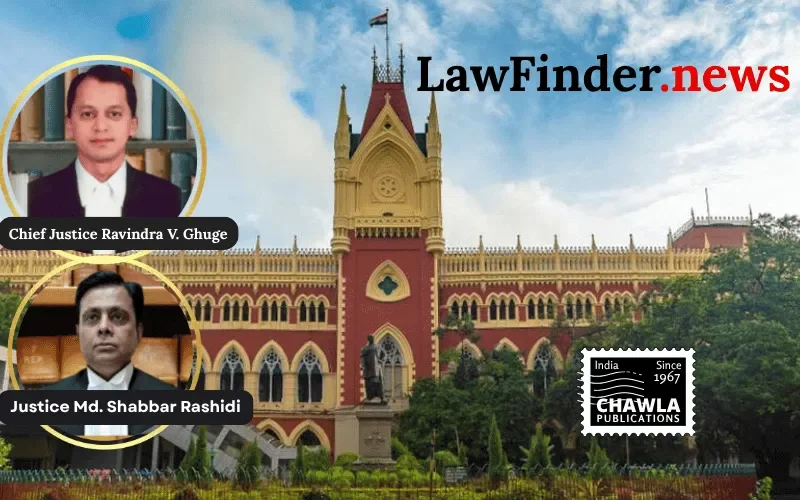
In a significant judgment delivered on October 14, 2026, the Division Bench of the Calcutta High Court, comprising Justices Ravi Krishan Kapur and Atarup Banerjee, dismissed an appeal filed by Sri Manoj Kumar Agarwala seeking specific performance of an agreement for sale of immovable property in Bankura. The Court upheld the Trial Court's decision to dismiss the suit, emphasizing the plaintiff's failure to prove continuous readiness and willingness to perform the contract as mandated under Section 16(c) of the Specific Relief Act, 1963.
The case revolved around an agreement dated March 17, 2004, wherein the plaintiff agreed to purchase a property measuring 1223 square feet from the late Baibarta Debya, who was related to the respondents. The plaintiff paid an initial sum of Rs. 1,00,000/- as part consideration. However, a dispute arose concerning the possession of a rented shop within the premises and the plaintiff's readiness to perform the contract after the death of the original owner.
Crucially, the plaintiff did not testify personally in the suit. Instead, his brother, holding a Power of Attorney, deposed on his behalf. The Court held that, while a Power of Attorney holder may act and appear for the principal under Order III Rules 1 and 2 of the Civil Procedure Code, he is not competent to depose on matters requiring the principal's personal knowledge or on issues necessitating the principal's cross-examination. This principle was reinforced by citing Supreme Court precedents including Janki Vashdeo Bhojwani v. IndusInd Bank Ltd. and Mahinder Kaur v. Sant Paul Singh.
The Court reiterated that in suits for specific performance, continuous readiness and willingness to perform the contract from the date of agreement until decree is a vital condition precedent. The plaintiff must both plead and prove this essential fact. The mere testimony of a Power of Attorney holder without the plaintiff's personal evidence was deemed insufficient to discharge this burden.
The judgment also distinguished the case from others involving partition suits, where a relative's testimony was acceptable due to the nature of evidence required. Here, the absence of the plaintiff's direct testimony on his readiness and willingness was fatal to his claim.
Ultimately, the Calcutta High Court affirmed the Trial Court's judgment, dismissing the appeal and instructing the registry to return the trial records. No order as to costs was issued, and certified copies of the judgment were directed to be supplied upon request.
This judgment underscores the strict evidentiary requirements imposed on plaintiffs seeking specific performance of contracts under Indian law, particularly emphasizing the importance of personal testimony in proving readiness and willingness to perform contractual obligations.
Bottom Line:
Specific Relief Act, 1963 Section 16(c) In a suit for specific performance, plaintiff must not only plead but also prove continuous readiness and willingness to perform the contract - Power of Attorney holder cannot depose in place of the principal on matters within principal's personal knowledge - Dismissal of suit upheld where plaintiff himself did not enter witness box.
Statutory provision(s):
Specific Relief Act, 1963 Section 16(c), Code of Civil Procedure, 1908 Order III Rules 1 and 2
Sri Manoj Kumar Agarwala v. Sri Omprakash Brajabasi, (Calcutta)(DB) : Law Finder Doc Id # 2997132