Court Affirms Principal Secretary's Decision Allowing Multiple Heirs to Share Liquor Shop License
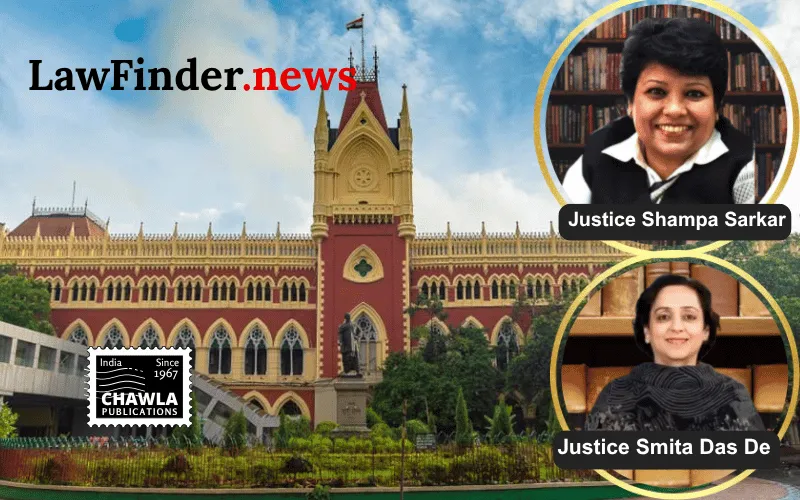
In a significant judgment, the Calcutta High Court has upheld the decision of the Principal Secretary, Finance Department, directing the joint settlement of an excise license for Sheoraphully Country Spirit Shop between two brothers, amidst a family dispute over entitlement. The judgment, delivered by Justices Shampa Sarkar and Smita Das De, dismissed an appeal filed by one of the brothers, Bijay Saha, challenging the legality of the joint settlement ordered by the Principal Secretary.
The dispute arose following the death of Prankrishna Saha, the original license holder of the shop, in 1971. The license was subsequently settled in favor of Bijay Saha, the grandson of the deceased licensee, by the Collector of Hooghly in 2014. However, Bijay's brother, another grandson, contested the settlement, leading to a series of legal challenges.
In 2021, the Principal Secretary overturned previous decisions favoring Bijay Saha and ordered a joint settlement of the license between Bijay and his brother, citing Rule 14(6) of the West Bengal Excise Rules, 2003. This rule permits joint settlement in favor of one or more heirs of the deceased licensee, provided they are willing and eligible, with no prior experience required.
Bijay Saha challenged this order, arguing that he was the sole heir who expressed willingness and had relevant experience managing the shop. He contended that the joint settlement was impractical and would disrupt business operations. However, the High Court affirmed the Principal Secretary's decision, stating that Rule 14(6) clearly allows joint settlement and does not prioritize seniority or prior experience.
The court emphasized the limited scope of judicial review, focusing on the decision-making process rather than the merits of the decision. It found no illegality, irrationality, or procedural impropriety in the Principal Secretary's decision, which was based on relevant criteria under Rule 14(6).
The judgment also addressed concerns over potential disputes between the joint licensees, highlighting that the licensing authority is empowered to manage any future conflicts. The court reiterated that when multiple heirs satisfy the conditions of Rule 14(6), joint settlement is a valid option.
With this decision, the Calcutta High Court has reinforced the principles of fairness and statutory adherence in the settlement of excise licenses, ensuring equal treatment for legal heirs while maintaining uninterrupted business operations.
Bottom line:-
Rule 14(6) of the West Bengal Excise Rules, 2003 permits joint settlement of excise licences in favor of one or more heirs or representatives of the deceased licensee if they are willing and eligible. Prior experience is not a stipulated criterion under this Rule.
Statutory provision(s): Rule 14(6) of the West Bengal Excise Rules, 2003
Sri Bijay Saha v. State of West Bengal, (Calcutta)(DB) : Law Finder Doc id # 2938131