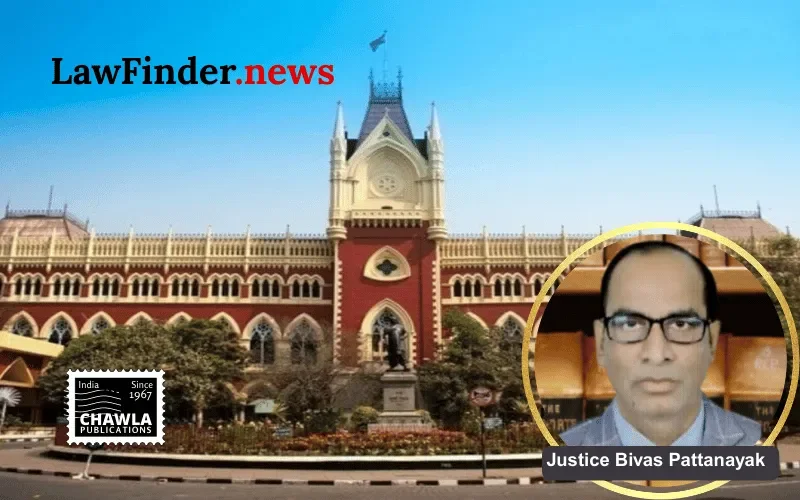
Court Dismisses Petitions Challenging Director of Madrasah Education's Memo for Re-verification of Appointment Approvals, Citing Supreme Court's Subsequent Judgments and Need for Compliance with Gazette Notifications
In a significant judgment delivered on October 7, 2026, the Calcutta High Court, presided over by Justice Bivas Pattanayak, dismissed multiple writ petitions filed by Madrasah teachers and non-teaching staff challenging the legality of memos issued by the Director of Madrasah Education, West Bengal. These memos called for re-verification of the validity and legality of appointments made in various Madrasahs across the state.
The petitioners, appointed during a contentious "window period" between December 2015 and early 2016, argued that their appointments had attained finality following the Supreme Court's landmark judgment in Sk. Mohd Rafique v. Managing Committee, Contai Rahamania High Madrasah (2020), which had declared the relevant provisions of the West Bengal Madrasah Service Commission Act, 2008 valid and protected appointments made during the interim period. They contended that the subsequent issuance of the memos by the Director of Madrasah Education was arbitrary, without jurisdiction, and violated the principles of res judicata and administrative finality since their appointments had been approved and salaries paid for nearly a decade.
However, the State respondents and the Madrasah Service Commission contended that the Supreme Court's later rulings in Snehasis Giri v. Subhasis Mitra (2023) and Najma Khatun v. State of West Bengal (2026) revisited the issue of appointment validity. These judgments emphasized that appointment approvals needed to comply with specific recruitment procedures outlined in Gazette Notifications dated February 9, 2015, and March 4, 2016. The Supreme Court had constituted a Committee to scrutinize appointments made during the window period. The Committee found that appointments of many teachers were not valid as they did not adhere to prescribed norms, a finding upheld in Najma Khatun, which rejected claims of several petitioners and held that appointments not made as per notifications could not be sustained.
Importantly, the Court clarified that the petitioners in the present cases were not parties to the Supreme Court proceedings scrutinizing appointment validity, as they had been regularly receiving salaries and their approvals were never questioned by the Committee or the Supreme Court. This distinction was critical in the Court's decision to uphold the Director's memos as mere notices for verification rather than adverse orders, and thus not prematurely challengeable through writ petitions.
The Court observed that the earlier Supreme Court observation in paragraph 64 of Sk. Mohd Rafique, which the petitioners heavily relied upon to claim finality, was subsequently examined and qualified by the Supreme Court in Snehasis Giri and Najma Khatun. The "closure" of appellate proceedings did not settle the controversy entirely, and therefore the plea of administrative finality or estoppel was unsustainable. The Court also rejected the argument that Managing Committees' autonomy protected appointments made during the window period, holding that ad hoc managing committees lacked authority to initiate recruitment or incur salary expenditure without express authorization.
Furthermore, the Court emphasized that payment of salary by the State did not ipso facto validate appointments. The memos issued were seen as a legitimate administrative step to verify compliance with the recruitment notifications and ensure validity, consistent with Supreme Court directions. Since the memos did not impose any adverse civil consequence or affect any justiciable rights at this stage, the Court held that writ jurisdiction was not maintainable against such notices.
In conclusion, the Calcutta High Court upheld the necessity of verification of Madrasah appointments made during the critical period and dismissed the petitions challenging the Director's memos. The judgment reinforced the principle that even where appointments have been approved and salaries paid, validity must be examined on prescribed legal parameters, particularly in light of evolving Supreme Court jurisprudence.
Bottom Line:
Madrasah appointments made during the period between the Division Bench judgment striking down parts of the West Bengal Madrasah Service Commission Act, 2008 and the subsequent stay by the Supreme Court do not attain unquestionable finality merely because approvals were granted and salaries were paid. In view of the later Supreme Court decisions in Snehasis Giri and Najma Khatun, verification of whether such appointments complied with Gazette Notifications dated 9-2-2015 and 4-3-2016 is necessary. A memo calling appointees to appear with documents for such verification is only a notice and not an adverse order amenable to writ jurisdiction.
Statutory provision(s):
West Bengal Madrasah Service Commission Act, 2008 Sections 8, 10, 11, 12; Constitution of India, 1950 Articles 141, 142.
Tarikul Molla v. State of West Bengal, (Calcutta) : Law Finder Doc Id # 2992620