Court says alleged RBI guideline violations and denial of rehabilitation package in NPA accounts do not amount to caste atrocity without specific caste-based insult or denigration
The Supreme Court has quashed criminal proceedings initiated against bank officers in Telangana under the Scheduled Castes and Scheduled Tribes (Prevention of Atrocities) Act, 1989, holding that a banking and loan recovery dispute cannot be converted into a criminal case under the SC/ST Act in the absence of clear allegations of caste-based abuse.
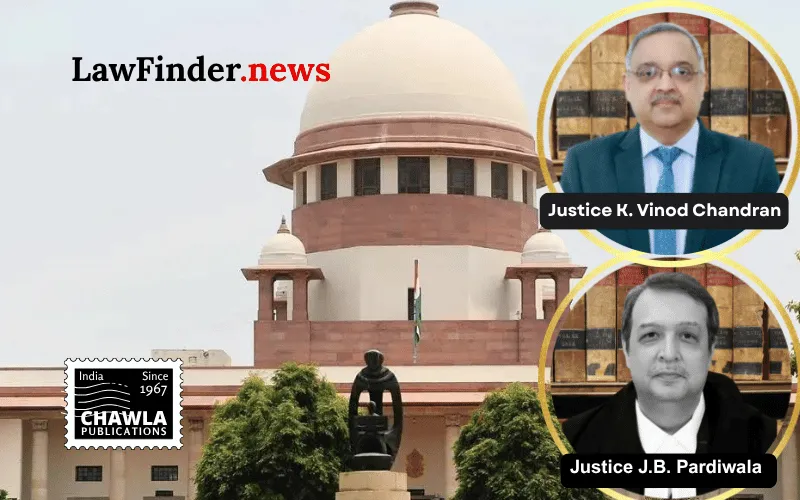
A Bench of Justice J.B. Pardiwala and Justice K. Vinod Chandran passed the order on October 12, 2026, in Chavan Dharmendar and Ors. v. State of Telangana and Ors. The Court allowed the appeal and set aside the continuation of proceedings arising out of FIR No. 1 of 2019 registered at CID Police Station, Hyderabad.
The dispute arose from credit facilities granted by a bank to a small-scale industrial enterprise. According to the complainant company, its loan accounts were declared Non-Performing Assets (NPAs) in 2016 despite substantial repayments over the years. The enterprise claimed it had repaid a term loan of Rs. 2.90 crore and later paid another Rs. 45 lakh to regularise the account. It alleged that bank officials discriminated against its promoters, who belonged to Scheduled Castes and Scheduled Tribes, by not extending rehabilitation benefits and by violating Reserve Bank of India guidelines applicable to revival of MSMEs.
The complaint further accused bank officials of submitting false and fabricated information to higher authorities and of acting in a manner that caused injury and harassment to the company’s promoters. It was argued that these actions attracted Section 3(1)(q) of the SC/ST Act. The complainant also alleged that enterprises run by persons from higher castes were given rehabilitation packages and concessions, while similar relief was denied to units managed by members of Scheduled Castes and Scheduled Tribes.
The High Court had earlier declined to interfere, observing that the accused bank officers should face trial. It had taken note of allegations relating to non-implementation of RBI circulars, denial of rehabilitation measures, and alleged forgery and fabrication concerning loan security documents.
However, the Supreme Court found that these allegations, even if accepted at face value, did not justify prosecution under the SC/ST Act. The Bench observed that mere non-compliance with RBI circulars, refusal to grant a rehabilitation package, or disputes over recovery steps could not automatically become criminal offences under the Act simply because the company’s directors belonged to Scheduled Castes or Scheduled Tribes.
The Court stressed that there was no specific allegation that any bank officer had insulted, denigrated, or targeted the directors on the basis of caste. In the absence of such direct caste-based conduct, the invocation of the SC/ST Act was held to be legally unsustainable.
Calling the enterprise “seemingly beleaguered” and financially distressed after its accounts turned NPA, the Court said the allegations appeared to be retaliatory in nature against the bank’s recovery process. It held that the proper remedy for grievances relating to RBI guideline violations, denial of rehabilitation, false information, or coercive recovery action lay before the appropriate adjudicatory forum, including the Debts Recovery Tribunal.
The Bench clarified that the borrower was free to raise all such contentions in recovery proceedings, where the adjudicating authority could examine whether the bank had acted contrary to law or whether such conduct affected the validity of recovery action. But those issues, the Court said, were matters of civil and regulatory adjudication, not criminal prosecution under a special penal statute meant to address caste atrocities.
Accordingly, the Supreme Court quashed the FIR and all proceedings arising from it, bringing an end to the criminal case against the bank officers.
The ruling is significant as it draws a clear line between allegations of banking misconduct and offences under the SC/ST Act, reiterating that criminal law under the special statute cannot be invoked without specific accusations of caste-based humiliation or discrimination.
Statutory provision(s): Scheduled Castes and Scheduled Tribes (Prevention of Atrocities) Act, 1989, Section 3(1)(q) of the Scheduled Castes and Scheduled Tribes (Prevention of Atrocities) Act, 1989
Chavan Dharmendar v. State of Telangana, (SC) : Law Finder Doc id # 2997912