Court Rules State Cannot Arbitrarily Abandon Ongoing Recruitment Without Rational Justification, Directs Completion of Selection Within Three Months
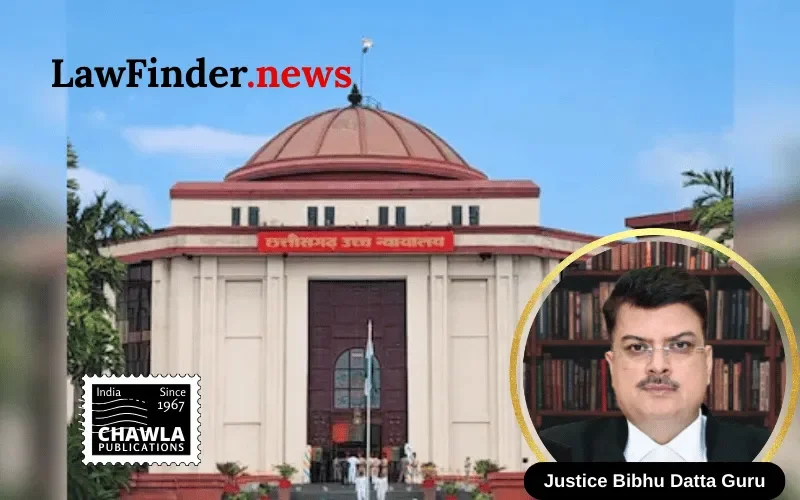
In a significant judgment delivered on October 28, 2026, the Chhattisgarh High Court, presided by Justice Bibhu Datta Guru, quashed the decision of the State of Chhattisgarh to cancel the ongoing recruitment process for Class III and Class IV posts at Government Medical College, Ambikapur. The Court held that the State's action to abandon the recruitment mid-way, citing administrative convenience and a large number of applications, was arbitrary and violative of Articles 14 and 16 of the Indian Constitution, which guarantee equality and non-arbitrariness in public appointments.
The petitioners, led by Aditya Saini, had challenged the General Body's resolution dated April 23, 2025, which cancelled the recruitment advertisements issued on July 20, 2022, and directed fresh recruitment through the Chhattisgarh Professional Examination Board (VYAPAM). The petitioners contended that the recruitment process had progressed substantially - with a merit list prepared and candidates called for document verification - and that the cancellation lacked any bona fide or cogent justification.
The State's primary ground for cancellation was the purportedly large volume of over one lakh applications, which allegedly would delay the recruitment process. However, the Court found this factual basis materially unexplained and inconsistent with an official communication by the Dean of the Medical College, dated June 19, 2025, which showed only 55,335 applications against 448 posts. The respondents failed to reconcile this substantial discrepancy, undermining the legitimacy of the cancellation decision.
Justice Guru emphasized that while mere participation in a recruitment process or inclusion in a merit list does not create an indefeasible right to appointment, the State does not have an unqualified prerogative to arbitrarily discard an ongoing process. The administrative decision to abandon recruitment must be founded on relevant, bona fide, and objectively supportable reasons. The Court cited several Supreme Court precedents, including East Coast Railway v. Mahadev Appa Rao (2010), Shankarsan Dash v. Union of India (1991), and Tej Prakash Pathak v. Rajasthan High Court (2025), underscoring that arbitrariness in public appointments is impermissible.
The Court also noted that the stage of recruitment - including the preparation of a merit list and scheduling of document verification - while not rendering the process irreversible, is a material consideration. The State failed to demonstrate any illegality, procedural defect, or compelling necessity justifying the abandonment of the recruitment process. Further, the administrative convenience of shifting recruitment to VYAPAM could not alone justify discontinuation of the ongoing selection.
Consequently, the Court set aside the General Body resolution and directed the respondents to resume the recruitment from the stage it was discontinued, complete the verification and merit determination, and issue appointment orders in accordance with applicable recruitment rules within three months of the judgment.
This ruling reinforces the principle that recruitment decisions by public authorities must adhere to constitutional mandates of fairness and non-arbitrariness, ensuring that candidates are not prejudiced by unexplained administrative actions.
Bottom Line:
Service Law - Cancellation of ongoing recruitment process and shifting recruitment to VYAPAM cannot be sustained where factual basis for cancellation is materially unexplained and no cogent reason is shown for abandoning selection process after substantial progress - Mere participation or inclusion in merit list does not confer indefeasible right to appointment, but State cannot act arbitrarily in cancelling recruitment.
Statutory provision(s):
Articles 14, 16 of the Constitution of India
Aditya Saini v. State of Chhattisgarh, (Chhattisgarh) : Law Finder Doc Id # 3006519