Court holds that even a minor penalty under Rule 16(1)(a) of the CCA Rules cannot be imposed without prior written notice, imputations of misconduct, and a reasonable chance to respond.
The Chhattisgarh High Court has set aside a departmental penalty imposed on an Assistant Draftsman after finding that the mandatory procedure under Rule 16(1)(a) of the Chhattisgarh Civil Services (Classification, Control and Appeal) Rules, 1966 was not followed.
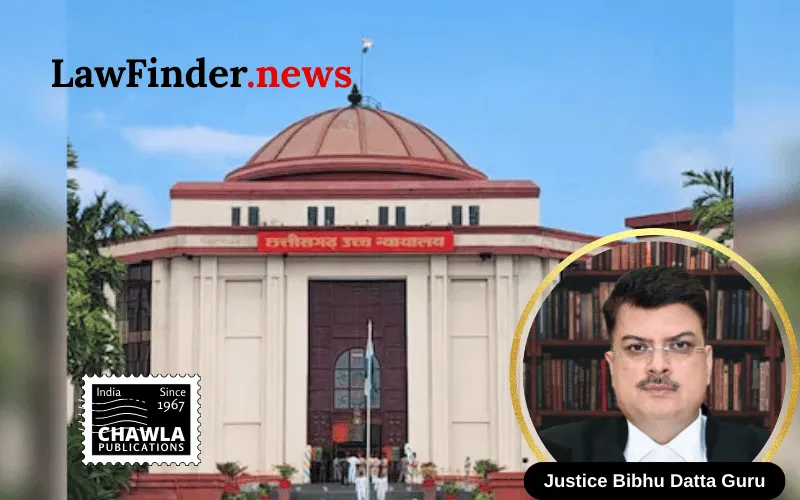
Justice Bibhu Datta Guru, hearing WPS No. 6103 of 2026 filed by Prabhawati Patel, ruled that withholding one annual increment without cumulative effect could not be sustained because the petitioner was never served with a written proposal to take disciplinary action, nor was she informed in advance of the imputations of misconduct against her. The Court held that a post-decisional representation cannot cure such a defect.
According to the petition, the impugned order dated June 11, 2026 was passed merely a day after a review meeting on the progress of construction works, without giving the petitioner any opportunity to explain her position. The petitioner argued that the information placed before the authorities had been compiled from field officials and that she was not given a chance to defend herself before punishment was imposed. She relied on the Supreme Court’s decision in O.K. Bhardwaj v. Union of India, which recognizes that even minor penalties require observance of natural justice.
The State and the respondent authority opposed the petition, contending that the petitioner was responsible for the information submitted and that the lapse amounted to negligence. It was also argued that the petitioner later submitted a representation, which was considered by the department.
Rejecting these submissions, the High Court observed that Rule 16(1)(a) requires the disciplinary authority to first inform the government servant in writing of the proposed action and the allegations, and then provide a reasonable opportunity to make a representation. The Court emphasized that this safeguard is not a mere formality, but a mandatory protection rooted in fairness and natural justice.
The Court further noted that the petitioner’s representation was submitted only after the penalty order had already been passed, and therefore could not be treated as compliance with the Rule. The fact that the punishment was a minor one also did not excuse the failure to follow the prescribed procedure. Since the petitioner disputed the factual basis of the alleged misconduct, she ought to have been heard before any penalty was imposed.
Holding that the order suffered from a clear breach of the mandatory procedural requirement, the High Court quashed the penalty order dated June 11, 2026. However, it left it open to the disciplinary authority to proceed afresh, if so advised, strictly in accordance with law and the CCA Rules.
Bottom Line :
Service law - Minor penalty of withholding one annual increment without cumulative effect cannot be imposed without prior written notice of proposed action, imputations of misconduct and reasonable opportunity of representation under Rule 16(1)(a) of the Chhattisgarh Civil Services (Classification, Control and Appeal) Rules, 1966 - Subsequent representation after penalty order does not cure breach of mandatory procedure.
Statutory provision(s): Rule 16(1)(a), Chhattisgarh Civil Services (Classification, Control and Appeal) Rules, 1966
Prabhawati Patel v. State of Chhattisgarh, (Chhattisgarh) : Law Finder Doc id # 2985409