Court holds government order relaxing study leave from 24 to 36 months applies prospectively only; prior sanctioned leaves cannot be retrospectively extended
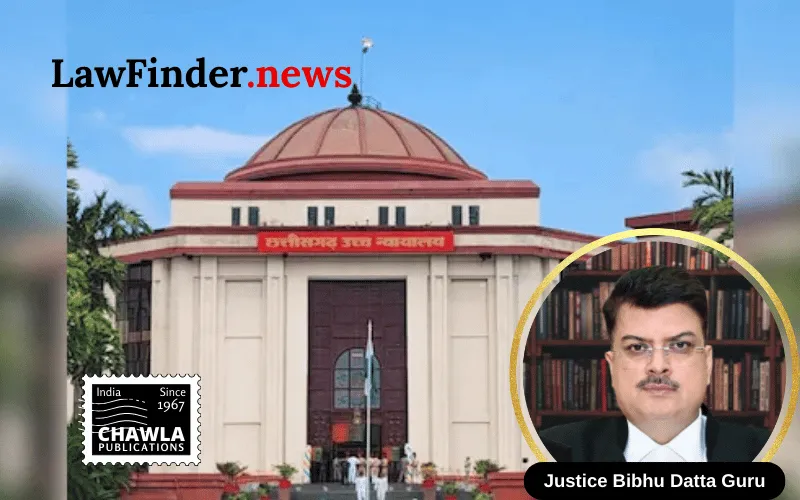
In a significant judgment delivered on October 1, 2026, the Chhattisgarh High Court, presided over by Justice Bibhu Datta Guru, dismissed a batch of writ petitions filed by serving doctors under the Health and Family Welfare Department of Chhattisgarh. The doctors, including Dr. Bhumika Dewangan, sought the retrospective benefit of a government order dated March 3, 2025, which relaxed the permissible period of study leave from 24 months to 36 months for postgraduate medical education.
The petitioners had already obtained permission and sanctioned study leave of 24 months before the issuance of the March 3, 2025 order and had availed the entire period. They argued that the subsequent relaxation should automatically extend their sanctioned leave to 36 months, including conversion of any extraordinary leave taken thereafter into study leave. Additionally, they contended that denial of such retrospective benefit amounted to discrimination violating Articles 14 and 16 of the Constitution of India.
The respondents, represented by the Additional Advocate General, opposed the claim, asserting that the March 3, 2025 order was prospective and did not intend to reopen or enlarge already concluded leave sanctions. They relied on the statutory Chhattisgarh Civil Services (Leave) Rules, 2010, particularly Rule 44 governing study leave, and highlighted the importance of the chronology of sanction and availing of leave.
Justice Guru, after a detailed examination of the facts, statutory provisions, and relevant Supreme Court precedents-including Assistant Excise Commissioner, Kottayam v. Esthappan Cherian and CIT v. Vatika Township (P) Ltd.-held that in the absence of express or necessarily implied retrospective effect, beneficial government orders are presumed to operate prospectively. The court clarified that the March 3, 2025 order, while increasing the maximum permissible study leave to 36 months, did not automatically convert earlier sanctioned 24-month leaves into 36-month leaves or convert extraordinary leave into study leave.
The court also examined a subsequent communication dated April 6, 2026, which the petitioners claimed curtailed the benefit of the March 3 order. The court found this communication to be merely clarificatory and consistent with the parent order, emphasizing that it did not amend, override, or withdraw vested rights.
Further, the court considered arguments based on parity where certain doctors had been granted extended study leave based on departmental orders dated June 13, 2025, but noted that such orders were subsequently cancelled and could not form a basis for enforcing similar benefits. The court underscored that parity claims must be grounded in material similarity including date of permission, sanction, and legal regime applicable.
Rejecting the petitioners' pleas, the court held that the respondents' actions were neither arbitrary nor discriminatory. The petitioners had no legal entitlement to extend their already availed 24 months of study leave by an additional 12 months retrospectively. Consequently, all the writ petitions were dismissed with no order as to costs.
This judgment reinforces the principle that administrative relaxations, unless expressly stated, do not operate retrospectively and that vested rights under the statutory leave rules cannot be enlarged by subsequent government orders.
Bottom Line:
Service Law - Study leave - Government order relaxing maximum study leave from 24 months to 36 months held prospective - Doctors who had already obtained sanction and availed 24 months' study leave prior to order dated 03.03.2025 were not entitled to retrospective enlargement of leave or conversion of extraordinary leave into study leave - Subsequent communication dated 06.04.2026 held merely clarificatory.
Statutory provision(s):
Chhattisgarh Civil Services (Leave) Rules, 2010 Rule 44; Articles 14 and 16 of the Constitution of India; Article 226 of the Constitution of India
Dr. Bhumika Dewangan v. State of Chhattisgarh, (Chhattisgarh) : Law Finder Doc Id # 2990785