Revenue Courts Cannot Declare Registered Sale Deeds Invalid; Exclusive Jurisdiction Lies with Civil Courts
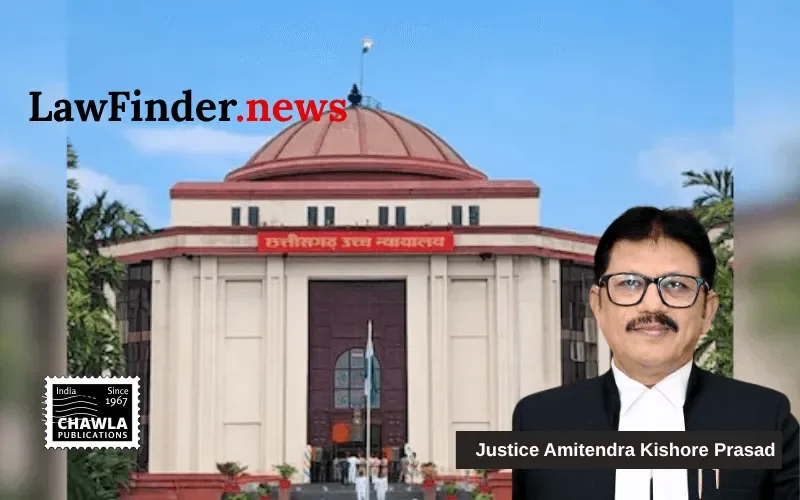
In a significant judgment, the Chhattisgarh High Court, presided over by Justice Amitendra Kishore Prasad, has underscored the exclusive jurisdiction of Civil Courts in declaring registered sale deeds null and void, thereby restricting the powers of Revenue Courts in such matters. The court delivered this ruling on July 17, 2026, in a consolidated decision involving three writ petitions, with WPC No. 2349 of 2022 being treated as the lead case.
The petitioners, Sheikh Hameed, Afreen Bano, and Mohammed Rizwan, challenged the orders of the Collector, Gariyaband, which declared their sale deeds null and void due to alleged violations of the Madhya Pradesh Land Revenue Code, specifically Sections 158(3) and 165(7-b). The Collector's orders were based on the grounds that the sale transactions took place without obtaining mandatory prior permission from the Collector, as required for land originally granted on lease by the State Government.
Advocates for the petitioners argued that the Revenue Court had overstepped its jurisdiction, as only Civil Courts possess the authority to adjudicate on the validity of registered sale deeds under the Transfer of Property Act, 1882, and the Specific Relief Act, 1963. They contended that once Bhumiswami rights are conferred, the need for prior permission dissipates.
The court examined the core legal questions, including whether the land was originally leased, whether it could be sold without prior permission, and the competence of the Revenue Court to declare the sale deeds void. Justice Prasad emphasized that the statutory powers to nullify registered sale deeds are vested exclusively in Civil Courts. He cited Section 54 of the Transfer of Property Act and Section 31 of the Specific Relief Act to support this legal position.
Highlighting the Supreme Court's precedent in the case of "Asset of Reconstruction Company (India) Limited v. S.P. Velayutham," the court reiterated that any defect in the execution of sale deeds challenges their validity, a matter that falls solely within the jurisdiction of Civil Courts.
Consequently, the High Court set aside the impugned orders declaring the sale deeds null and void and reserved the State Government's right to seek appropriate remedies through competent Civil Courts. This ruling reinforces the separation of powers between Revenue and Civil Courts, ensuring that only the latter can adjudicate on the legality of registered sale deeds.
Bottom line:-
The Revenue Court cannot declare a registered sale deed null and void. Such jurisdiction exclusively vests with the Civil Court under the provisions of the Transfer of Property Act and the Specific Relief Act.
Statutory provision(s):
Madhya Pradesh Land Revenue Code, 1959 Sections 158(3) and 165(7-b), Transfer of Property Act, 1882 Section 54, Specific Relief Act, 1963 Section 31, Constitution of India Article 226
Sheikh Hameed v. State of Chhattisgarh, (Chhattisgarh) : Law Finder Doc id # 2942439