The court clarifies that Section 165(6) of the Chhattisgarh Land Revenue Code does not mandate a minimum land retention for tribal bhumiswamis.
In a landmark judgment, the Chhattisgarh High Court has quashed the orders of the Collector, District Mungeli, and the Board of Revenue, Bilaspur, which had denied permission for the sale of land by a tribal bhumiswami, Vijay. The court clarified that the authorities misinterpreted Section 165(6) of the Chhattisgarh Land Revenue Code, 1959, by imposing a non-existent condition that a tribal landowner must retain at least 5 acres of irrigated or 10 acres of unirrigated land post-sale.
The petitioner, Vijay, a member of the Scheduled Tribes, had sought permission to sell a small portion of his land to repay debts and meet urgent family obligations, including marriage expenses. The Collector had rejected his application based on the erroneous premise that retaining less than 5 acres of land post-sale violated statutory provisions.
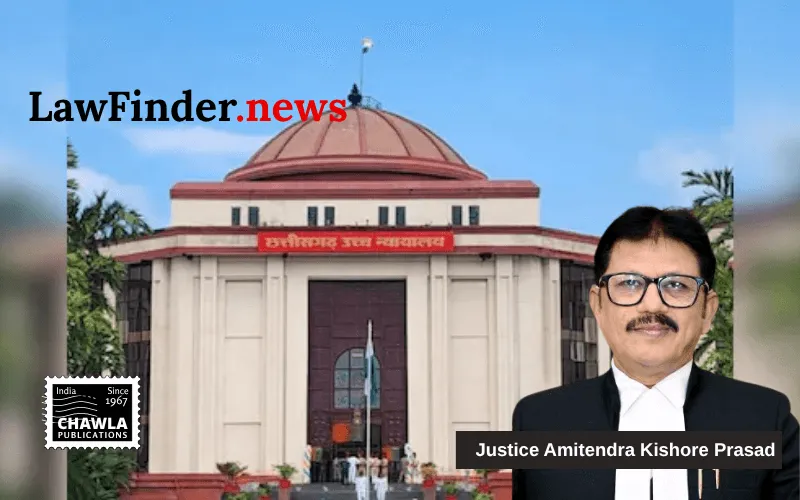
Justice Amitendra Kishore Prasad, presiding over the case, emphasized that Section 165(6) aims to protect tribal communities from exploitation but should not obstruct genuine livelihood needs. The court noted that the authorities erroneously applied Section 165(7), which is relevant only for attachment or sale in execution of a decree, not for voluntary sales.
The judgment highlighted the need for the Collector to exercise discretion reasonably, considering the bona fide necessity of the petitioner, the fairness of the transaction, and the sufficiency of remaining land for sustenance. The Tehsildar's enquiry had already confirmed the legitimacy and fairness of the proposed sale, with no indications of fraud or coercion.
In directing the competent authority to reconsider the application, the court instructed that all concerned parties be given a fair hearing and a reasoned decision be made within three months. This decision not only provides relief to the petitioner but also sets a precedent for interpreting protective land laws in a manner that balances protection with the genuine needs of tribal landholders.
Bottom line:-
Section 165(6) of the Chhattisgarh Land Revenue Code, 1959 does not impose a mandatory condition that a tribal bhumiswami must retain a minimum of 5 acres of irrigated land or 10 acres of unirrigated land before permission for transfer can be granted.
Statutory provision(s): Chhattisgarh Land Revenue Code, 1959, Sections 165(6), 165(7)
Vijay v. State of Chhattisgarh, (Chhattisgarh) : Law Finder Doc id # 2926629