Court Rules Registration Mandatory for Property Title Transfer; Finality of Delay Condonation Prevents Reopening of Limitation Issue
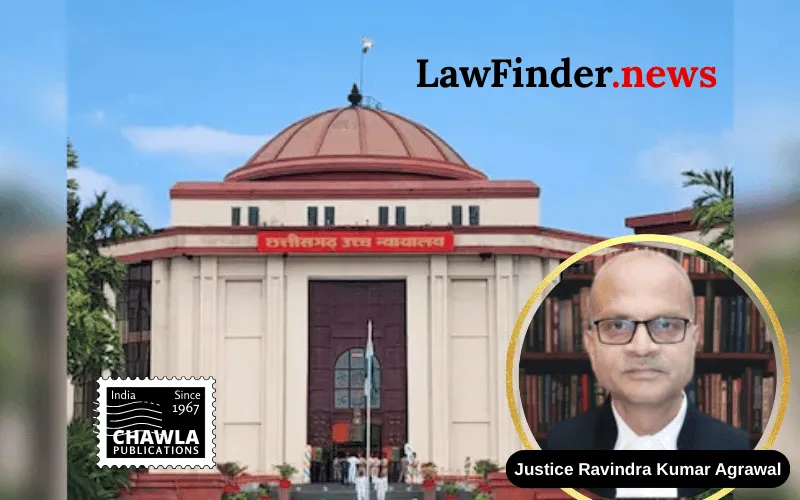
In a significant ruling dated 24th September 2026, the Chhattisgarh High Court dismissed a writ petition filed by Narayan Soni and others challenging the order passed by the Chhattisgarh Board of Revenue, Bilaspur, which invalidated a mutation entry deleting the name of Buchi Bai, sister of Narayan Soni, from the revenue records. The mutation was initially based on an unregistered relinquishment deed purportedly executed by Buchi Bai in favor of the petitioners.
The dispute arose from a mutation order dated 19th June 1981, which removed Buchi Bai's name from the revenue record after submission of the alleged relinquishment deed. About 15 years later, Buchi Bai sought to restore her name through an appeal and proceedings under Sections 109 and 110 of the Madhya Pradesh Land Revenue Code, 1959. Her appeal before the Sub-Divisional Officer (SDO), Raipur, was delayed, but the delay was condoned by the SDO on 21st June 2001, a decision affirmed by the Board of Revenue in 2004. This condonation order was never challenged, thereby attaining finality.
On merits, the SDO allowed the appeal of Buchi Bai's legal heirs in 2007, setting aside the original mutation and directing their names to be mutated in place of the deceased Buchi Bai. The petitioners challenged this decision before the Commissioner, Raipur Division, who set aside the SDO's order on grounds of limitation and merit, favoring the petitioners.
However, the respondents filed a revision before the Board of Revenue, which allowed the revision and restored the SDO's order. The Board held that the relinquishment deed was in fact a document transferring title in immovable property valued above Rs.100/-, requiring compulsory registration as per Section 17 of the Indian Registration Act, 1908. Since the deed was unregistered, it could not validly transfer title. The Board also held that the issue of delay condonation had already attained finality and could not be reopened by the Commissioner.
The High Court upheld the Board's decision, emphasizing the mandatory nature of registration for the transfer or extinguishment of title over immovable property of value exceeding Rs.100/-. It rejected the petitioners' argument that the deed was a mere family settlement exempt from registration. The Court noted that title transfer could not be effected by an unregistered relinquishment deed, regardless of the passage of time or alleged admission by the original owner.
Furthermore, the Court confirmed that the delay condonation order passed by the SDO and affirmed by the Board of Revenue had become final and binding, depriving the Commissioner of jurisdiction to reconsider the limitation issue. The Court found no perversity or jurisdictional error in the Board's order warranting interference.
This judgment reinforces the principle that revenue mutations affecting title must comply with statutory registration requirements and that once delay condonation orders attain finality, they cannot be reopened. The petitioners were left at liberty to pursue other appropriate remedies for their claims.
Bottom Line:
Revenue mutation based on an unregistered relinquishment deed/family settlement affecting title is invalid; once delay in filing appeal has already been condoned and affirmed up to the Board of Revenue, that issue attains finality and cannot be reopened by the Commissioner.
Statutory provision(s):
Article 227 of the Constitution of India, Sections 109 and 110 of the Madhya Pradesh Land Revenue Code, 1959, Section 5 of the Limitation Act, 1963, Section 17 of the Indian Registration Act, 1908, Sections 54, 59, and 118 of the Transfer of Property Act, 1882
Narayan Soni v. Kumari Niramala Soni, (Chhattisgarh) : Law Finder Doc Id # 2990466