Conviction of Meenu Kalmu for possession of explosive materials affirmed despite absence of independent witnesses
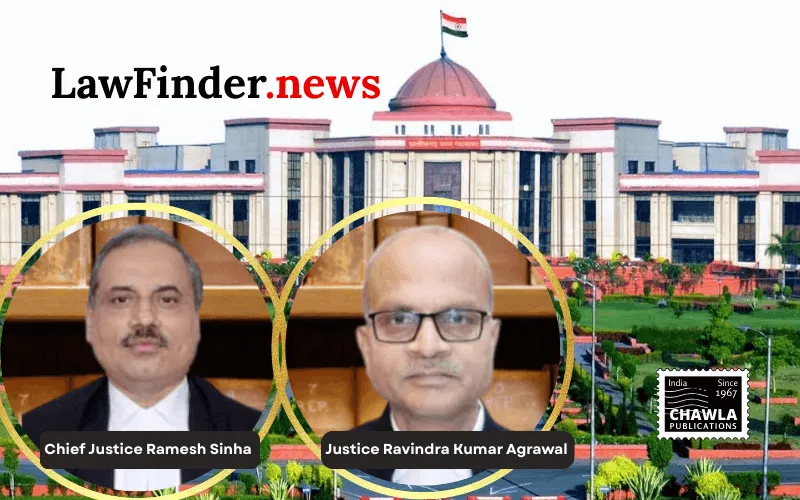
In a significant judgment delivered on June 30, 2026, the Chhattisgarh High Court upheld the conviction and sentencing of Meenu Kalmu alias Kalmumi Manoj alias Denga under Sections 4 and 5 of the Explosive Substances Act, 1908. The Division Bench, comprising Chief Justice Ramesh Sinha and Justice Ravindra Kumar Agrawal, dismissed the criminal appeal filed by the appellant, affirming the trial court’s decision.
The case involved the recovery of an electric detonator and additional explosive substances from the appellant, who was arrested on April 14, 2023, following a police operation based on secret information regarding Maoist activities in the region. Despite the absence of independent witnesses, the High Court found the prosecution's evidence credible, corroborated by official witnesses and documentary records.
The appellant was originally charged under various sections of the Indian Penal Code (IPC), the Explosive Substances Act, 1908, and the Unlawful Activities (Prevention) Act (UAPA), 1967. While acquitted of charges under the IPC and UAPA, the trial court convicted him for offences under Sections 4 and 5 of the Explosive Substances Act, sentencing him to rigorous imprisonment along with fines.
The appellant's counsel argued that the prosecution failed to prove its case beyond reasonable doubt, citing material omissions, contradictions, and lack of independent witness support. However, the High Court noted that the evidence from police witnesses was reliable and consistent, dismissing concerns about procedural irregularities and the hostility of independent witnesses.
In its judgment, the High Court emphasized that minor discrepancies and the absence of independent witnesses do not vitiate a credible prosecution case. It underscored that police witnesses' testimonies are trustworthy if corroborated by evidence, and procedural irregularities do not impact the core evidence's credibility.
The court acknowledged the challenging circumstances under which the police operated, highlighting the area's high sensitivity due to Naxalite activities. The recovery of the electric detonator and subsequent explosive substances from the appellant's possession was deemed sufficient to establish his guilt.
The judgment reiterated principles laid down by the Supreme Court concerning the reliability of police witnesses and the non-essential nature of independent corroboration in such cases. The High Court found no perversity, illegality, or misapplication of law in the trial court's judgment, warranting interference in appellate jurisdiction.
The appellant has been directed to serve the remainder of his sentence, with the court advising him of his right to appeal to the Supreme Court with the assistance of legal services committees. The judgment and original records have been transmitted to the trial court for compliance.
Bottom line:-
Conviction under Sections 4 and 5 of the Explosive Substances Act, 1908 upheld based on credible evidence, corroborated by official witnesses and documentary records, despite the absence of independent witnesses.
Statutory provision(s): Sections 4 and 5 of the Explosive Substances Act, 1908, Sections 34, 120-B, 147, 148, 149 of IPC, Sections 16, 20 and 38 of the Unlawful Activities (Prevention) Act, 1967, Section 313 of CrPC, Section 160 of CrPC, Section 299 of CrPC.
Meenu Kalmu v. State of Chhattisgarh, (Chhattisgarh)(DB) : Law Finder Doc id # 2938738