Court affirms that resignation accepted without inquiry amidst claims of coercion is legally unsustainable, orders reinstatement with full benefits.
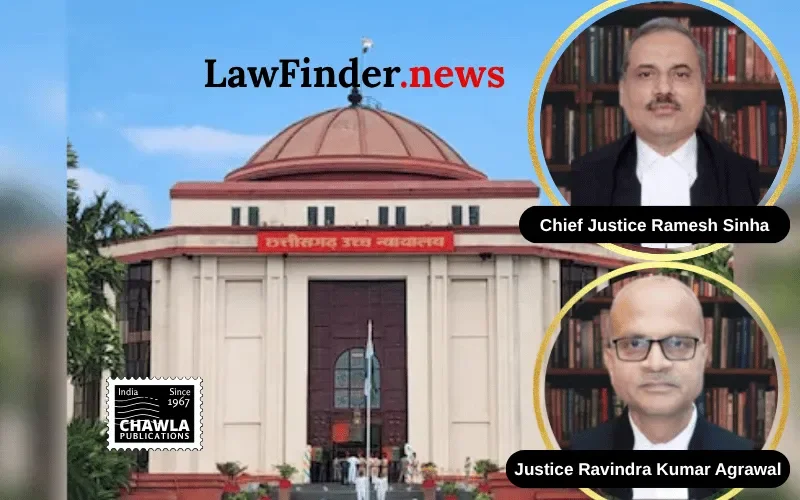
In a significant ruling, the Chhattisgarh High Court has upheld the decision to reinstate Ashish Kumar Khandelwal, an Assistant Professor at Chouksey Engineering College, who was compelled to resign under duress. The Division Bench, comprising Chief Justice Shri Ramesh Sinha and Justice Ravindra Kumar Agrawal, dismissed the appeal filed by the college challenging the earlier order of a Single Judge which had declared the resignation as non-voluntary and thus legally invalid.
The controversy stemmed from Khandelwal's resignation on September 21, 2020, which he alleged was submitted under threat and pressure from his colleagues, Chitrakant Tiger and Jai Kishan Gupta. Despite these assertions being clearly stated in his resignation letter, the college management accepted the resignation within two days without conducting any inquiry into the claims of coercion.
The High Court reiterated the importance of verifying the voluntariness of a resignation when coercion is alleged. The Bench observed that the failure to conduct any inquiry or verification before acceptance of the resignation rendered the action legally unsustainable. The subsequent affidavits denying coercion by the concerned colleagues were deemed insufficient to rectify the procedural lapse committed by the management.
The court's decision mandates the reinstatement of Khandelwal with arrears of salary and all consequential service benefits from the date of resignation acceptance, September 23, 2020. The judgment emphasizes that employers have a duty to ensure that resignations are submitted voluntarily, especially when allegations of coercion are present.
Legal representatives argued extensively, with the appellant's counsel, Dr. Veena Nair, asserting that the resignation was voluntary and within procedural norms. However, the court found no substantive evidence to overturn the Single Judge's findings, thereby dismissing the appeal.
This judgment serves as a crucial reminder of employers' responsibilities in handling resignations and the legal implications of neglecting due diligence in cases alleging coercion. The decision upholds the principles of fairness and due process, ensuring protection for employees who may be coerced into resigning.
Bottom line:-
Resignation tendered under threat and coercion cannot be treated as voluntary, and its acceptance without inquiry is legally unsustainable. Reinstatement with arrears of salary and consequential service benefits is justified in such cases.
Statutory provision(s):
- Chhattisgarh High Court (Appeal to Division Bench Act, 2006)