Court Rules No Automatic Right for RTE Students to Transfer to Another Private School; State's Obligation Under Article 21-A and RTE Act Satisfied by Accommodation in Nearby Government Schools
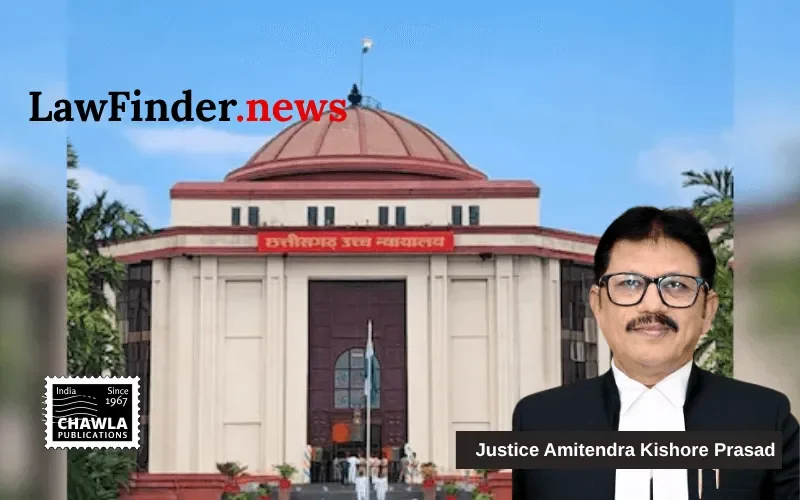
In a significant judgment dated October 6, 2026, the Chhattisgarh High Court, presided over by Justice Amitendra Kishore Prasad, addressed the contentious issue of transfer rights of students admitted under the Right to Education (RTE) Act, 2009, when a private unaided school closes or merges. The case, titled *Atharv Gupta (Minor) and Others v. Union of India and Others*, involved several minor students studying under the RTE quota in St. Xavier's High School, Kota, who were compelled to shift to government schools following the closure of their private school branch.
The petitioners, represented by advocate Ms. Vagisha Tiwari, challenged the District Education Officer's (DEO) order rejecting the school management's voluntary merger of the Kota branch with another branch in Bharni and directing RTE students to be transferred to nearby government schools. The parents had consented to the merger, and the school management had assured seamless continuation of education at the new branch without additional fees and with transportation support. Despite this, the DEO applied a State-issued administrative circular dated March 30, 2022, mandating that students of closed private schools be accommodated only in government institutions.
The petitioners contended that neither the RTE Act nor the Chhattisgarh RTE Rules allow for forced transfer to government schools when a private alternative exists and that the State's circular lacked statutory backing under Section 38 of the RTE Act. Furthermore, they argued that the closure/merger decision violated the mandatory procedural safeguards under Section 18 of the RTE Act and Rule 16 of the State Rules, which require show-cause notices and hearings before derecognition or closure.
The State, represented by Additional Advocate General Mr. RK Gupta, defended the DEO's order, submitting that the RTE Act and Rules do not mandate or permit automatic transfer of RTE students from one private unaided school to another upon closure. The State emphasized that its constitutional duty under Article 21-A - guaranteeing free and compulsory elementary education - is discharged by providing education in recognized government schools. The policy aims to ensure uniformity and avoid administrative chaos by uniformly accommodating affected students in government schools.
After detailed examination, the High Court held that:
- 1. The fundamental right under Article 21-A and the RTE Act guarantees access to free and compulsory elementary education but does not confer an absolute right on students or parents to demand education in a private unaided school of their choice.
- 2. The voluntary merger or closure of a private school by its management does not attract the procedural requirements under Section 18 and Rule 16, which are applicable only when the State initiates derecognition proceedings.
- 3. The State's circular dated March 30, 2022, prescribing transfer of students to government schools upon closure of private schools, is a valid administrative policy within the State's discretion, and its uniform application does not violate Article 14 (right to equality).
- 4. The mere listing of a school on the RTE online portal for a new academic session, despite its closure, is an administrative or technical error and does not create any enforceable right for students to continue there.
- 5. The State has fulfilled its constitutional and statutory obligations by accommodating the affected RTE students in nearby government schools, thereby ensuring uninterrupted elementary education.
The Court declined to interfere with the DEO's order but stressed the importance of a child-centric approach in the transition. It directed the State authorities to expedite the transfer process and prioritize admission in nearby English medium government schools, such as Atmanand Excellent English Medium School, to avoid academic disruption. The Court also mandated smooth issuance of Transfer Certificates and transfer of school records to facilitate continuity.
This judgment clarifies the legal position on the rights of RTE students in cases of private school closures and reinforces the State's role in ensuring free and compulsory education through government institutions, while recognizing the autonomy of private unaided schools in their operational decisions.
Bottom Line:
Right to Education - On closure/merger of a private unaided school, RTE students cannot as a matter of right seek transfer to another private unaided school of their choice - State discharges its obligation under Article 21-A and the RTE Act by accommodating such students in nearby Government schools - Executive circular providing such re-allocation upheld - Procedure under Section 18 of RTE Act and Rule 16 of Chhattisgarh RTE Rules applies to State-initiated derecognition, not to voluntary closure/relocation by private management.
Statutory provision(s):
Constitution of India Article 21-A, Right of Children to Free and Compulsory Education Act, 2009 Sections 8, 9, 12, 18, 38; Chhattisgarh Right of Children to Free and Compulsory Education Rules, 2010 Rule 16
Atharv Gupta (Minor) v. Union of India, (Chhattisgarh) : Law Finder Doc Id # 2994987