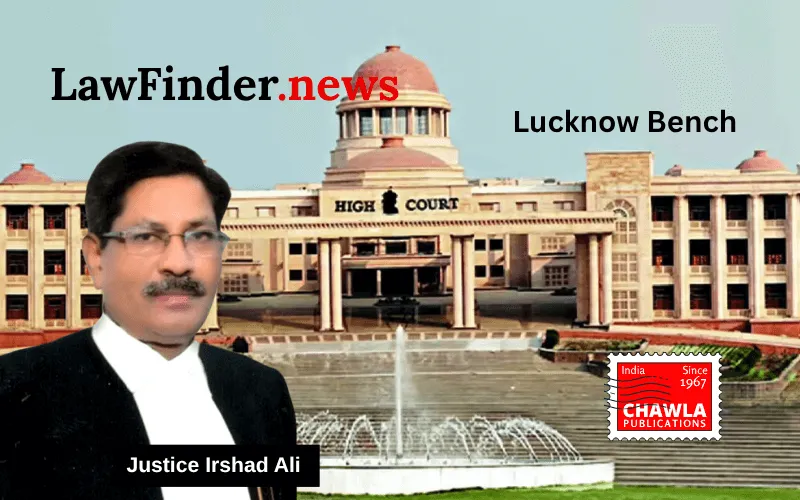
Lucknow, Aug 11 The Allahabad High Court's Lucknow Bench on Tuesday directed the state government to extend pay parity and consequential service benefits to Special Teachers/Resource Teachers, on contract for several years in government schools.
The court held that the contractual status of the teachers, who were roped in to educate children with special needs, could not be used to deny them benefits available to corresponding regular teachers.
The authorities have been given four months from the date of production of a certified copy of the order to implement the directions.
Justice Irshad Ali allowed a writ petition filed by the petitioners, Vipin Mishra and 23 others, who had been appointed as Itinerant Teachers and Resource Teachers through district-level selection committees and the Sarva Shiksha Abhiyan.
Though their appointments were described as contractual and their initial remuneration was fixed at Rs 6,000 per month, the petitioners claimed that they performed duties identical to those of regular special teachers.
The petitioners worked across government schools, imparting education to children with special needs and undertaking their assessment, rehabilitation, counselling and continuous monitoring, they contended.
They possess qualifications prescribed by the Rehabilitation Council of India and worked for several years through successive renewals of their contractual arrangements, the petition said.
The dispute arose because, despite performing specialised educational duties for years, the petitioners were paid only a fixed honorarium while regular teachers performing comparable functions received regular pay scales and service benefits.
The petitioners contended that the denial of parity amounted to discrimination under Articles 14 and 16 of the Constitution.
They also relied on Clause 12.3 of the Integrated Education for Disabled Children (IEDC) Scheme, which specifically provided that special teachers should receive the same pay scales as teachers in the corresponding category.
Considering the contention, the bench held that the state could not selectively implement the scheme by taking advantage of its benefits while ignoring teachers' service conditions.
The court also observed that the petitioners were not engaged on a casual or sporadic basis, and they worked uninterrupted for years.
It held that merely describing their appointments as contractual could not defeat constitutional guarantees when they possessed the requisite qualifications and discharged substantially similar duties as corresponding special teachers.
The court also rejected the state's argument that some petitioners had subsequently accepted fresh appointments and their earlier claims had therefore become infructuous.
The bench held that subsequent appointments could not extinguish rights that had already accrued during the period they served under the earlier scheme.
The teachers approached the high court only after their repeated representations before authorities failed to secure pay parity.
Allowing the petition, the court directed the respondents to extend to the petitioners parity in pay scales and all consequential service benefits under Clause 12.3 of the IEDC Scheme, including annual increments, admissible leave benefits, maternity benefits wherever applicable and continuity of service.
Vipin Mishra v. Union of India, (Allahabad)(Lucknow) : Law Finder Doc Id # 2957933