Supreme Court Grants Bail in POCSO-Atrocities Case, Says Courts Must Not Judge Morality, Apex Court sets aside Madhya Pradesh High Court order, holds prolonged custody and pending trial justify bail; warns against personal value judgments in criminal adjudication.
The Supreme Court of India has granted bail to an accused facing charges under the Bharatiya Nyaya Sanhita, the POCSO Act and the SC/ST (Prevention of Atrocities) Act, while strongly cautioning courts against importing personal moral views into bail decisions or criminal trials.
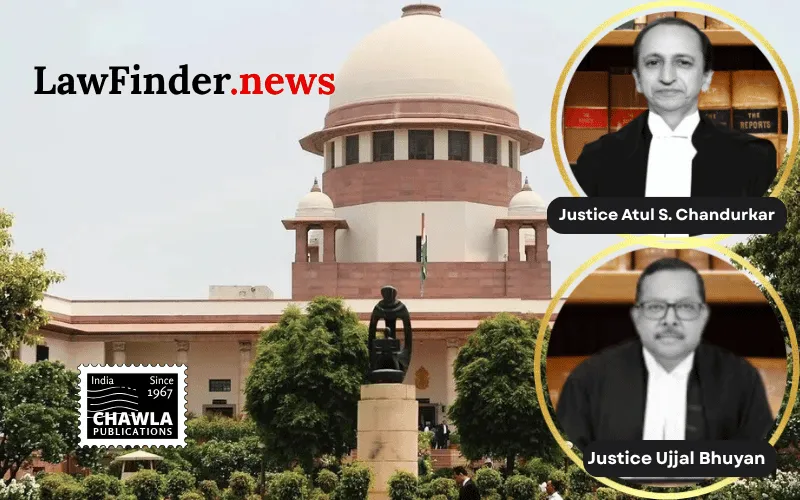
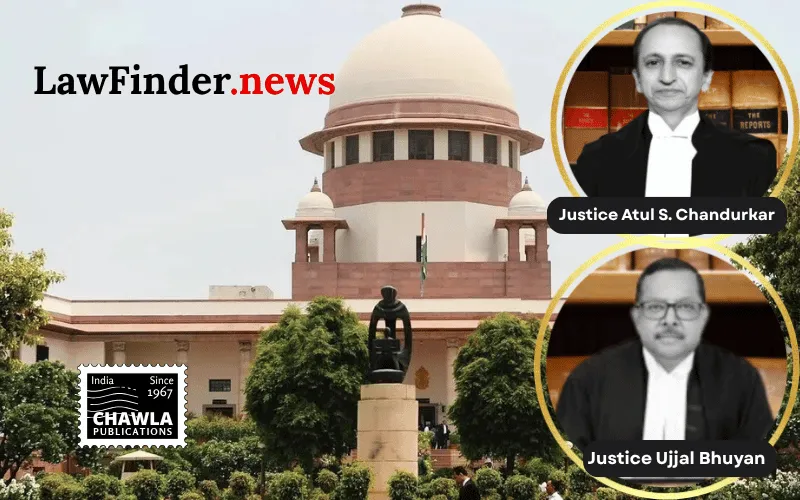
A Bench of Justice Ujjal Bhuyan and Justice Atul S. Chandurkar allowed the appeal filed by Kanha @ Kanhaiya Singh, who had challenged the Madhya Pradesh High Court’s order dated 20 March 2026 rejecting his regular bail plea. The apex court held that the High Court had declined bail partly on the basis that release could affect “social order” and the “morals” of the victim’s family, a reasoning the Supreme Court disapproved.
The Court observed that judges must refrain from imposing their personal views or value judgments on morality while deciding bail applications or even during criminal trials. “Courts should refrain from imposing the personal views or value judgment of the Presiding Judge on morality or otherwise while adjudicating a matter relating to bail, or even a criminal trial of an accused,” the Bench said.
According to the case record, the appellant was in custody since 10 September 2025. The prosecution alleged that he, a tenant living in the neighbourhood of the victim, had attempted to abduct the victim’s elder sister and later sexually exploited the minor victim for about a month. The case was registered at Station Road Police Station, Ratlam, under multiple serious provisions including the BNS, POCSO Act and the SC/ST Act.
The State opposed bail, arguing that the appellant had already been convicted in the earlier connected case relating to the elder sister and that the present case involved a minor prosecutrix. It also pointed out that the trial was still ongoing, with 5 of 15 witnesses already examined.
However, the Supreme Court found that the appellant had already undergone more than one year of incarceration and that the trial would take some more time to conclude. In these circumstances, the Court held that a case for bail was made out.
Setting aside the High Court’s order, the Supreme Court directed that the appellant be produced before the jurisdictional Special Court within seven days and be released on bail on appropriate terms and conditions. The Court clarified that the bail order would remain subject to the appellant’s custody status in the connected criminal appeal challenging his conviction in the earlier case.
The ruling reinforces the principle that bail decisions must rest on legal considerations such as custody period, progress of trial and the nature of allegations, rather than on subjective notions of morality.
Bottom Line:
Courts should refrain from imposing personal views or value judgments on morality while adjudicating matters relating to bail or criminal trials.
Statutory provision(s): Bharatiya Nyaya Sanhita, 202
Kanha @ Kanhaiya Singh v. State of Madhya Pradesh, (SC) : Law Finder Doc Id # 2985406