Supreme Court Upholds Tender Conditions in Delhi's Public Procurement Case, Court Dismisses Appeals Against Stringent Tender Clauses Citing Delay and Public Interest
In a significant ruling, the Supreme Court of India dismissed the appeals challenging the tender conditions set by the Directorate of Education, Government of the National Capital Territory of Delhi, for procuring sports goods and outdoor gymnasium equipment. The appeals, filed by M/s. Utkarsh Enterprises and M/s. Philips International, contended that the tender conditions were exclusionary and discriminatory, effectively barring their participation.
The tender conditions required bidders to have a fully functional office and warehouse in Delhi/NCR for the past three years, a clause that the appellants argued was arbitrary and lacked a rational nexus with the procurement's objectives. They also challenged the stringent past performance criteria and the lack of relaxations for Micro and Small Enterprises (MSEs).
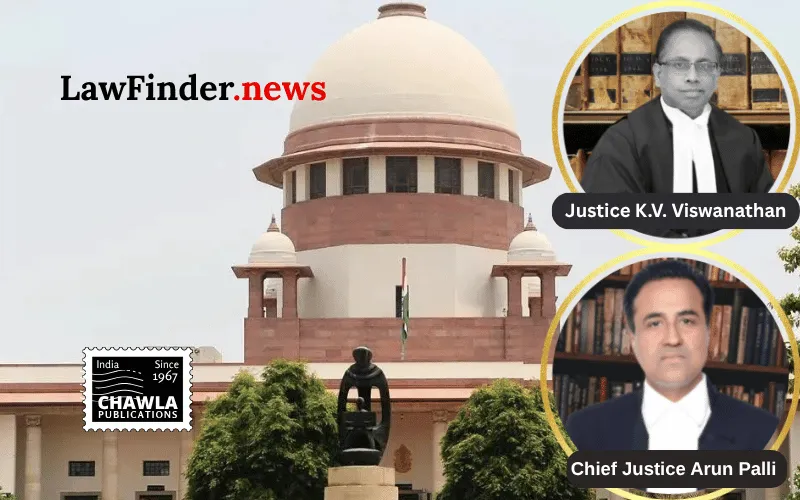
The Supreme Court, led by Justices K.V. Viswanathan and Arun Palli, highlighted the importance of timely challenges in tender processes. The court noted that the appellants had delayed their approach, filing the writ petition four months after the tender publication. By then, the tender process had advanced significantly, with one tender already awarded and others at the financial evaluation stage.
The judgment emphasized the need for judicial discretion in public procurement cases, particularly when the procurement serves a larger public interest. The court underscored that the equipment was intended for government schools, benefitting around 1.6 million students, and any disruption could severely impact this public interest.
While the appellants argued that the case was covered by a previous Supreme Court decision in Vinishma Technologies Pvt. Ltd. v. State of Chhattisgarh, the court found that the two cases differed significantly in context and specifics. The court held that the tender conditions in the present case were operational rather than geographical, aiming to ensure prompt installation and maintenance of equipment in schools.
The Supreme Court's decision upholds the Delhi High Court's judgment, leaving the validity of the tender conditions, particularly the controversial Clause 2.17, open for examination in future cases. The ruling highlights the court's cautious approach in intervening in public procurement processes, balancing procedural fairness with the timely execution of public projects.
Bottom Line:
Delay in challenging tender conditions may result in refusal of judicial intervention, especially when the tender process has substantially progressed and public interest is involved.
Statutory provision(s): Article 226 of the Constitution of India, Public Procurement Policy for MSEs Order (2012), GeM procurement framework.
M/s. Utkarsh Enterprises v. Union of India, (SC) : Law Finder Doc id # 2962298