Court holds affidavit and financial proof by NRI sponsor sufficient, quashes requirement of legal guardianship under Guardians and Wards Act, 1890 for admission eligibility
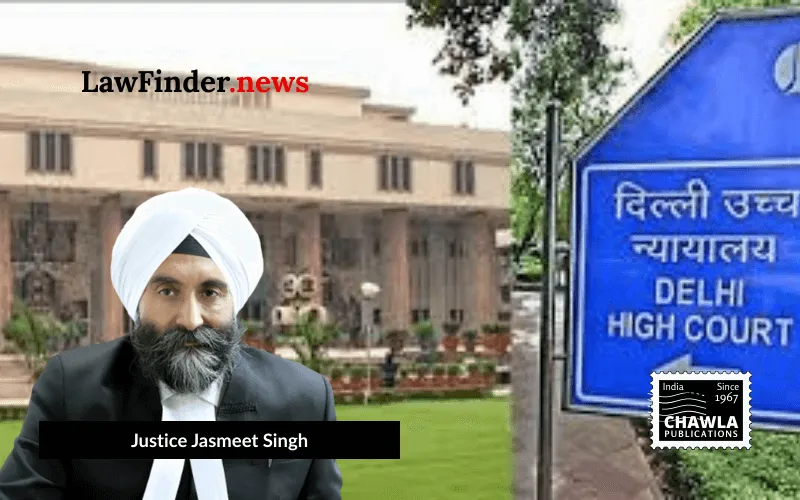
In a significant judgment dated September 8, 2026, the Delhi High Court, presided over by Justice Jasmeet Singh, has directed the Medical Counselling Committee (MCC) to allow a minor petitioner, Anish Sandeep Patil, to participate in the ongoing NEET-UG 2026 counselling under the NRI quota despite his inability to produce legal guardianship as mandated by a recent MCC notice. The court held that an affidavit by the NRI sponsor accompanied by documentary proof of financial capacity is adequate at the interim stage, thereby relaxing the stringent requirement introduced by the MCC.
Anish Sandeep Patil, a minor born on October 30, 2008, secured the requisite cut-off marks in the NEET-UG 2026 examination. His maternal uncle, Mr. Shailesh Ashokrao Patil, an NRI residing abroad, undertook to bear all educational expenses including coaching, examination fees, and MBBS course costs. Historically, since 2017, admissions under the NRI quota were permitted based on an affidavit by the NRI sponsor as per the Supreme Court's order in Consortium of Deemed Universities in Karnataka v. Union of India (2017). This practice was followed in subsequent years including 2024 and 2025.
However, the MCC's impugned notice dated May 27, 2026, introduced a new requirement mandating that the NRI sponsor produce evidence of legal guardianship under the Guardians and Wards Act, 1890, and prove having looked after the student as a guardian. The petitioner challenged this notification on the ground that obtaining such guardianship is a time-consuming legal process that effectively barred his participation in the ongoing second round of counselling scheduled from September 3 to 9, 2026.
The MCC defended the new requirement as a safeguard against bogus claims and fraudulent sponsorships. Nonetheless, the court observed that the requirement to prove actual guardianship introduces a subjective and potentially arbitrary criterion that could unjustly exclude genuine candidates. It emphasized that the legitimate concern of preventing misuse can be sufficiently met by requiring an affidavit and proof of financial capacity from the sponsor, especially when the sponsor is a close relative, such as a maternal uncle.
The court balanced the inconvenience and potential irreparable harm to the petitioner, noting that denial of counselling participation after securing qualifying marks could cause loss not compensable by monetary damages. The court accordingly granted interim relief allowing the petitioner to participate in the ongoing counselling process subject to furnishing the affidavit and financial documents by the sponsor. The final decision on the petition remains pending.
This judgment reinforces the principle of protecting students' right to education and ensures that procedural changes do not unfairly impede deserving candidates, especially minors relying on NRI sponsorship. It also underscores the court's role in scrutinizing administrative policies for fairness and reasonableness in admission processes.
Bottom Line:
NEET-UG 2026 - NRI quota admission - Requirement of proving guardianship under the Guardians and Wards Act, 1890 for NRI sponsors challenged - Court holds that affidavit and sufficient documentary proof of financial capacity of sponsor are sufficient at this stage to address concerns over bogus claims.
Statutory provision(s):
Guardians and Wards Act, 1890; Section 151, Civil Procedure Code, 1908
Anish Sandeep Patil (Minor) v. Union of India, (Delhi) : Law Finder Doc Id # 2979214