Court holds that arbitration petition under Section 11(6) of Arbitration and Conciliation Act, 1996 is maintainable within three years excluding bona fide mediation period; arbitrability of disputes to be decided by arbitrator, not referral court.
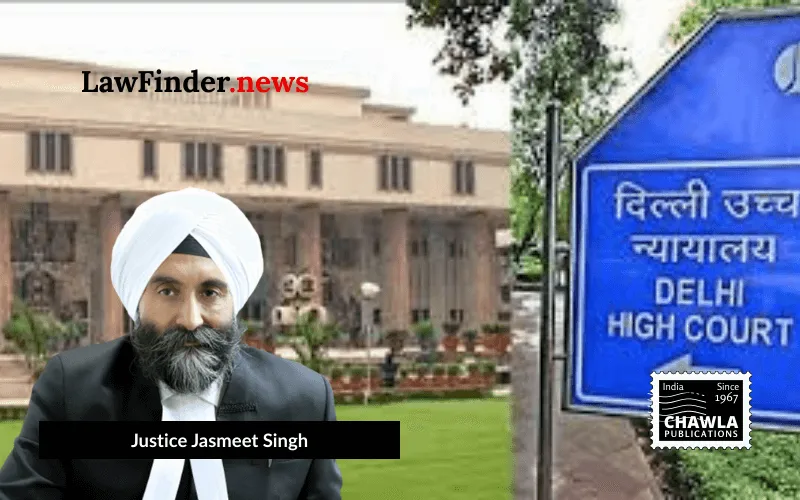
In a significant judgment delivered on September 7, 2026, the Delhi High Court, presided over by Justice Jasmeet Singh, allowed the arbitration petition filed by Flemingo (DFS) Private Limited against the Airports Authority of India (AAI). The petition sought the appointment of a sole arbitrator under Section 11(6) of the Arbitration and Conciliation Act, 1996, to resolve disputes arising from a Licence Agreement dated September 30, 2011, concerning the operation of duty-free shops at Amritsar Airport.
The dispute originated from allegations by Flemingo regarding excess license fees and concession charges levied by AAI. After multiple correspondences and unsuccessful attempts to resolve the matter amicably, the petitioner invoked arbitration by sending a legal notice on March 14, 2022. The respondent AAI suggested mediation pursuant to its Mediation Policy, 2022, and the parties engaged in bona fide mediation from June 30, 2023, to November 23, 2023, which eventually failed.
AAI contested the petition on grounds of limitation, contending that earlier communications dating back to 2017 constituted invocation of arbitration, thus barring the petition filed in 2025 as time-barred. Additionally, AAI argued that some claims did not arise from the Licence Agreement and hence were not arbitrable.
The Court meticulously analyzed the nature of the earlier notices sent by Flemingo and held that these communications did not constitute valid notices invoking arbitration under Section 21 of the Arbitration Act, as they primarily sought amicable resolution and only indicated arbitration as a last resort. The Court ruled that the cause of action arose only when AAI formally rejected the claims on October 11, 2021, making the March 14, 2022 notice a valid invocation of arbitration within the three-year limitation period under Article 137 of the Limitation Act.
Importantly, the Court emphasized that the time spent in bona fide mediation must be excluded from the limitation calculation, thereby validating the petition's timeliness. The Court further reaffirmed that the referral court's role at the Section 11 stage is limited to a prima facie examination of the existence of a valid arbitration agreement and limitation compliance, without delving into the merits or arbitrability of disputes, which is the domain of the arbitrator.
Consequently, the Court appointed Ms. Justice Shalinder Kaur (Retd. Judge, Delhi High Court) as the sole arbitrator under the auspices of the Delhi International Arbitration Centre (DIAC) to adjudicate all disputes between the parties. The Court clarified that all rights and contentions, including arbitrability and preliminary objections, remain open for the arbitrator's decision.
This judgment underscores the judiciary's supportive role in arbitration, minimizing judicial interference while ensuring arbitration agreements are honored timely, and mediation efforts are respected in limitation computations. It also aligns with recent Supreme Court precedents limiting referral courts' scrutiny at the appointment stage.
Bottom Line:
Arbitration and Conciliation Act, 1996 - A petition under Section 11(6) for the appointment of an Arbitrator is maintainable if filed within the limitation period of three years from the date of the cause of action, excluding the time spent in bona fide mediation or settlement negotiations.
Statutory provision(s):
Arbitration and Conciliation Act, 1996 Section 11(6), Section 21; Limitation Act, 1963 Article 137
Flemingo (DFS) Private Limited v. Airports Authority of India, (Delhi) : Law Finder Doc Id # 2973658