Court emphasizes Section 124 of Trade Marks Act, 1999 grants independent right to seek rectification; dismissal of permission application not a bar for future challenges
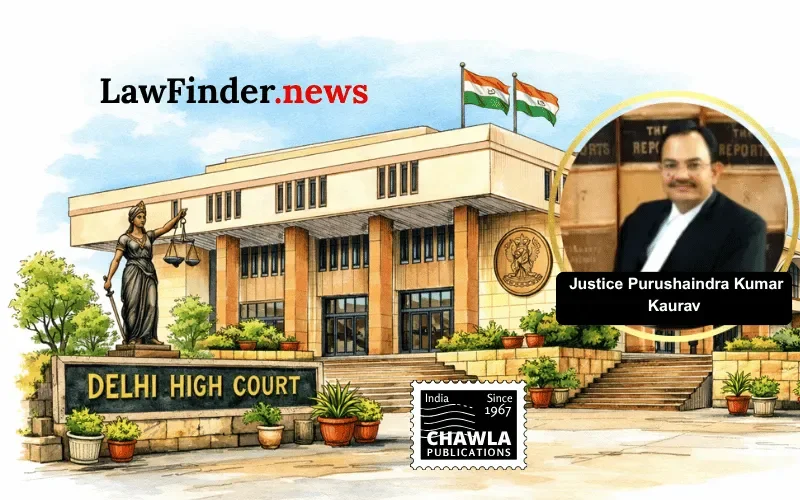
In a significant judgment delivered on November 6, 2026, the Delhi High Court, presided over by Justice Purushaindra Kumar Kaurav, clarified the legal position regarding the filing of rectification petitions under Section 124 of the Trade Marks Act, 1999. The judgment arose from petitions filed by Pawan Kumar Mittal, proprietor of Shree Salasar Dev Basmati House, challenging the dismissal of his application seeking permission to initiate rectification proceedings against two registered trademarks ‘KHAZANA’ and ‘KESARIA’ owned by J.R. Rice India Pvt. Ltd.
The petitioner had filed these applications under Section 124 during ongoing infringement proceedings, seeking a stay of the suit and court orders enabling him to file rectification petitions on grounds of invalidity of the respondent’s trademarks. He contended that the marks were descriptive, commonly used in the trade, and that registrations were not bona fide. However, the Commercial Court rejected this application on the basis that permission to file rectification was not required and the petitioner’s challenge was raised only post-institution of the suit.
The Delhi High Court upheld the principle that Section 124 does not mandate prior court permission to file rectification petitions. The Court explained that the statutory provision grants an independent right to seek rectification, and the court’s satisfaction regarding the prima facie tenability of invalidity is only relevant to decide whether to stay the infringement suit, not to grant leave to file rectification. The Court referred extensively to Supreme Court precedent in Patel Field Marshal Agencies v. P.M. Diesels Ltd. (2018) and recent Division Bench rulings, emphasizing that the trial court’s role is to assess the prima facie validity of the invalidity plea, not to act as a gatekeeper for filing rectification.
The Court also clarified that since the petitioner had not yet filed the actual rectification petitions, the question of permission was legally irrelevant. The petitioner was permitted to withdraw the current petitions with liberty to raise all issues at the appropriate stage. The Court explicitly stated that dismissal of the application under Section 124 by the Commercial Court would not be a ground to deny future applications on the same grounds.
Importantly, the judgment refrained from expressing any opinion on the merits of the trademark validity or infringement claims, leaving all rights and contentions open for future adjudication.
This judgment provides clarity to trademark litigants that rectification petitions can be filed independently without prior leave from civil courts, ensuring that challenges to trademark registrations remain accessible as an independent statutory remedy. It also underscores the procedural safeguards in place to balance expeditious resolution of infringement suits with the opportunity to question invalid registrations.
Bottom Line:
Section 124 of the Trade Marks Act, 1999 does not require permission or leave of the court to institute rectification proceedings. The right to seek rectification is an independent statutory right, and the satisfaction of the court pertains only to the prima facie tenability of the plea of invalidity as it impacts a pending suit for infringement.
Statutory provision(s): Trade Marks Act, 1999 Section 124; Trade and Merchandise Marks Act, 1958 Section 111; Constitution of India Article 227